In short: New Jersey homes paid about 25.2¢ per kWh in July 2026, roughly 38% above the U.S. average (EIA). Winter weather and strong wind are rated very high hazards (FEMA). The state still credits rooftop solar at the full retail rate. That mix makes solar, batteries and a backup plan worth a close look here.
This guide is built from New Jersey’s own numbers: what electricity costs, how often the lights go out, how much sun reaches Newark, which programs are confirmed, and who licenses the people who do the work. Every figure has its source and date, and our own estimates are labelled.
New Jersey at a glance
- Home electricity price: 25.19¢/kWh in July 2026 vs 18.31¢ U.S. average; 23.98¢ average for January to July 2026 (EIA, preliminary).
- Outages: about 174 minutes without power per customer in 2024 counting major storms, about 100 minutes without them; about 1.1 interruptions per customer (EIA-861, 2024).
- Sun: 3.92 kWh/m² a day in Newark; roughly 1,140 kWh a year per kW of panels (our estimate from NASA POWER data).
- Net metering: full retail credit with monthly rollover; yearly excess paid at a lower avoided-cost rate (NJ BPU).
- Plug-in (balcony) solar: law signed September 1, 2026 for systems up to 1,200 W; not yet in effect.
- Electric cars: 210,000 battery-electric cars registered (2025) and 7,044 public charging ports, 2,116 of them DC fast (AFDC, October 2026).
- Main utilities: PSE&G (about 56% of customers), Jersey Central Power & Light (28%), Atlantic City Electric (14%), Rockland Electric (EIA-861, 2024).
- Top weather hazards: winter weather and strong wind (very high); ice storms and cold waves (relatively high); hurricanes (relatively moderate) (FEMA National Risk Index, December 2025).
- Wildfire power shutoffs: no utility shutoff program found.
Backup power in New Jersey
On paper, New Jersey’s grid is fairly steady. In a normal 2024 day-to-day sense, a customer lost power for about 1 hour 40 minutes in the whole year. Add the major storm days and the average climbs to almost 3 hours. That gap is the story here: outages are rare, but when they come they come with the weather, and FEMA rates both winter weather and strong wind as very high risks for the state. An outage in January with ice on the lines is a different problem from a summer thunderstorm, because heat, a sump pump or a well pump may be what you need to keep running.
Three ways to plan for it:
- A portable power station covers phones, a modem, lights and a CPAP for a few hours. With outages averaging under two hours on a normal year, many apartment and condo households in North Jersey find this is enough. See portable power stations.
- A home battery keeps the essentials circuit running silently and switches over automatically. It suits short and medium outages and pairs with solar. See home batteries and size one with the battery backup calculator.
- A generator is the answer for the multi-day storm outage: a portable unit on a transfer switch, or a standby unit on natural gas. See home generators and the generator sizing calculator.
Safety, every time: run any generator outdoors only, at least 20 feet from the house, with the exhaust pointed away from windows, doors and vents, and never in a garage, even with the door open (CPSC). Put battery or battery-backup carbon monoxide alarms on every level. Connecting a generator or battery to house wiring needs a transfer switch or interlock installed by a licensed electrician, with a permit.
Solar in New Jersey
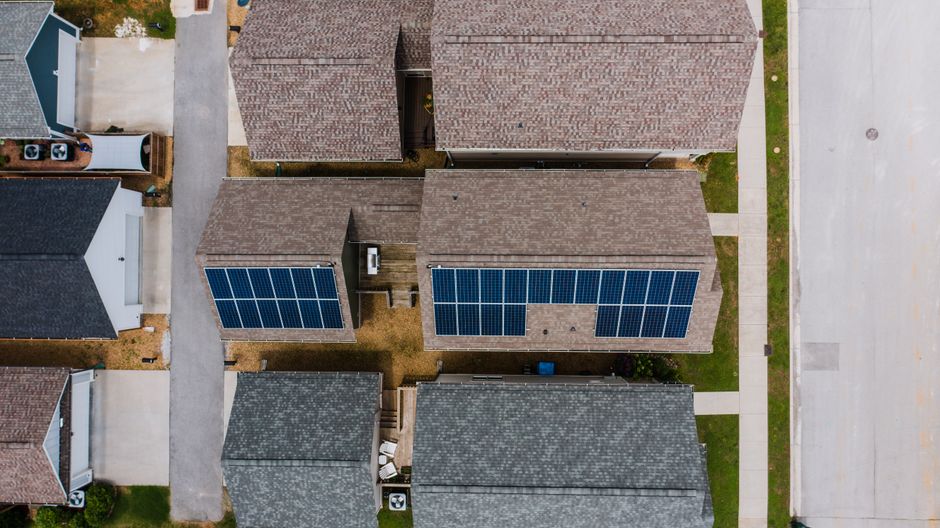
New Jersey is not a sunny state by U.S. standards, but it is an expensive one, and for solar the price of what you avoid buying often matters more than the sun. Our rough estimate: each kilowatt of panels makes around 1,140 kWh a year here (south-facing, tilted roofs usually do better than that horizontal figure). A 6 kW system would make roughly 6,800 kWh. At the July 2026 rate of 25.19¢, that power is worth up to about $1,700 a year if every kilowatt-hour offsets a kilowatt-hour you would have bought; at the year-to-date rate of 23.98¢, about $1,640. Those are upper-bound estimates, not promises; your own rate, roof and shade decide the real number. To see payback, divide the installed price on a quote by your yearly savings, then check the solar cost guide and the solar potential calculator.
Net metering is the reason that math works. New Jersey still credits exported power one-for-one at the retail rate and rolls credits month to month; whatever is left at the yearly true-up is paid at the lower avoided-cost rate, so systems sized to your own use come out best. The Board of Public Utilities held stakeholder sessions on net metering reform in 2024, but we found no successor tariff adopted as of October 2026. Read how it works in net metering explained.
Rooftop solar is already common in New Jersey: EIA counted about 199,800 net-metered home solar systems in 2024, about 1,380 MW, but only about 1,600 of them paired with a battery.
Confirmed state programs (check each program page; amounts change):
- SuSI Administratively Determined Incentive (ADI): 15 years of SREC-II payments for each MWh your system makes. For residential net-metered systems the value was $85/MWh for registrations through July 26, 2026 and $77/MWh from July 27, 2026; registrations stay open until the block fills or June 1, 2027. At $77/MWh, 6,800 kWh a year would be worth about $520 a year (our estimate). NJ Clean Energy Program.
- Sales tax exemption on solar energy equipment, including storage that is part of a solar system (NJ Treasury, Form ST-4).
The federal 25D tax credit ended for systems completed after December 31, 2025, so do not count on a federal credit in 2026. See energy incentives for the national picture and our solar guide for the basics.
Plug-in solar: The governor signed S2368/A4836 on September 1, 2026. It exempts plug-in systems up to 1,200 W from interconnection and metering requirements, and the governor’s release says landlords and HOAs can’t broadly prohibit them. News reports put the start date at March 1, 2027; until it takes effect, follow your utility’s rules.
Home batteries in New Jersey
Because full retail net metering already “stores” your summer surplus on the grid, a battery in New Jersey is mostly about backup rather than bill savings. That makes the question simple: how long do you want the essentials to run? A typical outage here lasts under two hours, which a single home battery covers easily; a two-day ice storm needs either a large battery bank charged by solar or a generator. Compare prices in home battery cost and read the basics in home batteries.
We found no state home-battery incentive that we could confirm as open in October 2026. The state sales tax exemption covers storage that is part of a solar energy system.
EV charging in New Jersey
New Jersey had 210,000 battery-electric cars and 61,900 plug-in hybrids registered by the end of 2025, against 7,044 public charging ports at 2,074 locations (AFDC). That is about 30 electric cars per public port, one of the higher ratios among states, which is a good reason to charge at home if you have a driveway.
Drive on another fuel? See every alternative fuel station in New Jersey: hydrogen, propane, natural gas, E85 ethanol, biodiesel and renewable diesel.
What it costs, by our estimate: a typical EV uses around 30 kWh per 100 miles, measured at the wall (a fueleconomy.gov-style figure). At 25.19¢, that is about $7.56 per 100 miles, or about $76 a month for 1,000 miles. A 30-mpg gas car at the U.S. average of $4.465 a gallon (EIA, late September 2026) costs about $14.88 per 100 miles. A time-of-use rate from your utility can lower the EV number; check the EV charging cost calculator with your own rate. A Level 2 charger needs a 240 V circuit and a permit, installed by a licensed electrician; see home EV charging. The federal 30C charger credit ended for chargers placed in service after June 30, 2026.
Off-grid, small wind and micro-hydro
Off-grid living is rare in a state this built up, but cabins in the northwest highlands and farm buildings in the south can make sense for a stand-alone system; start with off-grid power systems and the off-grid planner. NASA data shows about 6.2 m/s average wind at 50 m near the center of the state but only 5.2 m/s around Newark; small turbines sit lower, where winds are weaker, so only open rural sites are worth measuring (DOE suggests at least 4.5 m/s at hub height for a grid-tied turbine). Read wind energy and hydroelectric power for the basics; we have not checked state sources on micro-hydro.
Licensing and permits in New Jersey
Electrical contractors are licensed statewide by the Board of Examiners of Electrical Contractors (Division of Consumer Affairs), and home improvement contractors register with Consumer Affairs. There is no separate solar license. Check any contractor on the state license lookup before you sign. Permits come from your town’s construction office, and solar or battery systems that connect to the grid also need your utility’s interconnection approval before they are switched on.
Local guides in New Jersey
Utilities, rates, outage records, permit offices and local programs for each area:
Where we cover in New Jersey
- North Jersey: Newark, Jersey City, Clifton, Wayne, Paramus, Morristown
- Central Jersey: Edison, Woodbridge, Bridgewater, Princeton, Hamilton Township
- South Jersey: Cherry Hill, Mount Laurel
- Jersey Shore: Toms River, Brick Township
Local pages will follow as we verify local information and installers.
Get quotes in New Jersey
Are you a licensed installer in New Jersey? Join SolutionEnergy and get requests from homeowners and businesses →
Tell us about your project and we will connect you with a licensed, independent installer who serves New Jersey. It is free, there is no obligation, and only the installer you choose gets your details. See how it works.
New Jersey energy FAQ
Does New Jersey still have net metering?
Yes. Exported solar power is credited one-for-one at the retail rate and credits roll over month to month. At the annual true-up, leftover credits are paid at the utility’s avoided-cost rate, which is much lower. The BPU discussed reforms in 2024, but we found no successor tariff in place as of October 2026.
Is balcony solar legal in New Jersey?
A law signed on September 1, 2026 allows plug-in solar up to 1,200 W without the usual interconnection and metering requirements. It is not in effect yet; news reports say March 1, 2027. Until then, a plug-in system still falls under your utility’s interconnection rules.
How much are New Jersey SRECs worth in 2026?
Under the ADI program, a residential net-metered system registered from July 27, 2026 earns $77 per MWh for 15 years, down from $85 earlier in the year. For a system making 6,800 kWh a year, that is roughly $520 a year by our estimate. Check the program page; values step down.
Do I need a generator or a battery in New Jersey?
For the short outages most New Jersey homes see, a battery or a power station is usually enough. If you are in an area that loses power for days after winter storms or high wind, or you rely on a sump or well pump, a generator on a transfer switch, or a large battery with solar, is the safer plan.
Is there a federal solar tax credit in New Jersey in 2026?
No. The federal residential clean energy credit (25D) ended for systems completed after December 31, 2025. In 2026 New Jersey homeowners rely on the state’s SREC-II payments, the sales tax exemption and full retail net metering instead.
Sources
Electricity prices: EIA Electric Power Monthly, Tables 5.6.A and 5.6.B (July 2026, preliminary). Outages, utilities and solar counts: EIA-861 (2024). Sun and wind: NASA POWER climatology 2001–2020. Hazards: FEMA National Risk Index (December 2025). Electric cars and charging: AFDC (registrations 2025; stations read October 3, 2026). Net metering: NJ Board of Public Utilities. Incentives: NJ Clean Energy Program, NJ Division of Taxation. Plug-in solar: Office of the Governor (September 1, 2026). Licensing: NJ Division of Consumer Affairs. Generator safety: CPSC. Checked October 2026.