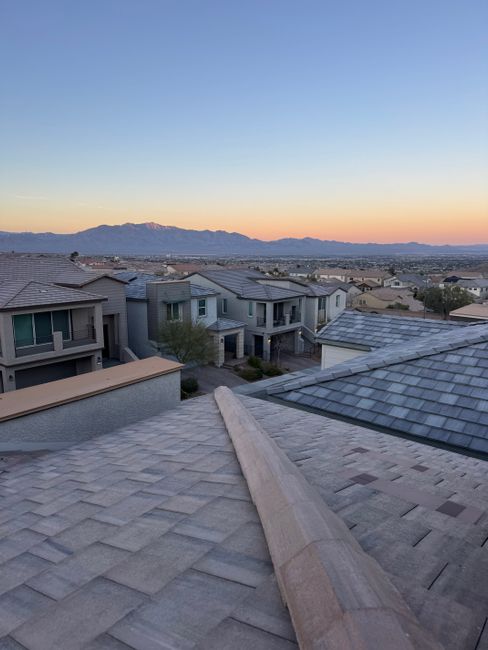
In short: Nevada has strong sun and cheap power. Las Vegas panels make about 1,640 kWh per kW a year (our estimate), but homes paid only 12.8 cents per kWh in July 2026 (EIA), and new solar exports earn 75% of retail. Outages are short, but heat waves and wildfire rate relatively high, and NV Energy runs planned fire-safety shutoffs.
Nevada at a glance
- Residential electricity price: 12.77¢/kWh in July 2026, about 30% below the U.S. average of 18.31¢. July 2025 was 12.39¢. The January to July 2026 average was higher, 13.53¢ (EIA Electric Power Monthly, September 2026; preliminary).
- Outages (2024): 159 minutes per customer with major events and 64 without. Customers averaged 1.11 interruptions, or 0.66 without major events (EIA-861).
- Solar resource: Las Vegas averages 5.61 kWh/m² a day, and central Nevada 5.03 (NASA POWER, 2001–2020). That is roughly 1,640 kWh per installed kW a year in Las Vegas, our estimate.
- Net metering: net billing. New NV Energy customers with systems up to 25 kW get exports credited at 75% of the retail rate (Tier 4), locked in for 20 years. NV Energy says a residential daily demand charge starts in January 2027 in southern Nevada only (about $0.14 per kW per day); solar exports are still netted monthly. Check the details with NV Energy.
- Plug-in (balcony) solar law: none as of October 2026.
- EVs and charging: 85,600 battery EVs and 16,100 plug-in hybrids through 2025. The state had 2,736 public ports, 1,184 of them DC fast, at 627 locations (AFDC, October 3, 2026).
- Main utilities: Nevada Power Co (70% of customers, the south) and Sierra Pacific Power Co (26%, the north), which together make up NV Energy. Valley Electric Association and Overton Power District No. 5 follow (EIA-861, 2024).
- Weather hazards (FEMA NRI, December 2025): wildfire and heat wave are rated relatively high, winter weather relatively moderate, strong wind relatively low. Cold wave, ice storm and tornado are very low, with no expected hurricane losses.
- Planned shutoffs (PSPS): yes. NV Energy runs Public Safety Outage Management, its PSPS program, in high fire-risk areas under its Natural Disaster Protection Plan.
Backup power in Nevada
Nevada’s grid is reliable on ordinary days: about an hour of outage per customer in 2024. Major events raised that to about 2.6 hours. So in Nevada, the reason for backup is less about how often the power goes out and more about when it does:
- Heat: FEMA rates heat waves relatively high. A summer outage in Las Vegas or Henderson is a health risk, especially for older adults and people with medical conditions. Running central air on backup takes a large battery or generator. A smaller system that cools one room, runs fans and the fridge, and keeps medicine cold is often the realistic target. Model it with the battery backup calculator.
- Fire-safety shutoffs: in high fire-risk areas, NV Energy can turn off power in dangerous fire weather. A home battery charged by solar is a natural fit here.
- Generators: a generator covers long outages, but in fire weather it is also an ignition source. Keep it on bare ground or pavement, clear of dry brush. Size one with the generator sizing tool.
- Apartments and condos: a portable power station keeps phones, Wi-Fi, a CPAP and a fan going. Many units charge from a portable solar panel on a balcony.
Generator safety, from the Consumer Product Safety Commission: run it outdoors only, at least 20 feet from the house, with the exhaust pointed away from windows, doors and vents. Never run it in a garage or carport, and keep battery-backed carbon monoxide alarms on every level. Let it cool before refueling, especially in summer heat. A licensed contractor should install the transfer switch or interlock.
Solar in Nevada
Solar in Nevada is a contest between excellent sun and low prices. Each installed kW in Las Vegas makes about 1,640 kWh a year by our estimate, among the highest in the country. Used at home at 12.77¢, that is worth about $209 a year per kW. Exported at 75% of retail, the same kWh earn about $157 (both estimates). A 6 kW system would make roughly 9,840 kWh, worth somewhere between $940 and $1,260 a year depending on how much you use at home. Summer air conditioning lines up well with solar output, which pushes many homes toward the higher end.
Nevadans have embraced it anyway. EIA counted 134,257 residential solar systems in Nevada in 2024, about 1,021 MW in all. Before you sign, check two things:
- Your export tier: new customers get 75% of retail for exports, locked for 20 years. Ask the installer to show your tier and credit in writing.
- The 2025 rate changes: NV Energy’s own pages still describe monthly netting for new solar customers, and it says a residential daily demand charge starts in January 2027 in southern Nevada only, at about $0.14 per kW per day. Parts of it have been challenged, and reported details differ by territory. Ask NV Energy how it applies to you, and make sure any payback estimate uses the current tariff.
Confirmed state incentive (check the program page, amounts change): under NRS 361.079, the value a qualified residential renewable energy system adds to your home is exempt from property tax. The federal 25D credit ended for systems completed after December 31, 2025. Use the solar potential tool, the solar cost guide and our net metering and net billing explainer, and see the solar hub and incentives. Nevada has no plug-in solar law.
Home batteries in Nevada
EIA counted 3,143 Nevada solar homes with a battery in 2024, about 2.3% of the total. With exports at 75% of retail, storing solar for the evening adds a modest 25% to the value of each stored kWh. If the new demand charge applies to you, a battery that trims your evening peak may be worth more. The bigger reasons for a battery in Nevada are fire-safety shutoffs and summer heat outages. NV Energy says its rooftop solar and battery incentives are no longer available. We could not confirm whether it has reopened, so check NV Energy’s page. Compare options on the battery cost page and the batteries hub. Battery heat matters too: a garage in a Las Vegas summer can get hotter than many batteries are rated for, so ask about placement.
EV charging in Nevada
Nevada’s EV numbers have grown faster than its public chargers. There are about 31 battery EVs per public port (85,600 BEVs, 2,736 ports), one of the most crowded ratios in our state data, so home charging matters. At about 30 kWh per 100 miles (a fueleconomy.gov-style assumption) and 12.77¢, home charging costs about $3.85 per 100 miles, roughly $460 for 12,000 miles a year (an estimate). Midday solar charging, or a time-of-use rate, can lower that. Try the EV charging cost calculator.
Drive on another fuel? See every alternative fuel station in Nevada: hydrogen, propane, natural gas, E85 ethanol, biodiesel and renewable diesel.
The federal 30D credit ended September 30, 2025, and 30C ended for chargers placed in service after June 30, 2026. A Level 2 charger needs a 240 V circuit installed by a licensed contractor. See the EV charging hub.
Off-grid, small wind and micro-hydro
Off-grid in Nevada almost always means solar plus batteries, with a generator for cloudy stretches. Small wind is a weak option at typical sites. NASA’s 50 m average is about 4.6 m/s at the center of the state and 5.2 m/s around Las Vegas, near the Department of Energy’s rough 4.5 m/s grid-tied threshold. Our hint is “poor at typical sites; needs a measured exceptional site” (an estimate). We have no state micro-hydro data. See the off-grid guide, wind energy and hydroelectric power.
Licensing and permits in Nevada
The Nevada State Contractors Board (NSCB) licenses contractors statewide. Electrical work falls under the C-2 classification and its subclassifications, including solar. Verify any installer with the NSCB license search. Individual electricians are licensed locally, for example by Clark County or the City of Las Vegas. Building and electrical permits come from your city or county, and solar and batteries need NV Energy’s interconnection approval before they switch on.
Local guides in Nevada
Utilities, rates, outage records, permit offices and local programs for each area:
Where we cover in Nevada
- Las Vegas: Las Vegas, Henderson, North Las Vegas, Boulder City, Pahrump
- Reno–Sparks: Reno, Sparks, Fernley
- Carson City: Carson City
Local pages will follow as we verify local information and installers.
Get quotes in Nevada
Are you a licensed installer in Nevada? Join SolutionEnergy and get requests from homeowners and businesses →
Tell us about your project and we will connect you with a licensed, independent installer who serves Nevada. It is free, there is no obligation, and only the installer you choose gets your details. Here is how it works.
Nevada energy FAQ
Does Nevada still have net metering?
In a reduced form. New NV Energy customers with systems up to 25 kW are in Tier 4, where exports earn 75% of the retail rate, locked for 20 years. NV Energy still nets solar monthly, and it says a residential daily demand charge starts in January 2027 in southern Nevada only. Ask NV Energy for the current rules before signing.
Is solar worth it in Las Vegas with such cheap power?
It can be, because the sun is so strong. We estimate about 1,640 kWh per installed kW a year in Las Vegas, worth roughly $157 to $209 a year at July 2026’s 12.77¢, depending on how much you use at home. Divide a quote’s net price by that range for a simple payback, and redo the math with the current tariff.
What is NV Energy’s Public Safety Outage Management?
It is NV Energy’s PSPS program: planned power shutoffs in high fire-risk areas during dangerous fire weather, under its Natural Disaster Protection Plan. If you live in a mapped risk area, sign up for alerts, and keep a battery or power station charged for medical devices, the fridge and communication.
Is there a Nevada battery rebate in 2026?
NV Energy no longer offers rooftop solar or battery incentives: its solar page says incentives are “no longer available”, and its handbook now covers batteries installed without an incentive. We could not confirm whether it has reopened. Check NV Energy’s energy storage page, as program amounts and status change.
Sources
Prices: EIA Electric Power Monthly, Tables 5.6.A and 5.6.B, September 2026 release (July 2026, preliminary). Reliability, utilities and solar counts: EIA-861, 2024. Sunlight and wind: NASA POWER, 2001–2020. Hazards: FEMA National Risk Index, December 2025. EVs and chargers: AFDC, registrations through 2025 and stations read October 3, 2026. State rules: Public Utilities Commission of Nevada decisions as reported in 2025, NRS 361.079, NV Energy’s PSPS and storage pages, and the Nevada State Contractors Board, checked October 3, 2026. Small wind: U.S. DOE Small Wind Guidebook.