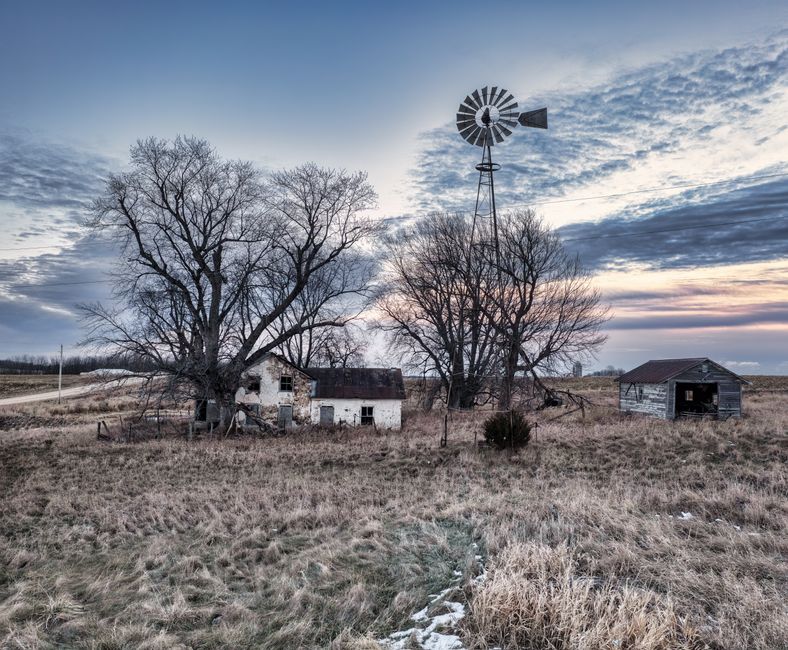
In short: North Dakota has cheap power, 13.4¢/kWh in July 2026, about 27% below the U.S. average (EIA), and one of the steadier grids, with about 99 outage minutes per customer in 2024. The real risk is winter: FEMA rates winter weather very high. Backup for heat matters more here than solar savings, and the wind is unusually strong.
North Dakota’s numbers point in a different direction from most states. Low prices make solar a slow payback, but a short outage at twenty below is a serious event, and the open prairie has wind that most of the country lacks. This page lays out the state’s own data, with sources, and what it means for your home.
North Dakota at a glance
- Home electricity price: 13.41¢/kWh in July 2026 vs 18.31¢ U.S. average; 12.36¢ for January to July 2026 (EIA, preliminary).
- Outages: about 99 minutes per customer in 2024 including major events, 84 minutes without; about 0.9 interruptions per customer (EIA-861, 2024).
- Sun: 3.91 kWh/m² a day in Fargo; roughly 1,140 kWh a year per kW of panels (our estimate from NASA POWER data).
- Net metering: for customers of the investor-owned utilities only (Xcel Energy, Montana-Dakota, Otter Tail), up to 100 kW; excess bought at avoided cost.
- Plug-in (balcony) solar: no state law.
- Electric cars: 1,900 battery-electric cars (2025) and 283 public charging ports, 145 of them DC fast (AFDC, October 2026).
- Main utilities: Xcel Energy (Northern States Power, 21% of customers), Montana-Dakota Utilities (21%), Cass County Electric Cooperative (13%), Otter Tail Power (13%) (EIA-861, 2024).
- Top weather hazards: winter weather (very high); ice storms and cold waves (relatively high); tornadoes and strong wind (relatively moderate). Overall expected losses are rated very low (FEMA National Risk Index, December 2025).
- Wildfire power shutoffs: Xcel Energy has reportedly published a North Dakota shutoff plan.
Backup power in North Dakota
The statistics are reassuring: in 2024, storms barely moved the outage numbers (99 minutes with major events, 84 without), and customers averaged less than one interruption a year. But averages hide what matters here. A blizzard or ice storm that drops lines for a day in January can freeze pipes and leave a house with no heat, because most furnaces and boilers, even gas ones, need electricity for their blowers, pumps and controls. So the backup question in North Dakota is mostly: “How do I keep the heat on?”
- A generator on a transfer switch is the most common answer for rural homes and farms, because it can run the furnace, well pump and freezer for days. Natural gas or propane avoids storing gasoline through winter. See home generators and the generator sizing calculator.
- A home battery can carry a gas furnace’s blower and controls plus the fridge and lights through a typical outage. Check the battery’s rated operating temperature; many must sit in a heated space. See home batteries and the battery backup calculator.
- A portable power station keeps phones, internet, lights and a CPAP going and is useful in a vehicle during winter travel. See portable power stations.
CPSC warns that winter storms bring deadly carbon monoxide risks, often because generators are moved close to the house to keep them out of the snow. Run it outdoors only, at least 20 feet from the house, exhaust pointed away from windows, doors and vents, and never in a garage, even with the door open (CPSC). Keep snow clear of the exhaust, and put battery or battery-backup CO alarms on every level. A licensed electrician should install the transfer switch or interlock, with a permit.
Solar in North Dakota
North Dakota gets about as much sun over a year as New Jersey or Ohio, roughly 1,140 kWh per kilowatt of panels by our estimate, with cold, clear days helping panel efficiency. What holds solar back is price. A 6 kW system making about 6,800 kWh a year would be worth up to about $920 at the July 2026 rate of 13.41¢, or about $850 at the year-to-date rate of 12.36¢, if every kilowatt-hour offset power you would have bought. That is less than half what the same system is worth in New York. These are estimates, not promises. Solar is still rare here: EIA counted only 81 net-metered home solar systems in the whole state in 2024. Check prices in the solar cost guide and your roof in the solar potential calculator.
Net metering depends on who your utility is. The Public Service Commission’s 1991 rule requires the investor-owned utilities (Xcel Energy, Montana-Dakota and Otter Tail) to net meter systems up to 100 kW, netting each month and buying any excess at avoided cost, which is well below the retail price. Cooperative and municipal utilities are not covered by that rule, and co-ops such as Cass County Electric serve many homes, so ask yours for its own policy before you design a system. Background: net metering explained.
Confirmed state program (check the program page; rules change):
- Property tax exemption for solar, wind and geothermal devices, including storage, for five years after installation. You apply each year to your local assessor (N.D.C.C. 57-02-08(27)). ND Office of State Tax Commissioner.
The federal 25D credit ended for systems completed after December 31, 2025. See energy incentives and the solar guide. North Dakota has no plug-in (balcony) solar law; utility interconnection rules apply.
Home batteries in North Dakota
With low prices and excess solar bought only at avoided cost, a battery can store midday solar for evening use, but the savings at 13¢ power are small. The stronger case is backup: keeping a furnace, sump pump and fridge running through a winter outage without fuel. EIA recorded no home solar systems paired with batteries in North Dakota in 2024, so you will be early. The state’s five-year property tax exemption lists storage among the covered devices. Prices and sizing: home battery cost and home batteries.
EV charging in North Dakota
Electric cars are rare: 1,900 battery-electric cars and 1,100 plug-in hybrids at the end of 2025 (AFDC). The public network is small but fast-charging heavy: 283 ports at 108 locations, and 145 of those ports are DC fast, more than half. That is about 7 electric cars per public port, but distances between chargers are long, so plan routes in winter.
Drive on another fuel? See every alternative fuel station in North Dakota: hydrogen, propane, natural gas, E85 ethanol, biodiesel and renewable diesel.
Home charging is cheap at North Dakota rates. Our estimate, using about 30 kWh per 100 miles (a fueleconomy.gov-style assumption), is about $4.02 per 100 miles at 13.41¢, roughly $40 for 1,000 miles a month, against about $14.88 per 100 miles for a 30-mpg car at the U.S. average of $4.465 a gallon (EIA, late September 2026). Cold weather raises an EV’s use per mile, so winter months cost more. Try the EV charging cost calculator and read home EV charging. A Level 2 charger in a garage needs a licensed electrician and a permit. The federal 30C charger credit ended for chargers placed in service after June 30, 2026.
Off-grid, small wind and micro-hydro
Here North Dakota stands out. NASA’s 20-year data shows about 7.3 m/s average wind at 50 m near the center of the state, 7.0 m/s near Fargo, and about 5.2 m/s even at 10 m. DOE’s small wind guidebook suggests at least 4.5 m/s at hub height for a grid-tied turbine and 4 m/s for an off-grid hybrid, so open farm and ranch sites may clear that bar, which is rare. Turbines still need tall towers clear of trees and buildings, county zoning approval, and regular maintenance; and outside the investor-owned utilities, check how your co-op treats a turbine before you buy. For shops, cabins and stock-tank pumps far from a line, a solar-wind-battery hybrid with a generator is worth pricing. Start with wind energy, off-grid power systems and the off-grid planner; hydroelectric power covers water, though we have not checked state micro-hydro sources.
Licensing and permits in North Dakota
Electricians and electrical contractors are licensed statewide by the North Dakota State Electrical Board; contractors also hold a license from the Secretary of State. Check a contractor in the State Electrical Board’s contractor search. Permits come from your city or county, and the utility must approve interconnection before solar, a turbine or a grid-tied battery is switched on.
Local guides in North Dakota
Utilities, rates, outage records, permit offices and local programs for each area:
Where we cover in North Dakota
- Fargo: Fargo, West Fargo
- Bismarck–Mandan: Bismarck, Mandan
- Grand Forks: Grand Forks
- Western North Dakota: Minot, Williston, Dickinson
Local pages will follow as we verify local information and installers.
Get quotes in North Dakota
Are you a licensed installer in North Dakota? Join SolutionEnergy and get requests from homeowners and businesses →
Tell us about your project and we will connect you with a licensed, independent installer who serves North Dakota. It is free, there is no obligation, and only the installer you choose gets your details. See how it works.
North Dakota energy FAQ
Does North Dakota have net metering?
Only partly. A Public Service Commission rule requires Xcel Energy, Montana-Dakota and Otter Tail to net meter systems up to 100 kW, netting monthly and buying any excess at avoided cost. Electric cooperatives and city utilities are not covered by that rule, so their customers need to ask their utility for its policy.
Is solar worth it in North Dakota?
It is a slower payback than in most states because power is cheap: by our estimate a 6 kW system’s output is worth up to about $850 to $920 a year at 2026 rates. It can still make sense with a good roof, a fair price and the five-year property tax exemption. Compare the quote to those savings.
Is a small wind turbine practical in North Dakota?
More than almost anywhere else. NASA data shows average winds of about 7 m/s at 50 m across much of the state, above DOE’s suggested minimums. Open rural sites with a tall tower, county approval and a utility that accepts the connection are the candidates; measure your site first.
What backup do I need to keep the furnace running?
A gas furnace’s blower and controls often need only a few hundred watts, with a short starting surge, so a mid-size portable generator or a home battery on a transfer switch can run it. The switch must be installed by a licensed electrician. Check your furnace label and use our sizing calculators.
Are there solar incentives in North Dakota?
The confirmed one is a five-year property tax exemption for solar, wind, geothermal and storage devices, applied for each year through your assessor. The federal 25D credit ended for systems completed after 2025, and we found no state rebate.
Sources
Electricity prices: EIA Electric Power Monthly, Tables 5.6.A and 5.6.B (July 2026, preliminary). Outages, utilities and solar counts: EIA-861 (2024). Sun and wind: NASA POWER climatology 2001–2020; DOE small wind guidebook. Hazards: FEMA National Risk Index (December 2025). Electric cars and charging: AFDC (registrations 2025; stations read October 3, 2026). Net metering: ND Public Service Commission rule (N.D. Admin. Code 69-09-07). Incentive: ND Office of State Tax Commissioner. Licensing: ND State Electrical Board. Generator safety: CPSC. Checked October 2026.