In short: Missouri faces two extremes. FEMA rates both heat waves and ice storms very high here. Homes paid about 16.1 cents per kWh in July 2026, well above the 14 cents averaged since January (EIA), and lost about 3.7 hours of power in 2024. Plan backup power for both summer and winter. Solar gets monthly retail netting but no state incentives.
Missouri at a glance
- Residential electricity price: 16.09¢/kWh in July 2026, against a U.S. average of 18.31¢. July 2025 was 15.56¢. The January to July 2026 average was only 13.96¢, so summer bills run noticeably higher per kWh (EIA Electric Power Monthly, September 2026; preliminary).
- Outages (2024): 224 minutes per customer with major events and 106 without. Customers averaged 1.19 interruptions, or 0.92 without major events (EIA-861).
- Solar resource: Kansas City and the center of the state both average about 4.2 kWh/m² a day (NASA POWER, 2001–2020). That works out to roughly 1,240 kWh per installed kW a year, our estimate.
- Net metering: yes, for systems under 100 kW at every utility (Net Metering and Easy Connection Act). Usage and production are netted 1:1 at retail each month. Any monthly surplus is credited at avoided cost, and credits expire after 12 months. Total net metering is capped at 5% of utility peak (Missouri DNR).
- Plug-in (balcony) solar law: none as of October 2026.
- EVs and charging: 43,700 battery EVs and 19,600 plug-in hybrids through 2025. The state had 3,310 public ports (901 DC fast) at 1,324 locations (AFDC, October 3, 2026).
- Main utilities: Union Electric Co, which operates as Ameren Missouri (41% of customers), Evergy Missouri West (11%), Evergy Metro (10%) and Empire District Electric (5%) (EIA-861, 2024).
- Weather hazards (FEMA NRI, December 2025): ice storm and heat wave are rated very high. Winter weather, cold wave, tornado and strong wind are relatively high, wildfire relatively low.
- Planned shutoffs (PSPS): none found at Ameren Missouri, Evergy or Liberty.
Backup power in Missouri
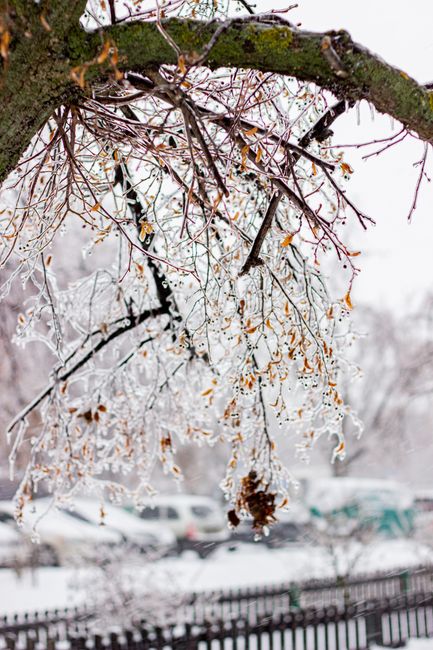
Missouri’s outage numbers sit near the middle of the states we track. About 1.8 hours on ordinary days in 2024, 3.7 hours with major events, and an average outage of around three hours (our arithmetic on EIA’s figures). What sets the state apart is the timing. FEMA rates heat waves very high, so a summer outage can be a health risk for older adults, babies and anyone with a medical condition. It rates ice storms very high too, and freezing rain is what brings down lines and limbs across whole neighborhoods. Tornadoes and strong winds, both relatively high, add spring and summer outages.
- Summer heat outage: keeping central air running takes a large battery or a generator of matching size. Many homes choose a smaller backup that runs one room’s window unit or mini-split, fans, the fridge and medical equipment. Use the battery backup calculator to see what fits.
- Ice storm lasting days: a generator on natural gas or propane, or a dual-fuel portable unit with a transfer switch, can run as long as fuel lasts. Size it with the generator sizing tool. A home battery covers the first hours quietly and works best alongside solar or a generator to recharge it.
- Simple start: a portable power station for phones, lights, Wi-Fi, a CPAP and fans.
Generator safety, from the Consumer Product Safety Commission: run it outdoors only, at least 20 feet from the house, with the exhaust pointed away from windows, doors and vents. Never run it in a garage, basement or crawl space. Install battery-backed carbon monoxide alarms. In ice, keep the unit dry under an open-sided cover, never by moving it indoors. A licensed electrician should install the transfer switch or interlock.
Solar in Missouri
Missouri’s net metering is useful but less generous than full retail rollover. Within each month, every solar kWh offsets a kWh you would have bought at retail. Only the surplus at month’s end drops to avoided cost, and unused credits expire after 12 months. So a system sized to your monthly use, not oversized, gets the most value.
For a rough figure, each installed kW makes about 1,240 kWh a year by our estimate. At July 2026’s 16.09¢ that is worth about $200 a year. At the lower January to July average of 13.96¢ it is about $173. A 6 kW system would make about 7,440 kWh, worth roughly $1,040 to $1,200 a year if it all offsets retail power (estimates, not promises). If your utility’s summer rates are higher, solar’s busiest months line up with its most valuable kWh.
Incentives are thin. We found no active state solar incentive for 2026. Missouri’s solar property tax exemption was struck down by the Missouri Supreme Court in 2022, and Ameren Missouri’s solar rebate has ended. The federal 25D credit ended for systems completed after December 31, 2025. Payback rests on bill savings alone, so ask for quotes, divide the net price by the yearly savings, and compare. The solar potential tool, the solar cost guide and our net metering explainer help. More in the solar hub and on incentives.
Despite that, Missouri has an established solar market. EIA counted 30,022 residential net-metered systems in 2024, totaling about 275 MW. There is no plug-in solar law, so plug-in kits fall under utility interconnection rules.
Home batteries in Missouri
About 2.5% of Missouri’s net-metered solar homes had a battery in 2024 (760 of 30,022, EIA). Monthly retail netting means a battery adds little to bill savings. Its value here is resilience: riding through ice-storm and heat-wave outages, and covering the hours after a tornado warning before crews restore power. Compare costs on the battery cost page and see system types in the batteries hub. We found no state battery program for 2026.
EV charging in Missouri
Missouri has about 13 battery EVs per public charging port (43,700 BEVs, 3,310 ports), and 901 of those ports are DC fast. At home, about 30 kWh per 100 miles (a fueleconomy.gov-style assumption) at the July 2026 rate of 16.09¢ comes to about $4.80 per 100 miles, roughly $580 for 12,000 miles. At the lower year-to-date average it would be closer to $500 (estimates). Run your own numbers with the EV charging cost calculator.
Drive on another fuel? See every alternative fuel station in Missouri: hydrogen, propane, natural gas, E85 ethanol, biodiesel and renewable diesel.
The federal 30D EV credit ended September 30, 2025, and 30C ended for chargers placed in service after June 30, 2026. Level 2 chargers need a 240 V circuit from a licensed electrician, with a local permit. See the EV charging hub.
Off-grid, small wind and micro-hydro
Missouri’s small wind picture is mixed. NASA’s 50 m average is about 5.3 m/s at the center of the state and 6.7 m/s around Kansas City, above the Department of Energy’s rough 4.5 m/s threshold. Our hint is “fair, very site-dependent” (an estimate): open western prairie can work, while Ozark hollows and wooded lots usually won’t. Measure before buying. We have no state micro-hydro data. Start with the off-grid guide, then wind energy and hydroelectric power.
Licensing and permits in Missouri
Missouri has no required statewide electrical contractor license. Licensing is mostly local: St. Louis, Kansas City and other cities and counties license electricians and issue permits. Since 2018 there has also been an optional statewide electrical contractor license from the Division of Professional Registration, which some localities recognize. Ask your city or county building department what it requires, and ask the installer for the license number it accepts. Grid-tied solar and batteries also need your utility’s interconnection approval.
Local guides in Missouri
Utilities, rates, outage records, permit offices and local programs for each area:
Where we cover in Missouri
- St. Louis: St. Louis, Chesterfield, St. Charles, O’Fallon, Wentzville
- Kansas City: Kansas City, Lee’s Summit, Blue Springs, Independence
- Springfield: Springfield
- Columbia: Columbia, Jefferson City
Local pages will follow as we verify local information and installers.
Get quotes in Missouri
Are you a licensed installer in Missouri? Join SolutionEnergy and get requests from homeowners and businesses →
Tell us about your project and we will connect you with a licensed, independent installer who serves Missouri. It is free, there is no obligation, and only the installer you choose gets your details. Read how it works.
Missouri energy FAQ
Does Missouri have net metering?
Yes. Under the Net Metering and Easy Connection Act, every utility must offer it for systems under 100 kW. Use and production are netted 1:1 at retail each month. Any monthly surplus is credited at the utility’s avoided cost, and those credits expire after 12 months. The program is capped at 5% of utility peak demand (Missouri DNR).
Is there a solar property tax exemption in Missouri?
Not any more. The Missouri Supreme Court struck down the solar property tax exemption in 2022 (Johnson v. Springfield Solar 1). Ameren Missouri’s solar rebate has also ended, and the federal 25D credit ended for systems completed after 2025. In 2026, solar in Missouri pays back through bill savings.
Why is my Missouri electric rate higher in summer?
EIA’s figures show it: July 2026 averaged 16.09¢/kWh, against 13.96¢ for January to July. The gap points to seasonal pricing, which many utilities use. If yours charges more in summer, that helps solar, which produces most in the same months. Check your utility’s tariff for the exact seasonal rates.
Do I need a licensed electrician in Missouri?
For wiring a generator transfer switch, solar, a battery or an EV charger, yes. Licensing is mostly handled by cities and counties, such as St. Louis and Kansas City. An optional statewide contractor license has existed since 2018. Your local building department will tell you which license and permit it requires.
What backup power suits a Missouri heat wave?
FEMA rates heat waves very high in Missouri. Keeping central air on needs a large generator or a large battery system. A smaller, cheaper plan cools one room with a window unit or mini-split and runs fans, the fridge and medical devices. Size it with a calculator before buying.
Sources
Prices: EIA Electric Power Monthly, Tables 5.6.A and 5.6.B, September 2026 release (July 2026, preliminary). Reliability, utilities and solar counts: EIA-861, 2024. Sunlight and wind: NASA POWER, 2001–2020. Hazards: FEMA National Risk Index, December 2025. EVs and chargers: AFDC, registrations through 2025 and station counts read October 3, 2026. State rules: Missouri Department of Natural Resources (Net Metering and Easy Connection Act publication), checked October 3, 2026. Small wind: U.S. DOE Small Wind Guidebook.