In short: Mississippi has cheap electricity, about 14.5 cents per kWh in July 2026 (EIA), and some of the longest outages we track: 9.5 hours per customer in 2024, and 4.4 hours even without major storms. Rooftop solar exports earn only a few cents, so here backup power usually comes before solar.
Mississippi at a glance
- Residential electricity price: 14.54¢/kWh in July 2026, about a fifth below the U.S. average of 18.31¢. It was 13.58¢ a year earlier. The January to July 2026 average, 15.19¢, was higher than July itself (EIA Electric Power Monthly, September 2026; preliminary).
- Outages (2024): 567 minutes per customer including major events, and 266 minutes without them. Customers averaged 2.56 interruptions, or 1.96 on ordinary days (EIA-861).
- Solar resource: Jackson averages 4.64 kWh/m² a day (NASA POWER, 2001–2020), or roughly 1,350 kWh per installed kW a year by our estimate.
- Net metering: no. The Net Renewable Generation Rules (2022) credit exports at the utility’s avoided cost plus a 2.5¢/kWh adder, or 2¢ more for low-income customers. Entergy Mississippi’s credit has been reported at about 5.5¢ (7.5¢ low-income) since January 2025 (Mississippi Public Service Commission).
- Plug-in (balcony) solar law: none as of October 2026.
- EVs and charging: 7,200 battery EVs and 3,000 plug-in hybrids through 2025. The state had 703 public ports at 222 locations, and 345 of them are DC fast (AFDC, October 3, 2026).
- Main utilities: Entergy Mississippi (30% of customers) and Mississippi Power (12%), then Coast Electric Power Association and Singing River Electric Cooperative. Many other homes are served by co-ops (EIA-861, 2024).
- Weather hazards (FEMA NRI, December 2025): tornado and cold wave are rated relatively high. Hurricane, winter weather, ice storm, strong wind and heat wave are relatively moderate.
- Planned shutoffs (PSPS): none found at Entergy Mississippi, Mississippi Power or the co-ops.
Backup power in Mississippi
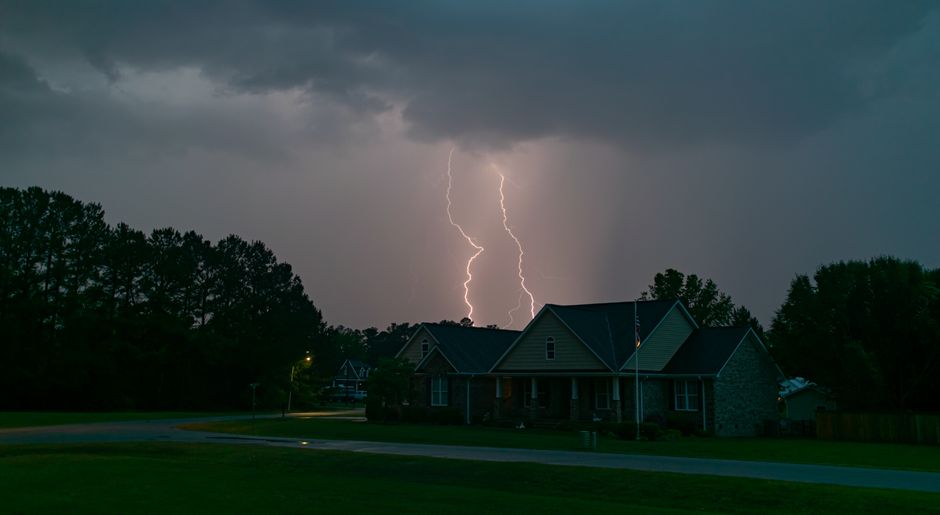
Many states look reliable until a big storm hits. Mississippi’s numbers are high even on ordinary days. Without major events, the average customer still lost about 4.4 hours of power in 2024, more than double the ordinary-day figure for most states on this site. Major events added about five more hours. Customers saw two to three interruptions in the year. Mississippi has no single dominant hazard: tornadoes and cold waves rate relatively high, hurricanes, ice and wind relatively moderate. So outages can come in any season.
- Several outages a year, a few hours each: a home battery switches over on its own and keeps the fridge, fans, lights, internet and medical devices going. In a hot summer outage, a window or mini-split air conditioner on battery is possible for some hours, if the battery is sized for it. Check with the battery backup calculator.
- Multi-day outages after a Gulf storm or a tornado outbreak: a generator is the practical answer. That can be a standby unit on natural gas or propane, or a portable one with a transfer switch. Find the size with the generator sizing tool.
- Renters and light needs: a portable power station is the simple start. Recharge it with a portable solar panel when the grid is down.
After hurricanes and tornadoes, carbon monoxide from generators is a well-known danger. Follow the Consumer Product Safety Commission’s rules: run a generator outdoors only, at least 20 feet from the house, with the exhaust pointed away from doors, windows and vents. Never run it in a garage, carport or under the house, and keep battery-powered CO alarms on each level. Only a licensed electrician should connect a generator to your wiring, through a transfer switch or interlock.
Solar in Mississippi
Mississippi has good sun but weak export credit. Each installed kW makes roughly 1,350 kWh a year by our estimate. Used at home in place of grid power, those kWh are worth the retail rate, about $196 a year per kW at 14.54¢. Sent to the grid at Entergy Mississippi’s reported 5.5¢, the same kWh would earn only about $74 (both estimates). Real systems fall somewhere between, depending on how much you use while the sun shines.
That is why few homes here have solar. EIA counted only 1,789 residential net-metered systems in Mississippi in 2024, and just 11 with a battery. We found no confirmed state solar incentive for 2026, and the federal 25D credit ended for systems completed after December 31, 2025. Low-income customers get a higher export adder under the PSC rules. Check the current figure with your utility, because amounts change.
Solar can still pay where a home uses a lot of daytime power (air conditioning, a pool pump, people at home during the day), or when it is paired with a battery for backup. Size the system to your daytime use rather than to cover the whole bill. Test any quote with the solar potential tool and the solar cost guide. Our page on net metering and net billing explains the difference. More in the solar hub and on incentives. Mississippi has no plug-in solar law.
Home batteries in Mississippi
In a state with long, frequent outages and low export credits, a battery has two jobs. It keeps the essentials on when the grid is down, and it stores midday solar for the evening instead of exporting it for a few cents. Without solar, a battery is purely backup, charged from the grid. Compare that with a generator on cost per hour of backup. Our battery cost page and the batteries hub lay out the options. We found no state battery program in 2026.
EV charging in Mississippi
Mississippi’s EV market is small, 7,200 battery EVs through 2025, but the public network is unusually fast. Nearly half of the 703 public ports are DC fast chargers, mostly useful on highway trips. At home, low power prices keep charging cheap. At about 30 kWh per 100 miles (a fueleconomy.gov-style assumption) and 14.54¢/kWh, it costs about $4.35 per 100 miles, roughly $520 for 12,000 miles a year (an estimate). Try the EV charging cost calculator.
Drive on another fuel? See every alternative fuel station in Mississippi: hydrogen, propane, natural gas, E85 ethanol, biodiesel and renewable diesel.
The 30D EV credit ended September 30, 2025, and the 30C charger credit ended for chargers placed in service after June 30, 2026. A Level 2 charger needs a 240 V circuit installed by a licensed electrician. See the EV charging hub.
Off-grid, small wind and micro-hydro
Small wind is a poor fit in most of Mississippi. NASA’s 50 m average is about 3.9 m/s at the center of the state and 4.4 m/s near Jackson, below the Department of Energy’s rough 4.5 m/s threshold for grid-tied turbines (an estimate). Off-grid camps and rural buildings are better served by solar, a battery and a backup generator. We have no state data on micro-hydro. See the off-grid guide, wind energy and hydroelectric power.
Licensing and permits in Mississippi
Mississippi has no statewide electrician license. The Mississippi State Board of Contractors (MSBOC) licenses commercial contractors, and residential contractors above certain dollar thresholds, including the electrical classification. Check a contractor on the MSBOC license search. Individual electricians are licensed by cities and counties, so ask your local building department what it requires, and ask the installer for a local license number. Permits come from the city or county. Grid-tied solar and batteries need interconnection approval from your utility or co-op.
Local guides in Mississippi
Utilities, rates, outage records, permit offices and local programs for each area:
Where we cover in Mississippi
- Jackson: Jackson, Madison, Ridgeland, Brandon
- Gulf Coast: Gulfport, Biloxi, Ocean Springs
- Memphis suburbs: Southaven, Olive Branch, Hernando
- Hattiesburg: Hattiesburg
- Tupelo: Tupelo
Local pages will follow as we verify local information and installers.
Get quotes in Mississippi
Are you a licensed installer in Mississippi? Join SolutionEnergy and get requests from homeowners and businesses →
Tell us about your project and we will connect you with a licensed, independent installer who serves Mississippi. It is free, there is no obligation, and only the installer you choose gets your details. See how it works.
Mississippi energy FAQ
Does Mississippi have net metering?
Not full retail net metering. Under the Public Service Commission’s Net Renewable Generation Rules (2022), exported power is credited at the utility’s avoided cost plus a 2.5¢/kWh adder, with 2¢ more for low-income customers. Entergy Mississippi’s credit has been reported at about 5.5¢ (7.5¢ low-income) from January 2025. Confirm the current figure with your utility.
Why are power outages so long in Mississippi?
The 2024 data show both frequent and long interruptions: 2.56 per customer and 567 minutes in total, or 266 minutes even without major storms (EIA). FEMA rates tornadoes and cold waves relatively high and hurricanes relatively moderate, so outages can come in any season.
Are there solar incentives in Mississippi in 2026?
We found no confirmed state solar incentive for 2026. The federal 25D credit ended for systems completed after December 31, 2025. The main extra is the low-income export adder in the PSC’s rules. Ask your utility or co-op about its own programs, and check the program page, because amounts change.
Do I need a licensed electrician for a generator hookup in Mississippi?
Yes. There is no statewide electrician license, but cities and counties license electricians and issue permits, and the State Board of Contractors licenses larger contracts. A transfer switch or interlock must be installed by a licensed electrician with a permit where one is required. Never backfeed through a dryer outlet.
Sources
Prices: EIA Electric Power Monthly, Tables 5.6.A and 5.6.B, September 2026 release (July 2026, preliminary). Reliability, utilities and residential solar counts: EIA-861, 2024. Sunlight and wind: NASA POWER, 2001–2020. Hazards: FEMA National Risk Index, December 2025. EVs and chargers: AFDC, registrations through 2025 and station counts read October 3, 2026. State rules: Mississippi Public Service Commission, Net Metering and Interconnection Rules, and the Mississippi State Board of Contractors, checked October 3, 2026. Small wind thresholds: U.S. DOE Small Wind Guidebook.