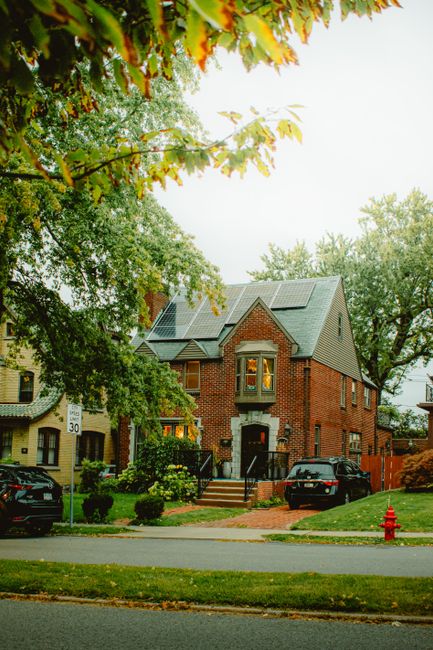
In short: New Hampshire’s electricity rose about 17% in a year, to 26.6 cents per kWh in July 2026 (EIA). In 2024, major storms left the average customer without power for about 15 hours, against roughly 2 hours on ordinary days. High prices favor solar, and long storm outages favor backup power. A plug-in solar law is signed but not yet in effect.
New Hampshire at a glance
- Residential electricity price: 26.60¢/kWh in July 2026, against 22.79¢ in July 2025 and a U.S. average of 18.31¢. The January to July 2026 average was 26.79¢ (EIA Electric Power Monthly, September 2026; preliminary).
- Outages (2024): 923 minutes per customer with major events and 132 without. Customers averaged 2.02 interruptions, or 0.98 without major events (EIA-861; utilities reporting under the IEEE 1366 standard alone show 736 and 84 minutes).
- Solar resource: Manchester averages 3.81 kWh/m² a day (NASA POWER, 2001–2020). That is roughly 1,110 kWh per installed kW a year, our estimate.
- Net metering: modified. Under the NEM 2.0 tariff (since 2017), exports from small systems are credited for energy supply, transmission and 25% of distribution, not the full retail rate. A November 2024 PUC order (DE 22-060) kept NEM 2.0 and allowed interconnection application fees from 2025.
- Plug-in (balcony) solar law: signed but not yet in effect. SB 540 (2026) covers systems up to 1,200 W, with part of it effective January 1, 2027. Use is not legal until NH DOE certifies a standard and codes are amended (City of Dover).
- EVs and charging: 16,100 battery EVs and 9,500 plug-in hybrids through 2025. The state had 819 public ports, 344 of them DC fast, at 302 locations (AFDC, October 3, 2026).
- Main utilities: Public Service Co of New Hampshire (Eversource) serves 72% of customers, then New Hampshire Electric Cooperative (11%), Unitil (11%) and Liberty Utilities (6%) (EIA-861, 2024).
- Weather hazards (FEMA NRI, December 2025): winter weather and ice storm are rated relatively moderate. Hurricane, cold wave, tornado and strong wind are relatively low and wildfire very low, for an overall rating of very low.
- Planned shutoffs (PSPS): none found at Eversource, Liberty or Unitil.
Backup power in New Hampshire
New Hampshire’s numbers seem to contradict each other. FEMA rates the state’s overall expected weather losses very low. Yet in 2024 the average customer lost about 15 hours of power once major events are counted, nearly seven times the ordinary-day figure of about 2.2 hours. The two can both be true: a few large storms can black out wide areas for long stretches without causing large property losses, and a single year can be unusual. Either way, when the power fails here it can stay off for a long time. Dividing minutes by interruptions gives an average outage of roughly seven and a half hours (our arithmetic on EIA’s figures).
- Multi-day storm outages: a generator is the long-duration tool. That can be a standby unit on propane or natural gas, or a portable one with a transfer switch. Plan for the furnace or boiler, well pump, sump pump and fridge with the generator sizing tool.
- Silent backup for the first hours: a home battery takes over automatically. With solar it can recharge between storms, though less in winter. Size it with the battery backup calculator.
- Apartments and short gaps: a portable power station for lights, phones, internet and a CPAP.
Use the generator safely (Consumer Product Safety Commission): outdoors only, at least 20 feet from the house, with the exhaust pointed away from windows, doors and vents. Never use it in a garage, barn or mudroom, even with doors open. Keep snow cleared from the exhaust, and fit battery-powered carbon monoxide alarms on every level. A licensed electrician should install the transfer switch or interlock.
Solar in New Hampshire
New Hampshire solar works mainly because power is expensive. Panels in Manchester make about 1,110 kWh per installed kW a year by our estimate. At 26.6¢, a kW whose output you use at home is worth about $295 a year (an estimate). A 6 kW system would make about 6,660 kWh, worth up to about $1,770 a year at July 2026 prices. The price jump helps here: the same output was worth about 14% less at July 2025’s 22.79¢.
Exports are worth less. Under NEM 2.0, power you send to the grid earns credit for supply, transmission and only a quarter of the distribution charge, so each exported kWh is worth less than the retail price. How much less depends on your utility’s rates. Ask the installer to model your actual use and export split with your utility’s current NEM 2.0 credit, and note that interconnection applications can now carry a fee (PUC order, November 2024).
Incentives: we could not confirm a state solar rebate for 2026. Third-party sources say the old residential rebate ($0.20/W up to $1,000) was ended in 2024, and the NH Department of Energy page would not load to confirm either way. New Hampshire law reportedly lets towns adopt their own property tax exemption for solar and wind (RSA 72:62), with the amount set locally. Ask your town assessor. The federal 25D credit ended for systems completed after December 31, 2025. Test quotes with the solar potential tool and the solar cost guide, read how net metering works, and see the solar hub and incentives.
Plug-in solar: New Hampshire is one of the few states with a plug-in solar law, SB 540 of 2026, for systems up to 1,200 W. It is not usable yet. Part of the law takes effect January 1, 2027, and the City of Dover’s energy commission and electrical inspector have warned that use is not legal until NH DOE certifies a standard and codes are amended. Until then, a plug-in kit still needs your utility’s approval.
Home batteries in New Hampshire
EIA counted 718 New Hampshire solar homes with a battery in 2024, about 3% of the state’s 22,503 net-metered residential systems. Two features of the state support a battery. Exports earn less than retail under NEM 2.0, so storing midday solar for the evening has some value. And storm outages are long, so a battery is real backup. In deep winter, solar recharge is limited, so many homes pair a battery with a small generator for the longest outages. Compare costs on the battery cost page and options in the batteries hub. We found no confirmed state battery program for 2026. Ask your utility about any of its own.
EV charging in New Hampshire
At about 30 kWh per 100 miles (a fueleconomy.gov-style assumption) and 26.6¢/kWh, home charging costs about $8 per 100 miles, roughly $960 for 12,000 miles a year (an estimate; winter raises it). That is one reason EV owners here look at solar. The public network is small but quick: 819 ports, 42% of them DC fast, about 20 battery EVs per port. Run your own figures with the EV charging cost calculator.
Drive on another fuel? See every alternative fuel station in New Hampshire: hydrogen, propane, natural gas, E85 ethanol, biodiesel and renewable diesel.
The federal 30D credit ended September 30, 2025, and 30C ended for chargers placed in service after June 30, 2026. A Level 2 charger needs a 240 V circuit installed by a licensed electrician, with a permit. Ask your utility about EV or time-of-use rates. See the EV charging hub.
Off-grid, small wind and micro-hydro
Small wind is a poor fit at most New Hampshire homes. NASA’s 50 m average is about 4.4 to 4.5 m/s at both the center of the state and Manchester, at or below the Department of Energy’s rough 4.5 m/s grid-tied threshold. Hilltops can be windier, but trees cut the wind at typical tower heights. Our hint is “poor at typical sites; needs a measured exceptional site” (an estimate). Off-grid camps usually run on solar, a battery and a generator. We have no state micro-hydro data. Start with the off-grid guide, then wind energy and hydroelectric power.
Licensing and permits in New Hampshire
Electricians are licensed statewide by the New Hampshire Electricians’ Board through the Office of Professional Licensure and Certification (OPLC). To check a license, search the board’s website on OPLC (our automated check of the lookup page was blocked, but it should open normally in a browser). Building and electrical permits come from your town or city. Solar and batteries need interconnection approval from Eversource, the Co-op, Unitil or Liberty.
Local guides in New Hampshire
Utilities, rates, outage records, permit offices and local programs for each area:
Where we cover in New Hampshire
- Manchester–Nashua: Manchester, Nashua, Bedford, Merrimack, Londonderry, Derry
- Concord: Concord
- Seacoast: Portsmouth, Dover, Rochester, Exeter
- Lakes Region: Laconia
Local pages will follow as we verify local information and installers.
Get quotes in New Hampshire
Are you a licensed installer in New Hampshire? Join SolutionEnergy and get requests from homeowners and businesses →
Tell us about your project and we will connect you with a licensed, independent installer who serves New Hampshire. It is free, there is no obligation, and only the installer you choose gets your details. See how it works.
New Hampshire energy FAQ
Does New Hampshire have net metering?
Yes, in a modified form. Under NEM 2.0 (since 2017), exports from small systems are credited for energy supply, transmission and 25% of distribution, not the full retail rate. A November 2024 PUC order (DE 22-060) kept NEM 2.0 and allowed interconnection application fees from January 2025. Ask your utility for its current credit.
Is balcony or plug-in solar legal in New Hampshire?
Not yet. SB 540 (2026) allows plug-in systems up to 1,200 W, but part of it only takes effect January 1, 2027, and use is not legal until NH DOE certifies a standard and codes are amended, according to the City of Dover. Until then, any plug-in kit needs utility approval.
Why were New Hampshire outages so long in 2024?
Nearly all of the 923 minutes came from major events. Ordinary days accounted for about 132 minutes (EIA). Large storms can cut power to many customers for many hours, even though FEMA rates the state’s overall expected weather losses very low. Plan backup for the long outage, not the average one.
Are there solar incentives in New Hampshire in 2026?
We could not confirm a state rebate for 2026. The old residential rebate is reported to have ended in 2024. Towns may offer a local property tax exemption for solar under RSA 72:62, so ask your assessor. There is no federal 25D credit for systems completed after 2025. Check program pages, because amounts change.
Sources
Prices: EIA Electric Power Monthly, Tables 5.6.A and 5.6.B, September 2026 release (July 2026, preliminary). Reliability, utilities and solar counts: EIA-861, 2024. Sunlight and wind: NASA POWER, 2001–2020. Hazards: FEMA National Risk Index, December 2025. EVs and chargers: AFDC, registrations through 2025 and stations read October 3, 2026. State rules: NH Public Utilities Commission order in DE 22-060 (as summarized by Community Power NH), City of Dover notice on SB 540, NH RSA 72:62, and the NH Electricians’ Board (OPLC), checked October 2–3, 2026. Small wind: U.S. DOE Small Wind Guidebook.