In short: New Mexico has some of the strongest sun in the country, about 5.5 kWh/m² a day in Albuquerque (NASA), and a state tax credit that pays back 10% of a solar or battery system, up to $6,000. Power costs about 16.1¢/kWh (EIA, July 2026), and PNM can shut off lines in wildfire weather.
That combination, plenty of sun, a refundable credit, moderate prices and planned wildfire shutoffs, shapes almost every energy decision in the state. Here are New Mexico’s numbers and what they mean for solar, home batteries, generators and electric cars.
New Mexico at a glance
- Home electricity price: 16.09¢/kWh in July 2026, about 12% below the 18.31¢ U.S. average; 15.08¢ for January to July 2026 (EIA, preliminary).
- Outages: about 279 minutes per customer in 2024 including major events, 157 minutes without them; 1.3 interruptions per customer (EIA-861, 2024).
- Sun: 5.53 kWh/m² a day in Albuquerque, 5.66 near the center of the state; roughly 1,610 kWh a year per kW of panels (our estimate from NASA POWER data).
- Net metering: reported as net metering at the retail rate under the PRC’s rule; details below.
- Plug-in (balcony) solar: no state law; utility interconnection rules apply.
- Electric cars: 16,600 battery-electric cars (2025) and 1,265 public charging ports, 616 of them DC fast (AFDC, October 2026).
- Main utilities: PNM (about 54% of customers), Southwestern Public Service (12%), El Paso Electric (10%), City of Farmington (4%) (EIA-861, 2024).
- Top weather hazards: wildfire and winter weather (relatively high); hurricanes very low (FEMA National Risk Index, December 2025).
- Wildfire power shutoffs: yes. PNM runs Public Safety Power Shutoffs under its wildfire mitigation plan.
Backup power in New Mexico
Day to day, New Mexico’s grid has more small interruptions than many states: even with major events taken out, the average customer lost power for about 2.6 hours in 2024, and with them about 4.6 hours. The bigger planning issue is the planned outage. PNM, which serves about half the state, can de-energize lines in fire-prone areas during dangerous wind and dry conditions, and it launched an alert system for those areas in 2026. A shutoff can last until crews inspect the lines, so homes near wildland in PNM’s fire-prone areas should plan for more than a few hours. Sign up for your utility’s outage alerts first; that costs nothing.
Which tool fits:
- Solar plus a home battery is the natural fit here: the sun that is out during a dry, windy shutoff keeps recharging the battery. See home batteries and the battery backup calculator.
- A portable power station handles phones, internet, lights, a fan and medical devices through a short outage; add a folding panel for longer ones. See portable power stations.
- A generator covers a well pump or a whole house for days. In wildfire country, fuel storage and hot exhaust are fire risks of their own, so keep the unit on bare ground or pavement, clear of dry brush. See home generators and the generator sizing calculator.
Run any generator outdoors only, at least 20 feet from the house, exhaust away from windows, doors and vents, and never in a garage (CPSC). Install battery or battery-backup carbon monoxide alarms on every level. A licensed electrician should install the transfer switch or interlock that connects a generator or battery to your home’s wiring.
Solar in New Mexico
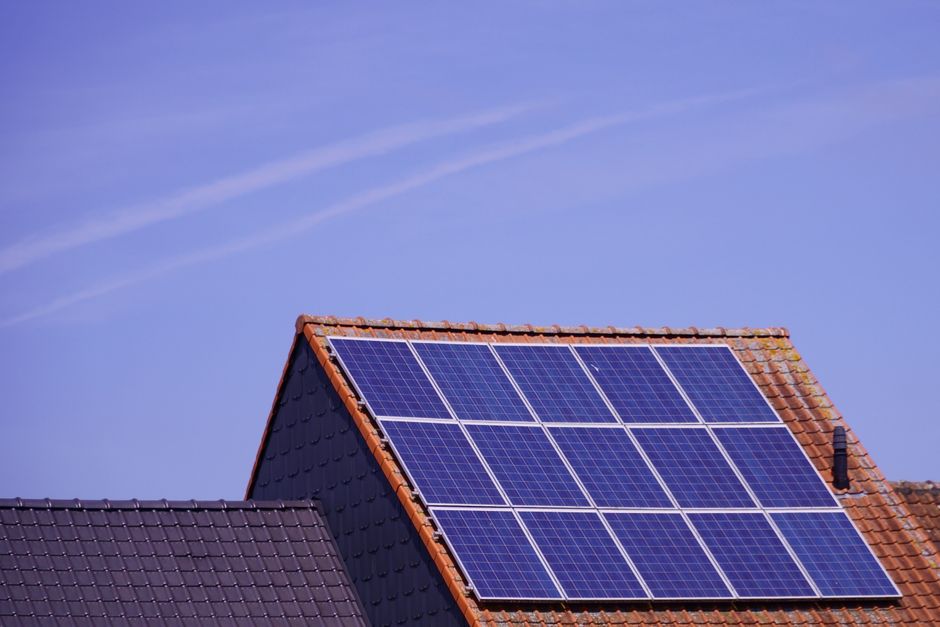
Sun is New Mexico’s advantage. Our rough estimate puts output at about 1,610 kWh a year for each kilowatt of panels in Albuquerque, about 40% more than the same panels would make in Newark or Columbus. A 6 kW system would make roughly 9,700 kWh a year. At the July 2026 rate of 16.09¢ that is worth up to about $1,550 a year; at the year-to-date rate of 15.08¢, about $1,460, if every kilowatt-hour replaces one you would have bought. These are labelled estimates, not promises. Lower electricity prices mean each kWh is worth less than in the Northeast, so payback depends on getting a fair installed price: compare quotes against the solar cost guide and model your roof with the solar potential calculator.
Net metering: the Public Regulation Commission’s net metering rule (17.9.570 NMAC) applies to investor-owned utilities and co-ops. Under it, if your panels make more than you use in a billing period, the excess is credited on your next bill and unused credits carry forward month to month; the rule also lets a utility pay for excess at its energy or avoided-cost rate instead. Our research rates the details as uncertain, and terms can differ between PNM, SPS, El Paso Electric and the co-ops, so ask your utility for its current net metering tariff before you sign. Background: net metering explained.
EIA counted about 61,200 net-metered home solar systems in New Mexico in 2024, about 327 MW, but only 112 of them paired with a battery.
Confirmed state programs (check each program page; amounts change):
- New Solar Market Development Tax Credit: a refundable credit of 10% of the system cost, up to $6,000, for solar and battery systems installed from 2025 through 2031. The program has a $30 million yearly cap, and you apply to the Energy, Minerals and Natural Resources Department within a year of installation. EMNRD program page.
- Gross receipts tax deduction: sales and installation of solar energy systems can be deducted from gross receipts tax (NMSA 7-9-112; the seller uses Form RPD-41341).
The federal 25D credit ended for systems completed after December 31, 2025, so the state credit is the main one in 2026. More in energy incentives and the solar guide. New Mexico has no plug-in (balcony) solar law; a plug-in system must follow your utility’s interconnection rules.
Home batteries in New Mexico
Batteries make a stronger case here than in most low-price states for two reasons. First, the state tax credit counts batteries, so the 10% (up to $6,000) applies to a solar-plus-storage system. Second, planned wildfire shutoffs are the kind of outage a solar-charged battery handles well, because they tend to happen on clear, dry days. Size it by what must keep running, typically the fridge, lights, internet, a well pump and an evaporative cooler or fan, and check prices in home battery cost.
EV charging in New Mexico
New Mexico had 16,600 battery-electric cars and 7,100 plug-in hybrids at the end of 2025 (AFDC). Its 1,265 public ports at 489 locations lean unusually toward fast charging: 616 are DC fast, almost half, which fits a state of long highway drives. That is about 13 electric cars per public port.
Drive on another fuel? See every alternative fuel station in New Mexico: hydrogen, propane, natural gas, E85 ethanol, biodiesel and renewable diesel.
At home, a typical EV using about 30 kWh per 100 miles (a fueleconomy.gov-style assumption) costs about $4.83 per 100 miles at 16.09¢, or roughly $48 for 1,000 miles a month, our estimate. A 30-mpg gas car at the U.S. average of $4.465 a gallon (EIA, late September 2026) costs about $14.88 per 100 miles. Charging from your own solar can bring the home number lower still. Try your numbers in the EV charging cost calculator, and see home EV charging for chargers and installation; a Level 2 circuit needs a licensed electrician and a permit. The federal 30C charger credit ended for chargers placed in service after June 30, 2026.
Off-grid, small wind and micro-hydro
Rural New Mexico is one of the better places in the country to live off the grid with solar, batteries and a backup generator, because winter sun is still strong; plan with off-grid power systems and the off-grid planner. Wind is a reasonable second source on open ranch land: NASA data shows about 6 m/s at 50 m near the state’s center (5 m/s around Albuquerque), while DOE suggests at least 4 m/s at hub height for an off-grid hybrid. Small turbines sit lower, so measure first. See wind energy; for streams, hydroelectric power covers the basics, though we have not checked state micro-hydro sources.
Licensing and permits in New Mexico
Electrical work is licensed statewide by the Regulation and Licensing Department, Construction Industries Division, whose electrical classifications include photovoltaic work. Check a contractor’s license on the RLD license lookup. Building and electrical permits come from your city or county, and your utility must approve interconnection before a solar or battery system is turned on.
Local guides in New Mexico
Utilities, rates, outage records, permit offices and local programs for each area:
Where we cover in New Mexico
- Albuquerque: Albuquerque, Rio Rancho, Los Lunas, Bernalillo
- Santa Fe: Santa Fe
- Las Cruces: Las Cruces
- Farmington: Farmington
- Elsewhere in the state: Roswell, Alamogordo
Local pages will follow as we verify local information and installers.
Get quotes in New Mexico
Are you a licensed installer in New Mexico? Join SolutionEnergy and get requests from homeowners and businesses →
Tell us about your project and we will connect you with a licensed, independent installer who serves New Mexico. It is free, there is no obligation, and only the installer you choose gets your details. See how it works.
New Mexico energy FAQ
Does New Mexico have a solar tax credit in 2026?
Yes. The New Solar Market Development Tax Credit is a refundable state credit of 10% of the system cost, up to $6,000, for solar and battery systems installed from 2025 through 2031. The yearly pool is capped at $30 million, so apply to EMNRD soon after installation, and within a year at the latest.
Does New Mexico have net metering?
The PRC’s net metering rule (17.9.570 NMAC) covers investor-owned utilities and co-ops: excess solar is credited on the next bill and credits carry forward, though a utility may pay for excess at its energy rate. Terms can differ by utility and may have changed recently, so ask yours for its current tariff.
What is a PNM Public Safety Power Shutoff?
It is a planned outage: during high wind and very dry conditions PNM may switch off power lines in fire-prone areas so they cannot start a wildfire. Power returns after the weather passes and lines are checked. Homes in those areas should sign up for alerts and plan backup for medical devices, well pumps and refrigeration.
How much does solar produce in Albuquerque?
Our rough estimate from NASA’s 20-year sun data is about 1,610 kWh a year for each kW of panels, so a 6 kW system makes around 9,700 kWh. South-facing tilted panels often do better than this horizontal-based figure. Use the solar potential calculator for your own roof.
Does the New Mexico credit cover batteries?
Yes. The state lists the New Solar Market Development Tax Credit as covering solar systems and batteries, within the same 10% and $6,000 limit. Check the EMNRD program page for current eligibility rules and how storage installed with or after solar is treated.
Sources
Electricity prices: EIA Electric Power Monthly, Tables 5.6.A and 5.6.B (July 2026, preliminary). Outages, utilities and solar counts: EIA-861 (2024). Sun and wind: NASA POWER climatology 2001–2020. Hazards: FEMA National Risk Index (December 2025). Electric cars and charging: AFDC (registrations 2025; stations read October 3, 2026). Net metering: 17.9.570 NMAC (NM State Records Center and Archives). Incentives: EMNRD; NM State Records Center and Archives (GRT deduction). Power shutoffs: PNM. Licensing: NM Regulation and Licensing Department. Generator safety: CPSC. Checked October 2026.