In short: Iowa’s grid was one of the steadier ones in 2024, with about 90 outage minutes per customer on normal days (EIA). Home power cost 15.99¢ per kWh in July 2026 and 14.2¢ on average this year. The big date for solar buyers is July 1, 2027, when Iowa’s retail-based solar credit can start to change.
Iowa is a wind state, a tornado state and a cold state all at once. That mix means the energy questions here are less about escaping high bills and more about timing: when to lock in solar terms, what to keep running in a January storm, and whether a turbine on an open acreage is realistic.
Iowa at a glance
- Home electricity price: 15.99¢/kWh in July 2026 (15.31¢ in July 2025), 14.2¢ average for January to July 2026; U.S. average 18.31¢ in July (EIA, preliminary).
- Outages (2024): about 167 minutes per customer including major events, 90 without; about 1.15 interruptions a year, 0.89 without major events (EIA-861).
- Sun: about 4.09 kWh/m² per day in Des Moines (NASA POWER, 2001–2020); rough estimate about 1,190 kWh per kW of panels per year.
- Net metering: under a 2020 law (SF 583), new MidAmerican and Alliant customers get net billing or inflow-outflow billing with a retail-based credit until July 1, 2027 or until solar reaches 5% statewide, after which a value-of-solar review may set a lower rate. Co-ops and city utilities set their own rules.
- Plug-in solar law: none found as of October 2, 2026.
- EVs and charging: 15,100 battery-electric and 8,800 plug-in hybrids registered through 2025; 1,294 public ports at 482 locations, 581 of them DC fast (AFDC, October 2026).
- Main utilities: MidAmerican Energy (about 738,000 customers, half the state), Interstate Power and Light, which is Alliant Energy (about 504,000), Linn County REC (about 35,000) and the City of Ames (about 28,000) (EIA-861, 2024).
- Weather risk (FEMA National Risk Index, Dec 2025): winter weather, cold wave, tornado and strong wind relatively high; ice storm and heat wave relatively moderate; wildfire relatively low.
- Public Safety Power Shutoffs: no program found at MidAmerican or Alliant in Iowa.
Backup power in Iowa
On paper Iowa is reliable: fewer than one interruption a year on normal days and about an hour and a half without power. Major events nearly doubled the 2024 total to 167 minutes, and that’s the part to plan for. Severe wind storms, tornadoes and blizzards don’t come every year, but when they do, they can leave whole towns dark for days while crews work through downed lines.
Because routine outages are short, many Iowa homes don’t need a big system. Think in two tiers:
- The short outage kit. A portable power station keeps phones, Wi-Fi, lights, a CPAP and the fridge going for hours. No fuel, no maintenance, usable indoors. Size it with the battery backup calculator.
- The big-storm plan. For multi-day outages in winter, the furnace blower, sump pump and well pump (on acreages) matter. That’s generator territory, connected through a transfer switch or interlock by a licensed electrician, or a whole-home battery with enough capacity. Work out the watts in the generator sizing tool.
Generator safety doesn’t change with the weather. CPSC: run it outdoors only, at least 20 feet from the house with the exhaust pointed away from openings, never in a garage or machine shed attached to the home, and keep battery-backed CO alarms on every level. Never backfeed through a dryer outlet.
Solar in Iowa
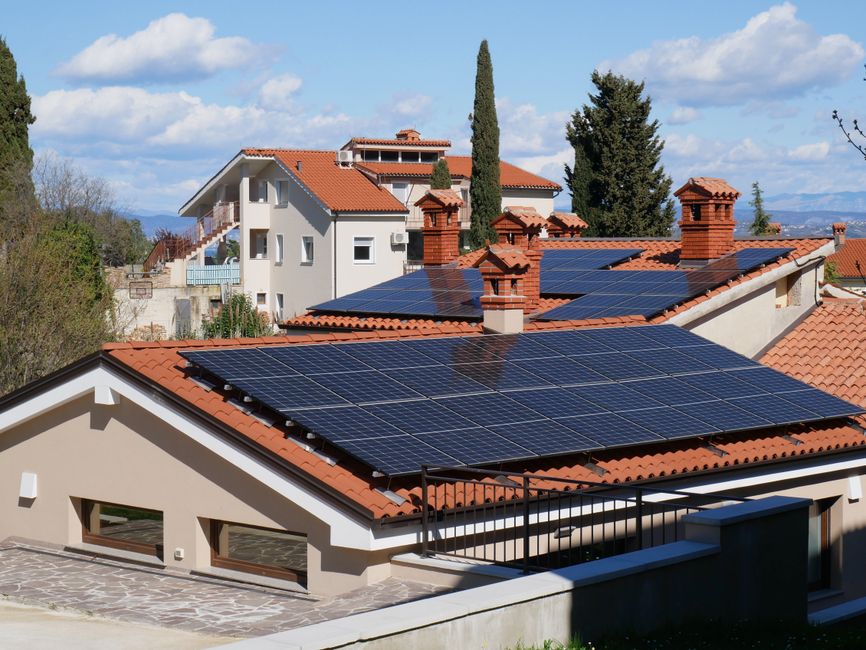
Iowa’s sun is about average for the Midwest: around 1,190 kWh per kW of panels a year by our rough estimate. Iowa’s price is seasonal: 15.99¢ in July but 14.2¢ averaged across the first seven months, so summer power is worth more, which suits solar. At those prices each kW of panels can offset roughly $170 to $190 a year of purchases if you use or are credited for all of it at retail. That’s a labelled estimate, not a promise.
The timing question is real. For MidAmerican and Alliant customers, SF 583 keeps a retail-based credit for new systems until July 1, 2027 or until distributed generation reaches 5% statewide, whichever comes first. After that, a value-of-solar proceeding may set a lower rate for new systems. If you’re weighing solar, ask your installer and utility what terms you’d lock in and for how long, and get the answer in writing. Co-op and city utility members (Linn County REC, Ames and many others) should ask their utility directly.
Incentives: Iowa excludes a new solar system from your home’s assessed value for five full assessment years (Iowa Code 441.21(8)(b)), so it doesn’t raise your property tax during that time. See the Iowa Department of Revenue form and guidance and file it with your assessor; rules change. Iowa’s old state solar income tax credit is reported to have expired, so don’t count on it, and the federal credit ended for systems completed after December 31, 2025.
No plug-in solar law exists in Iowa, so plug-in kits fall under utility interconnection rules. Learn more in our solar guide, solar costs and net metering explained, then check your roof with the solar potential calculator.
Home batteries in Iowa
Batteries are almost absent from Iowa’s solar so far: of 16,392 net-metered home systems in EIA’s 2024 count, just 22 had one. While exports still earn a retail-based credit, a battery adds little to solar savings; its value is backup. That could change after 2027 if export credits fall. We didn’t find a confirmed state battery program. If a battery is on your list, decide what it must run in a winter outage and size it for that. Compare options in home batteries and battery costs.
EV charging in Iowa
Iowa has more public charging per EV than most states: 1,294 public ports for 15,100 battery-electric cars, about 12 cars per port, and 581 of those ports are DC fast chargers. Range anxiety on rural highways is less of an issue than it was.
Drive on another fuel? See every alternative fuel station in Iowa: hydrogen, propane, natural gas, E85 ethanol, biodiesel and renewable diesel.
Home charging is still the cheapest. Using about 30 kWh per 100 miles (a typical fueleconomy.gov-style figure), 100 miles costs roughly $4.80 at the July 2026 average and about $4.26 at the year-to-date average, or $43 to $48 per 1,000 miles. That’s an estimate; cold winters raise consumption noticeably. Run your own numbers with the EV charging cost calculator and compare chargers in EV charging at home. Level 2 charging needs a 240 V circuit from a licensed electrician. The federal charger credit ended for chargers placed in service after June 30, 2026; we didn’t confirm a state charger rebate.
Off-grid, small wind and micro-hydro
Iowa is one of the better states for a small turbine. NASA’s coarse average is about 7.0 m/s at 50 meters and about 4.9 m/s at 10 meters near the state center, above the 4.5 m/s the U.S. Department of Energy’s small wind guidebook suggests for grid-tied systems. That points to open rural acreages with a tall tower, clear of trees and buildings, and a measured wind reading before you buy. Turbines need zoning approval, and the export credit rules above apply to wind too. Fully off-grid homes are uncommon in Iowa, but solar-plus-battery setups for barns and outbuildings are practical. We haven’t checked a state source on micro-hydro. See off-grid power, wind energy and hydroelectric power.
Licensing and permits in Iowa
Iowa licenses electricians and electrical contractors statewide through the Iowa Electrical Examining Board, part of the Department of Inspections, Appeals and Licensing (DIAL). Solar installations need a licensed electrical contractor. Check a license on the Iowa electrical licensing site. Permits and inspections come from your city or county, or from the state where it covers your area, and your utility must approve interconnection before solar or a battery goes live.
New for 2026: under House File 2800, signed June 2, 2026, Iowa removed its own state amendments to the electrical code and now uses the unamended 2023 National Electrical Code (Iowa DIAL). Ask your electrician which code edition your city or county inspects under, since local adoption can lag.
Local guides in Iowa
Utilities, rates, outage records, permit offices and local programs for each area:
Where we cover in Iowa
- Des Moines: Des Moines, West Des Moines, Ankeny, Waukee, Urbandale
- Cedar Rapids–Iowa City: Cedar Rapids, Iowa City
- Quad Cities: Davenport, Bettendorf
- Sioux City: Sioux City
- Also on our list: Waterloo, Ames
Local pages will follow as we verify local information and installers for each area.
Get quotes in Iowa
Are you a licensed installer in Iowa? Join SolutionEnergy and get requests from homeowners and businesses →
Tell us about your project and we will connect you with a licensed, independent installer who serves Iowa. It is free, there is no obligation, and only the installer you choose gets your details. See how it works.
Iowa energy FAQ
Does Iowa have net metering?
For MidAmerican and Alliant customers, Iowa’s 2020 law (SF 583) provides net billing or inflow-outflow billing with a retail-based credit for new systems until July 1, 2027 or until solar reaches 5% statewide. After that, a value-of-solar proceeding may set a lower credit. Rural electric co-ops and municipal utilities write their own rules, so ask yours.
Should I install solar in Iowa before 2027?
If solar already makes sense for your home, the current retail-based credit is a reason not to wait too long, because terms for new systems may change after July 1, 2027. Don’t rush into a poor fit, though: get several quotes, check the installer’s electrical contractor license, and ask in writing what credit you’d receive and for how long.
Does solar raise property taxes in Iowa?
Not at first. Under Iowa Code 441.21(8)(b), installing a solar energy system doesn’t raise your home’s assessed value for five full assessment years. You claim it with your local assessor using the Iowa Department of Revenue’s form. Check the current form and deadline before you file.
Is a small wind turbine worth it in Iowa?
It can be on an open rural property. Iowa’s long-term average wind speed at 50 meters is about 7 m/s, well above the U.S. Department of Energy’s 4.5 m/s guideline for grid-tied small wind. Results depend on tower height, trees, buildings and zoning, so measure the wind on your site and get a written production estimate first.
Who licenses solar installers in Iowa?
The Iowa Electrical Examining Board, under the Department of Inspections, Appeals and Licensing, licenses electricians and electrical contractors statewide, and solar installations need a licensed electrical contractor. You can look up licenses on iowaelectrical.gov.
Sources
Electricity prices: EIA Electric Power Monthly Tables 5.6.A and 5.6.B, July 2026 (preliminary). Outages, utilities and solar counts: EIA-861, 2024. Sun and wind: NASA POWER climatology, 2001–2020; small wind threshold from the U.S. Department of Energy. Hazards: FEMA National Risk Index, December 2025. EVs and charging: Alternative Fuels Data Center (AFDC), registrations through 2025 and station counts read October 3, 2026. Net billing: Iowa SF 583, as summarized in our state dataset, checked October 2026. Property tax: Iowa Department of Revenue. Licensing: Iowa Electrical Examining Board (DIAL).