In short: FEMA rates both winter weather and ice storms as a very high risk for Kansas, and in 2024 major events nearly tripled outage time, from 104 to 286 minutes per customer (EIA). Power cost 15.27¢ per kWh in July 2026. Kansas also has strong sun and wind and keeps kWh net metering at its largest utility.
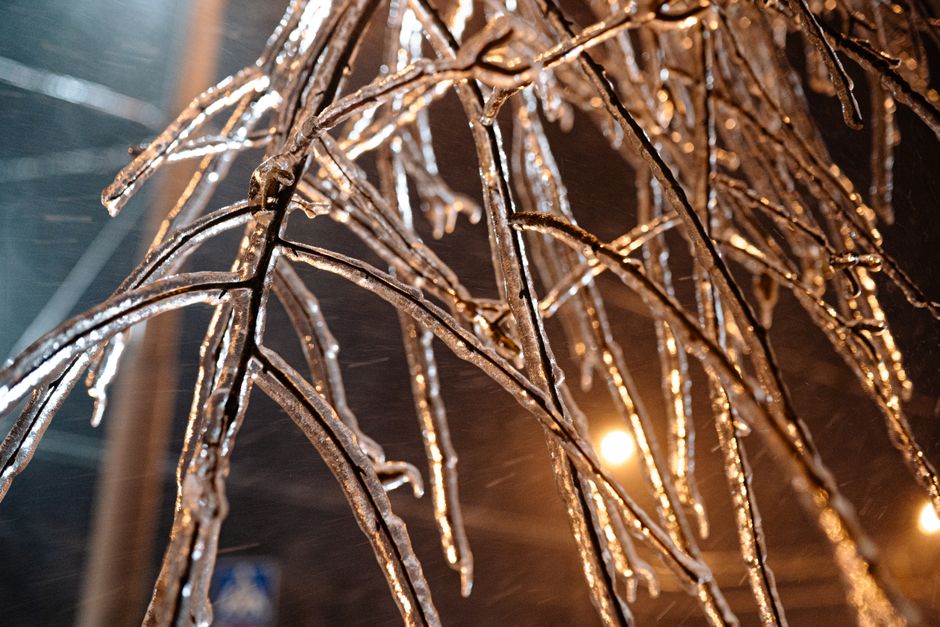
Ice is the Kansas outage to plan for. A coating of freezing rain on lines and tree limbs can take down a neighborhood’s power for days, in the cold, when you most need the furnace. The same state also has some of the country’s best wind and solid sunshine. This page puts both sides in numbers.
Kansas at a glance
- Home electricity price: 15.27¢/kWh in July 2026, up from 14.46¢ a year earlier; 15.21¢ average for January to July 2026. U.S. average 18.31¢ (EIA, preliminary).
- Outages (2024): about 286 minutes per customer with major events, 104 without; about 1.5 interruptions a year, 1.0 without major events (EIA-861).
- Sun: about 4.62 kWh/m² per day in Wichita (NASA POWER, 2001–2020); rough estimate about 1,350 kWh per kW of panels per year.
- Net metering: investor-owned utilities (Evergy, Liberty) offer kWh net metering. A 2025 law (Sub. HB 2149) raised the statewide cap to 6% in 2025, 7% from July 2026 and 8% from July 2027 and added consumer protections. Co-ops and city utilities aren’t required to offer it.
- Plug-in solar law: none found as of October 2, 2026.
- EVs and charging: 18,700 battery-electric and 7,800 plug-in hybrids registered through 2025; 1,403 public ports at 574 locations, 377 of them DC fast (AFDC, October 2026).
- Main utilities: three Evergy companies (Evergy Kansas Central, about 397,000 customers; Evergy Kansas South, about 346,000; Evergy Metro, about 277,000) together serve about three in four Kansas customers; the Kansas City, Kansas municipal utility serves about 69,000 (EIA-861, 2024).
- Weather risk (FEMA National Risk Index, Dec 2025): winter weather and ice storm very high; cold wave, tornado and strong wind relatively high; wildfire and heat wave relatively moderate.
- Public Safety Power Shutoffs: no active program. In a 2026 Kansas Corporation Commission wildfire workshop, Evergy said it lacks authority to shut off power proactively and asked the KCC for PSPS guidelines.
Backup power in Kansas
Kansas’ everyday grid is ordinary: about one interruption a year and roughly 100 minutes out. The trouble is the big events. In 2024 they added about 180 minutes per customer on top, and FEMA’s two “very high” ratings, winter weather and ice storm, explain where to aim your plan. Add tornadoes and straight-line wind in spring and summer, and Kansas has outage risk in every season.
For an ice-storm outage, the priorities are heat and water: the furnace blower and controls, a sump pump, and on rural properties a well pump. Here’s how the options compare for Kansas conditions:
| Option | Good for | Kansas caveat |
|---|---|---|
| Portable generator + transfer switch | Multi-day winter outages, furnace and well pump | Needs fuel on hand before the ice; run outdoors in the cold, 20 feet from the house |
| Standby generator (natural gas) | Whole house, automatic | Highest cost; installed by licensed electrician and gas fitter with permits |
| Home battery | Quiet, automatic backup of chosen circuits | Capacity runs down in a long outage unless solar can recharge it, and ice or snow on panels cuts output |
| Portable power station | Phones, lights, Wi-Fi, CPAP, a fridge for hours | Too small for a furnace for days |
Size your loads with the generator sizing tool or the battery backup calculator. CPSC’s generator rules are non-negotiable even when it’s freezing: outdoors only, at least 20 feet from the house, exhaust away from openings, never in a garage with the door open, and battery-backed CO alarms on every level. A transfer switch or interlock must be installed by a licensed electrician.
Solar in Kansas
Kansas gets good sun for the Plains: about 1,350 kWh per kW of panels a year by our rough estimate for Wichita. At 15.27¢, each kW of panels could offset up to about $205 a year. Because Evergy and Liberty customers have kWh net metering, exported power counts against power you buy, so you don’t have to use every kWh as it’s made to get close to that figure. That’s a labelled estimate, not a promise; roof angle, shade and your rate plan change it.
Two details to check before you sign. First, net metering in Kansas has a statewide cap (7% from July 2026, 8% from July 2027 under Sub. HB 2149), so ask your utility whether capacity is still open. Second, if you’re on a rural electric co-op or a city utility, it isn’t required to offer net metering; get its rules in writing.
Kansas exempts renewable generating property from property tax for 10 years after installation (K.S.A. 79-201 Eleventh). You apply to the Board of Tax Appeals. Note that batteries attached to a solar system haven’t been covered since 2024. Details are on the Kansas Department of Revenue exemptions page; check it, as rules change. The federal solar credit ended for systems completed after December 31, 2025.
Kansas has no plug-in solar law; plug-in kits fall under utility interconnection rules. Read our solar guide, solar costs and net metering explained, and try the solar potential calculator.
Home batteries in Kansas
Only 2 of 8,583 net-metered home solar systems in Kansas had a battery in EIA’s 2024 count. That’s logical: with kWh net metering, the grid already acts like a free battery for your solar, so a home battery adds little to savings. Its job here is backup. And remember the tax point: since 2024, batteries attached to solar systems aren’t covered by the property tax exemption. We didn’t confirm a state battery program. Compare options in home batteries and battery costs.
EV charging in Kansas
Kansas had 18,700 battery-electric vehicles through 2025 and 1,403 public charging ports, about 13 EVs per port, so public charging is relatively plentiful for the number of cars, though only 377 ports are DC fast.
Drive on another fuel? See every alternative fuel station in Kansas: hydrogen, propane, natural gas, E85 ethanol, biodiesel and renewable diesel.
Home charging, using a typical fueleconomy.gov-style figure of about 30 kWh per 100 miles, costs roughly $4.58 per 100 miles at the July 2026 average, about $46 for 1,000 miles. That’s an estimate; cold snaps raise consumption, and your utility’s plan may be cheaper overnight. Check it with the EV charging cost calculator and see EV charging at home. A Level 2 charger needs a 240 V circuit from a licensed electrician. The federal charger credit ended for chargers placed in service after June 30, 2026, and we didn’t confirm a state charger rebate.
Off-grid, small wind and micro-hydro
Kansas is one of the windiest states in our data: NASA’s coarse long-term average is about 7.3 m/s at 50 meters near the state center and about 5.2 m/s at 10 meters, both above the 4.5 m/s the U.S. Department of Energy’s small wind guidebook suggests for grid-tied turbines. On an open farm or ranch with a tall tower, small wind is a serious option, and the 10-year property tax exemption covers wind too. Check county zoning and your utility’s interconnection rules, and measure the site first. Off-grid setups for remote wells, barns and cabins usually pair solar, batteries and a generator. We haven’t checked a state source on micro-hydro. See off-grid power, wind energy and hydroelectric power.
Licensing and permits in Kansas
Kansas has no statewide electrician license and no statewide lookup. Electricians are licensed locally, for example by Wichita and Sedgwick County or by cities in Johnson County. Ask any installer which local license they hold, and confirm it with that city or county. Permits and inspections come from your city or county too, and your utility must approve interconnection before solar or a battery is switched on.
Local guides in Kansas
Utilities, rates, outage records, permit offices and local programs for each area:
Where we cover in Kansas
- Wichita: Wichita, Derby, Andover
- Kansas City suburbs: Overland Park, Olathe, Lenexa, Shawnee, Kansas City
- Topeka: Topeka
- Lawrence: Lawrence
- Also on our list: Manhattan
Local pages will follow as we verify local information and installers for each area.
Get quotes in Kansas
Are you a licensed installer in Kansas? Join SolutionEnergy and get requests from homeowners and businesses →
Tell us about your project and we will connect you with a licensed, independent installer who serves Kansas. It is free, there is no obligation, and only the installer you choose gets your details. See how it works.
Kansas energy FAQ
Does Kansas have net metering?
Yes, at investor-owned utilities such as Evergy and Liberty, which offer kWh net metering. A 2025 law raised the statewide cap to 7% from July 2026 and 8% from July 2027 and added consumer protections. Rural co-ops and city utilities aren’t required to offer net metering, so check with yours before you buy.
What’s the best backup for a Kansas ice storm?
For a multi-day outage in freezing weather, most homes rely on a generator that can run the furnace, sump pump and well pump through a transfer switch, or a natural-gas standby unit. A battery alone may run down if solar is covered in ice. Whatever you choose, keep a generator outdoors at least 20 feet from the house.
Does Kansas have a solar tax break?
Yes, a property tax exemption: renewable generating property is exempt for 10 years after installation under K.S.A. 79-201 Eleventh, and you apply to the Board of Tax Appeals. Batteries attached to the system haven’t been covered since 2024. The federal residential solar credit ended for systems completed after December 31, 2025.
How do I check an electrician’s license in Kansas?
There’s no statewide license or lookup in Kansas. Licensing is local, so ask the installer which city or county licensed them, for example Wichita/Sedgwick County or a Johnson County city, and verify it with that office. Ask for proof of insurance and confirm the permit is pulled before work starts.
Can Evergy shut off power for wildfire risk in Kansas?
Not under a current program. Evergy has no active Public Safety Power Shutoff program in Kansas; at a 2026 Kansas Corporation Commission wildfire workshop it said it lacks authority to shut off power proactively and asked the KCC for guidelines, which it estimated would take 18 to 24 months to put in place.
Sources
Electricity prices: EIA Electric Power Monthly Tables 5.6.A and 5.6.B, July 2026 (preliminary). Outages, utilities and solar counts: EIA-861, 2024. Sun and wind: NASA POWER climatology, 2001–2020; small wind threshold from the U.S. Department of Energy. Hazards: FEMA National Risk Index, December 2025. EVs and charging: Alternative Fuels Data Center (AFDC), registrations through 2025 and station counts read October 3, 2026. Net metering: Kansas Sub. HB 2149 (2025) as summarized in our state dataset. PSPS: Kansas Corporation Commission workshop record. Property tax exemption: Kansas Department of Revenue. Checked October 2026.