In short: Michigan homes lost about 7.8 hours of power per customer in 2024 once major storms are counted (EIA). Residential electricity jumped to 23 cents per kWh in July 2026, up 12% in a year. Michigan’s wind and winter risks are among the highest FEMA rates. Backup power comes first here, and solar is worth most when you use it at home.
Michigan at a glance
- Residential electricity price: 23.05¢/kWh in July 2026, compared with 20.55¢ in July 2025 and a U.S. average of 18.31¢. The January to July 2026 average was 21.53¢ (EIA Electric Power Monthly, September 2026 release; preliminary).
- Outages (2024): 470 minutes per customer with major events and 160 minutes without them. Customers averaged 1.36 interruptions, or 0.99 without major events (EIA-861).
- Solar resource: Detroit averages 3.79 kWh/m² of sunlight a day and the center of the Lower Peninsula 3.64 (NASA POWER, 2001–2020). That works out to roughly 1,110 kWh per installed kW a year, our estimate for Detroit.
- Net metering: no longer offered in the classic form. Michigan’s Distributed Generation program (Public Act 342 of 2016) bills the power you draw from the grid at retail and credits what you send back at a lower rate. A 2023 law raised the program cap to 10% of peak demand (Michigan Public Service Commission).
- Plug-in (balcony) solar law: none as of October 2026.
- EVs and charging: 112,600 battery EVs and 42,100 plug-in hybrids registered through 2025. The state had 5,707 public charging ports, 1,783 of them DC fast, at 2,063 locations (AFDC, October 3, 2026).
- Main utilities: DTE Electric (46% of customers) and Consumers Energy (38%), then Indiana Michigan Power and Great Lakes Energy Cooperative (EIA-861, 2024).
- Weather hazards (FEMA NRI, December 2025): winter weather and strong wind are rated very high. Ice storm, cold wave and tornado are relatively high, heat wave relatively moderate.
- Planned shutoffs (PSPS): Consumers Energy introduced a Public Safety Power Shutoff policy in October 2025 for wildfire and other extreme conditions, with 24 to 48 hours’ notice. We found no PSPS program at DTE.
Backup power in Michigan
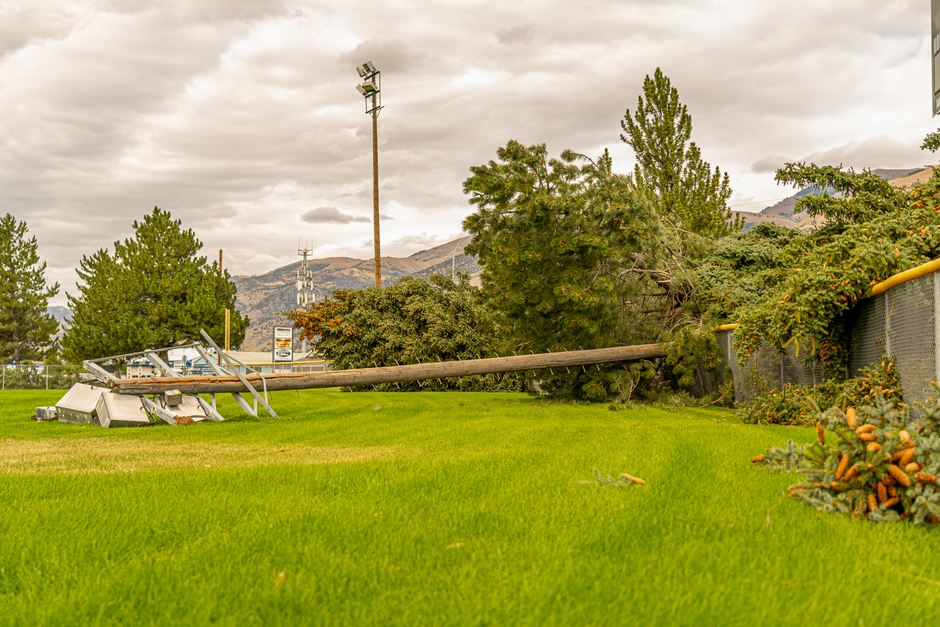
Major storms make the difference in Michigan’s numbers. On ordinary days the average customer lost under three hours of power in 2024. Add the major-event days and the total nearly triples to about 7.8 hours. Dividing the minutes by the number of interruptions, a typical outage ran close to six hours. That is our own rough arithmetic, but it lines up with the FEMA ratings: very high for strong wind and winter weather, relatively high for ice storms and tornadoes. In Michigan, losing power usually means wind or ice bringing down lines, often in cold weather.
That outage pattern shapes the choice of equipment:
- Six hours, several times a year: a home battery handles this quietly and automatically. Its job is to keep the furnace blower, sump pump, fridge and internet running until the crews arrive. Check whether your loads fit with the battery backup calculator.
- A two- or three-day ice storm: a battery alone may run short, especially with little winter sun to recharge it. A generator on natural gas or propane, or a portable one with stored fuel, keeps going as long as the fuel lasts. Find the right size with the generator sizing tool.
- Renters and small homes: a portable power station keeps phones, lights, a CPAP and the router going without fuel or wiring.
Michigan winters bring a particular risk: people running generators in the garage to keep them out of the snow. The U.S. Consumer Product Safety Commission is clear: outdoors only, at least 20 feet from the house, with the exhaust pointed away from doors, windows and vents, and never in a garage, even with the door open. Fit carbon monoxide alarms with battery backup on every floor. A licensed electrician should install the transfer switch or interlock that connects a generator to the house.
Solar in Michigan
Under Michigan’s Distributed Generation rules, solar power has two different values. Every kWh you use at home saves the full retail price, about 23 cents in July 2026. Every kWh you send to the grid earns a lower credit, roughly the utility’s power-supply rate minus transmission, according to the Public Service Commission. Panels in Detroit make about 1,110 kWh per kW a year by our estimate. If all of it replaced retail power, one kW would save roughly $256 a year. Exports bring the real figure down, so the more of your solar you use while the sun is up (or store for the evening), the better it pays. That is an estimate, not a promise.
Two things help the case. Prices are rising fast: the 12% jump between July 2025 and July 2026 was one of the larger ones we track. And Michigan does not raise your home’s taxable value for the system. Under SB 47 (2019), installing a residential alternative energy system up to 150 kW counts as “normal maintenance” for property assessment. Check with your assessor, as the rules can change. The federal 25D credit ended for systems completed after December 31, 2025, so leave it out of any 2026 payback math.
To test a quote, divide the net price by your expected yearly savings, using a realistic split between energy used at home and exports. Our solar potential tool, the solar cost guide and how net metering and net billing work walk through it. Start at the solar hub, and check incentives for utility programs. Michigan has no plug-in solar law, so even a small plug-in kit falls under your utility’s interconnection rules.
Home batteries in Michigan
Michigan homeowners have taken to batteries. EIA’s 2024 count shows 4,316 of 23,456 residential solar systems reported in the state paired with storage, about 18%. That is far higher than in states with full net metering. Two things push in the same direction. Exports earn less than retail, so storing midday solar for the evening is worth more. And the outage record gives a battery a second job as backup.
We have not confirmed a state-run battery rebate for 2026. Ask DTE or Consumers Energy about any utility program, and confirm it on their pages before signing. Compare essential-circuit and whole-home systems on the battery cost page and the batteries hub. Expect less solar recharge in winter, so size for your winter needs, not summer.
EV charging in Michigan
Michigan has about 20 battery EVs for every public charging port (112,600 BEVs, 5,707 ports). Public charging is thinner than in coastal states, so most drivers rely on charging at home. At about 30 kWh per 100 miles, a common fueleconomy.gov-style figure, and 23.05¢/kWh, home charging costs about $6.90 per 100 miles. That is roughly $830 for 12,000 miles a year (an estimate; cold weather raises consumption). Try your own numbers in the EV charging cost calculator.
Drive on another fuel? See every alternative fuel station in Michigan: hydrogen, propane, natural gas, E85 ethanol, biodiesel and renewable diesel.
The federal 30D EV credit ended on September 30, 2025, and the 30C charger credit ended for chargers placed in service after June 30, 2026. A Level 2 charger needs a dedicated 240 V circuit from a licensed electrician, and usually a permit. See the EV charging hub.
Off-grid, small wind and micro-hydro
Michigan is one of the few states where small wind is worth a closer look. NASA’s 50 m average is about 6.9 to 7.0 m/s at both the center of the state and Detroit, comfortably above the Department of Energy’s rough 4.5 m/s threshold for a grid-tied turbine. Our data hint is “good at open rural sites”, and that is an estimate: trees, buildings and a shorter tower cut the wind a lot. Any serious project should start with on-site wind measurements. For cabins up north, a solar, battery and generator hybrid is the usual off-grid setup. We have no state data on micro-hydro. Read our off-grid guide, plus wind energy and hydroelectric power.
Licensing and permits in Michigan
Michigan licenses electrical contractors and master and journeyman electricians statewide through the Department of Licensing and Regulatory Affairs (LARA), Bureau of Construction Codes, Electrical Division. Look up a license on the LARA license lookup. Electrical and building permits come from your city, township or county. Solar and battery systems also need interconnection approval from your utility (DTE, Consumers Energy or another provider) before they can operate.
Local guides in Michigan
Utilities, rates, outage records, permit offices and local programs for each area:
Where we cover in Michigan
- Detroit: Detroit, Troy, Novi, Livonia, Canton Township, Sterling Heights, Rochester Hills
- Grand Rapids: Grand Rapids, Wyoming, Holland
- Lansing: Lansing
- Ann Arbor: Ann Arbor
- Kalamazoo: Kalamazoo
- Northern Michigan: Traverse City
Local pages will follow as we verify local information and installers.
Get quotes in Michigan
Are you a licensed installer in Michigan? Join SolutionEnergy and get requests from homeowners and businesses →
Tell us about your project and we will connect you with a licensed, independent installer who serves Michigan. It is free, there is no obligation, and only the installer you choose gets your details. Read how it works.
Michigan energy FAQ
Does Michigan have net metering?
Not the classic kind. Since Public Act 342 of 2016, Michigan uses a Distributed Generation program. Power you take from the grid is billed at retail, and power you send back is credited at a lower rate, roughly the utility’s power-supply rate minus transmission (Michigan Public Service Commission). A 2023 law raised the program cap to 10% of peak demand.
Why are so many Michigan solar homes adding batteries?
Exports earn less than retail, so storing midday solar to use in the evening is worth more. And outages are long: about 7.8 hours per customer in 2024 with major storms (EIA). In EIA’s 2024 count, about 18% of the residential solar systems reported in Michigan had a battery, far more than in most net-metering states.
Does Consumers Energy shut off power for wildfire risk?
Consumers Energy introduced a Public Safety Power Shutoff policy in October 2025. It covers wildfire and other extreme conditions and promises 24 to 48 hours’ notice where possible. We found no similar program at DTE. A shutoff is planned, so a charged battery or a fueled generator gives you time to prepare.
Will solar raise my Michigan property taxes?
Under SB 47 (2019), installing a residential alternative energy system up to 150 kW counts as “normal maintenance”, so it does not raise your home’s taxable value. Confirm with your local assessor before you rely on it, because local practice and later law can matter.
Is a home wind turbine realistic in Michigan?
On open rural land, possibly. NASA’s average wind at 50 m is close to 7 m/s, well above the Department of Energy’s 4.5 m/s rule of thumb. Home turbines sit lower, and trees and buildings slow the wind, so measure at your site for a season before buying.
Sources
Electricity prices: EIA Electric Power Monthly, Tables 5.6.A and 5.6.B, September 2026 release (July 2026, preliminary). Reliability, utilities and residential solar counts: EIA-861, 2024. Sunlight and wind: NASA POWER, 2001–2020 climatology. Hazards: FEMA National Risk Index, December 2025. EVs and chargers: AFDC, registrations through 2025 and station counts read October 3, 2026. State rules: Michigan Public Service Commission (Distributed Generation), Michigan Legislature (SB 47 analysis), LARA, and Consumers Energy’s 2025 PSPS announcement, checked October 3, 2026. Small wind thresholds: U.S. DOE Small Wind Guidebook.