This article contains affiliate links: if you buy through them we may earn a commission, at no extra cost to you. Learn more.
Your roof faces the wrong way, or the HOA said no to panels. But the last ice storm left you in the dark for two days, and you don’t want to haul gas cans or hear a generator all night. Good news: a home battery doesn’t need solar. It charges from the grid, waits quietly and takes over when the power goes out.

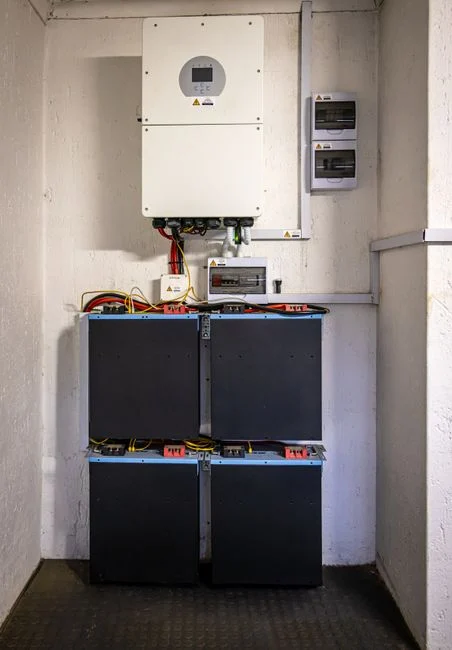
The best home battery backup without solar in 2026 is the Tesla Powerwall 3 for an installed, hands-off system: 13.5 kWh, 11.5 kW and automatic backup, charging from the grid. For a lower-cost setup you can grow yourself, the EcoFlow DELTA Pro Ultra with its Smart Home Panel 2 runs house circuits at 120 V and 240 V.
Below: seven batteries that work without panels, how long each lasts on a grid charge and what they cost.
Prices change often. The prices below are what we saw at the maker or a major retailer in October 2026; check the current price before you buy. Installed systems are priced by installers, so for those we give average quote data instead of a list price.
Our top picks
Tesla Powerwall 3
- 13.5 kWh, 11.5 kW continuous
- Expands with Powerwall 3 Expansion units
- Sold and installed by Tesla and certified installers
EcoFlow DELTA Pro Ultra
- 6.144 kWh per battery, 7.2 kW, 120/240 V
- Expands to 90 kWh with 3 inverters
- About $4,199 (maker's price, October 2026)
FranklinWH aPower 2
- 15 kWh, 10 kW continuous
- Generator Module recharges the battery
- Installed with the FranklinWH aGate
Anker SOLIX E10
- 6.144 kWh per battery, 7.68 kW, 120/240 V
- NEMA 4 (IP66) outdoor rating
- About $3,999 (maker's price, October 2026)
BLUETTI Apex 300
- 2.76 kWh, 3.84 kW, 120 V and 240 V
- 0 ms UPS switchover (maker)
- About $1,499 (maker's price, October 2026)
Anker SOLIX F3800 Plus
- 3.84 kWh, 6 kW, 120/240 V
- Expands to 26.9 kWh per unit
- Home Power Panel installed by an electrician
Jackery HomePower 3000
- 3.072 kWh, 3.6 kW
- LiFePO4 battery
- About $1,349 (maker's price, October 2026)
Home batteries without solar compared
| Battery | Usable energy (max) | Continuous power | How it connects | Price (October 2026) |
|---|---|---|---|---|
| Tesla Powerwall 3 | 13.5 kWh (up to 7 units) | 11.5 kW | Installed at the panel | No list price; EnergySage average about $13,055 installed |
| EcoFlow DELTA Pro Ultra | 6.144 kWh (90 kWh) | 7.2 kW | Smart Home Panel 2, installed | $4,199; $5,599 with panel (maker) |
| FranklinWH aPower 2 | 15 kWh (225 kWh) | 10 kW | aGate, installed | No list price; EnergySage average about $18,480 installed |
| Anker SOLIX E10 | 6.144 kWh per battery (90 kWh) | 7.68 kW | Smart Inlet Box or Power Dock, installed | $3,999; $5,799 with Power Dock (maker) |
| BLUETTI Apex 300 | 2.76 kWh (58 kWh) | 3.84 kW | Plug-in; transfer switch or kit | $1,499 (maker) |
| Anker SOLIX F3800 Plus | 3.84 kWh (53.8 kWh, two units) | 6 kW | Plug-in; Home Power Panel | Check price |
| Jackery HomePower 3000 | 3.072 kWh (not expandable) | 3.6 kW | Plug-in; manual transfer switch | $1,349 (maker) |
“EnergySage average” is the average price per kWh EnergySage saw for that brand in its first-half-2026 installer quotes, times the typical size; your quote will differ. Tesla and FranklinWH don’t publish list prices.
How a home battery works without solar
Without solar, a home battery fills up from the grid, often overnight when power is cheapest, and holds that charge. When the grid fails, it disconnects your home from the utility lines and runs your chosen circuits, usually fast enough that Wi-Fi doesn’t reset.
Tesla’s support pages say a Powerwall installed without solar charges from the grid, either through its backup reserve setting or with time-based control turned on, subject to local rules on grid charging. As EnergySage puts it, a battery on its own is a one-time reserve: once it’s empty, it waits for the grid.
So you get silent, fuel-free backup for a day or a few days of essentials, not a week. Three ways to stretch it:
- Back up only what matters. Installers wire a critical-loads panel (or the maker’s smart panel) so the battery runs the fridge, Wi-Fi, lights, furnace blower and well or sump pump, not the electric dryer.
- Add a generator. FranklinWH’s Generator Module can start a generator automatically when the battery drops to a set level (20% by default), run the house and recharge the battery, then shut the generator off at 80%. Plug-in systems like the DELTA Pro Ultra, E10 and Apex 300 also take generator power.
- Leave room for solar later. Every pick here accepts solar input, so the battery you buy now can be the first half of a solar-plus-storage system.
How long will it last on a grid charge?
We compared three loads. An essentials day (full-size fridge at ENERGY STAR’s median 363 kWh a year, modem and router, LED lights and a laptop) is about 1.8 kWh. Add a chest freezer, a CPAP and a sump pump running an hour, and it’s about 4 kWh. A typical whole home uses far more: EIA puts the average U.S. household at 10,791 kWh a year, about 29.6 kWh a day. We count 85% of each battery’s rated energy as usable, to allow for conversion losses and a small reserve.
| Battery (usable at 85%) | Essentials (≈1.8 kWh/day) | + freezer, CPAP, sump (≈4 kWh/day) | Average whole home (≈29.6 kWh/day) |
|---|---|---|---|
| BLUETTI Apex 300 (≈2.35 kWh) | ≈31 hours | ≈14 hours | ≈1.9 hours |
| Jackery HomePower 3000 (≈2.6 kWh) | ≈34 hours | ≈16 hours | ≈2.1 hours |
| Anker SOLIX F3800 Plus (≈3.3 kWh) | ≈1.8 days | ≈20 hours | ≈2.6 hours |
| DELTA Pro Ultra or E10, one battery (≈5.2 kWh) | ≈2.9 days | ≈31 hours | ≈4.2 hours |
| Tesla Powerwall 3 (≈11.5 kWh) | ≈6.3 days | ≈2.9 days | ≈9.3 hours |
| FranklinWH aPower 2 (≈12.75 kWh) | ≈7 days | ≈3.2 days | ≈10.3 hours |
These are our estimates, not maker figures. EnergySage notes a 5-ton central air conditioner can draw 3.5 kW or more, enough to drain a single 13.5 kWh battery in about four hours. Motors also need a starting surge, so check a battery’s peak rating against your well pump or AC. For the full math, see how long a home battery lasts.
The best home battery backup without solar
1. Tesla Powerwall 3: best installed battery without solar
The Powerwall 3 is the default choice for a reason. Each unit stores 13.5 kWh and delivers up to 11.5 kW continuous, with a 185 A locked-rotor start rating for motors like central AC. You can add up to three Powerwall 3 Expansion units and run up to four Powerwall 3 units, seven in all. It’s installed at your electrical panel by Tesla or a certified installer and switches to backup on its own. EnergySage’s first-half-2026 quotes averaged $967 per kWh for Tesla, about $13,055 for one unit before incentives.
- Good: high power for its size; whole-home backup with enough units; 10-year warranty; large installer network.
- Watch out: it has a solar inverter built in (up to 20 kW of solar), which you pay for even without panels; 291 lb installed; the warranty terms expect the system to stay online (connected to the internet); installer-only, so prices vary by quote.
- Best for: homeowners who want a set-and-forget battery today and may add solar later.
2. EcoFlow DELTA Pro Ultra: best DIY-friendly whole-home system
The DELTA Pro Ultra is a wheeled inverter on top of a stackable 6.144 kWh LFP battery. It puts out 7.2 kW (10.8 kW peak) at 120 V and 240 V, and charges from a 120 V or 240 V outlet, a generator or solar. One inverter takes up to five batteries (30 kWh); three inverters with EcoFlow’s Smart Home Panel 2 reach 90 kWh and 21.6 kW. The Smart Home Panel 2 is a 12-circuit smart sub-panel with automatic switchover, and EcoFlow says it requires installation before use. EcoFlow listed the starter kit at $4,199 and $5,599 with the panel in October 2026.
- Good: about a third the price of an installed battery per starter kit; true 240 V for well pumps; you can add batteries yourself; maker rates the battery for 3,500 cycles to 80%; UL 9540 listed.
- Watch out: one battery is only 6.144 kWh; the battery alone weighs 111.8 lb; five-year warranty, shorter than installed systems; panel installation is extra.
- Best for: homeowners who want automatic backup of key circuits without an installer-only system, and a path to more capacity.
Check the EcoFlow DELTA Pro Ultra price on Amazon
3. FranklinWH aPower 2: best to pair with a standby generator
The aPower 2 holds 15 kWh, the most per unit here, with 10 kW continuous (15 kW for 10 seconds) and up to 15 units on one aGate controller. FranklinWH says it stores energy from solar, the grid, a generator or an EV. Its Generator Module is what makes it shine without solar: when the battery falls to your set level during an outage, the aGate starts a compatible standby generator, runs the house, recharges the battery and shuts the generator off again. EnergySage’s first-half-2026 quotes averaged $1,232 per kWh for FranklinWH, about $18,480 for a 15 kWh system.
- Good: 15-year warranty (or 60 MWh throughput); LFP chemistry; 90% round-trip efficiency (maker); smart generator control.
- Watch out: needs the aGate, which adds cost; installer-only; at 15 kWh it’s the biggest single unit, so the typical quote is the largest here.
- Best for: homes with a standby generator, or planning one, that want long outages covered.
4. Anker SOLIX E10: best outdoor-rated expandable system
The E10 pairs a power module with 6.144 kWh B6000 batteries, up to five per E10 (about 30 kWh), and delivers 7.68 kW at 120/240 V split phase, with a 10 kW Turbo mode for 90 minutes when two or more batteries are installed. It’s rated NEMA 4 (IP66), so it can live outside. Anker lists a switchover of 20 ms or less. Hook it to the house with the Smart Inlet Box (works with an existing transfer switch) or the Power Dock (automatic backup, up to three E10s); either needs an electrician for the grid connection, and after that you can add batteries yourself. Anker listed $3,999 for the power module and one battery, or $5,799 with the Power Dock.
- Good: outdoor rating saves garage space; big expansion (90 kWh with three E10s); maker rates it for 4,000 cycles to 80%.
- Watch out: each battery weighs 130 lb; five-year warranty on the E10 (Anker says 10 on the Power Dock); Anker doesn’t name the battery chemistry on the E10 page.
- Best for: homes without indoor room for a battery, and anyone planning to grow to whole-home size.
Check the Anker SOLIX E10 price on Amazon
5. BLUETTI Apex 300: best budget 240 V system
The Apex 300 starts small: 2,764.8 Wh of LiFePO4 and 3,840 W, with 120 V and 240 V at the same time. BLUETTI lists a 0 ms UPS switchover and up to 6,000 cycles to 80%. It grows by stacking B300K batteries and linking units; BLUETTI’s figure is 58 kWh and 11.52 kW with three units. Connect it to house circuits with BLUETTI’s home integration kit or a transfer switch installed by an electrician. BLUETTI listed it at $1,499 in October 2026.
- Good: lowest entry price for a 240 V-capable system; generator and solar charging; big expansion path.
- Watch out: one unit covers essentials for about a day by our estimate; the 7.68 kW figure is what BLUETTI calls “Lifting Power,” not the same as a surge rating; warranty length wasn’t shown on the page we read.
- Best for: starting on a budget and adding batteries over time.
Check the BLUETTI Apex 300 price on Amazon
6. Anker SOLIX F3800 Plus: best plug-in with a home panel option
The F3800 Plus is a 3,840 Wh LFP power station with 6,000 W at 120 V and 240 V. Add BP3800 batteries and one unit reaches 26.9 kWh; two units reach 53.8 kWh. Anker’s Smart Home Power Kit pairs it with the Home Power Panel for automatic backup of chosen circuits; the panel needs an electrician (Anker sells an installation service) and supports 120/240 V split-phase homes only, not 120/208 V.
- Good: strong 240 V output; can start as a plug-in and become a home system; five-year warranty.
- Watch out: in UPS mode only its three 120 V “UPS” outlets keep running; heavy at 136.7 lb; we couldn’t confirm the current panel price.
- Best for: renters-turned-owners and anyone who wants portable power now and a panel later.
Check the Anker SOLIX F3800 Plus price on Amazon
7. Jackery HomePower 3000: simplest plug-in backup
The HomePower 3000 is the no-fuss option: 3,072 Wh of LiFePO4, 3,600 W (7,200 W peak), charging from any outlet and keeping itself topped up. Jackery lists a UPS switchover of 20 ms. It isn’t expandable, so think of it as essential-loads backup: the fridge, Wi-Fi, lights and a furnace blower for about a day. Jackery pairs it with an electrician-installed manual transfer switch for up to six circuits. Jackery listed it at $1,349 in October 2026.
- Good: lowest price here; 59.5 lb; three-year warranty plus two more years when bought at jackery.com.
- Watch out: no expansion and no 240 V output listed; Jackery says its stations are not recommended for medical devices or life-support equipment.
- Best for: smaller homes and short, frequent outages.
Check the Jackery HomePower 3000 price on Amazon
What about Enphase and Generac? The Enphase IQ Battery and Generac PWRcell 2 are excellent batteries, but both are designed around their makers’ own solar systems (Generac lists PWRcell 2 as working with Generac PWRmicro or Enphase IQ8 solar). If you have no solar, ask an installer whether a battery-only setup is supported in your area before you get a quote. We compare Tesla and Enphase in Tesla Powerwall vs Enphase.
Connect it safely
Any battery that powers house circuits must be connected through a transfer switch, a maker’s smart panel or a gateway, installed by a licensed electrician, with a permit where required. Never “backfeed” a house by plugging a battery or generator into a wall outlet with a double-ended cord: FEMA warns that power can flow back onto utility lines and electrocute line workers or neighbors. If you add a gas generator to recharge the battery, run it outdoors only, at least 20 feet from the house and never in a garage, as CPSC advises, and keep battery-powered carbon monoxide alarms on every level.
How to choose a home battery without solar
- Size it to your outages. Short, frequent outages: 3 to 6 kWh covers essentials. Multi-day storms: 13.5 kWh or more, or a smaller battery plus a generator.
- Check power, not just energy. Add up what runs at once. A well pump, sump pump or central AC needs a high starting surge, and many well pumps and furnaces need 240 V.
- Decide installed vs plug-in. Installed systems (Tesla, FranklinWH) have longer warranties but cost more. Plug-in systems (EcoFlow, Anker, BLUETTI, Jackery) cost less to start.
- Ask about time-of-use and battery programs. If your utility charges more in the evening, a battery charged overnight can trim bills. Some utilities pay you to share battery power during peak events (virtual power plants); search DSIRE for your state.
- Plan for solar or a generator. Without one of them, an empty battery stays empty until the grid returns.
- Get 2 to 3 quotes for installed systems; prices for the same battery vary widely by installer and state.
There is no federal tax credit for home batteries in 2026: the 25D residential clean energy credit ended for systems installed after December 31, 2025. State and utility programs still exist in some places. See our home battery backup cost guide for prices and programs.
Keep exploring
Start with our home battery backup guide, then see the best home battery backup systems with or without solar, compare a home battery vs a generator, or read our Tesla Powerwall 3 review. If a battery plus a generator sounds right, our home generators guide covers sizing and safety. For smaller needs, see the best portable power station for home backup and all portable power stations. Thinking about panels later? Read solar energy, or browse the home battery backup section.
Home battery without solar questions
Can you install a home battery without solar panels?
Yes. A standalone battery charges from the grid and switches on automatically when the power goes out. Tesla says a Powerwall without solar charges from the grid, and plug-in systems like the EcoFlow DELTA Pro Ultra, Anker SOLIX E10 and Jackery HomePower 3000 charge from an outlet. Installed systems still need a licensed electrician and, where required, a permit.
Is a home battery worth it without solar?
It can be if you get frequent outages, rely on powered medical equipment, have a time-of-use rate, or can’t put panels on your roof. It’s mostly insurance: a battery alone makes no energy, so it won’t pay for itself like solar can.
How long will a home battery last without solar during an outage?
It depends on what you run. By our estimate, a 13.5 kWh Powerwall 3 runs about 1.8 kWh a day of essentials for around six days, but an average whole home (about 29.6 kWh a day, per EIA) for roughly nine hours. Once it’s empty, it can’t recharge until the grid returns, unless you add a generator.
How much does a home battery cost without solar?
EnergySage says the average installation is about $15,650 for 13.5 kWh, based on its 2026 quotes, before incentives. Plug-in systems start lower: about $1,349 for the Jackery HomePower 3000 and $4,199 for the EcoFlow DELTA Pro Ultra (maker prices, October 2026), plus an electrician if you connect them to house circuits.
Is there a tax credit for a home battery without solar in 2026?
Not a federal one. The 25D credit, which covered standalone batteries of 3 kWh or more, ended for systems installed after December 31, 2025. Some states and utilities still offer rebates or pay for battery performance, such as Connecticut’s Energy Storage Solutions program. Check DSIRE and your utility.