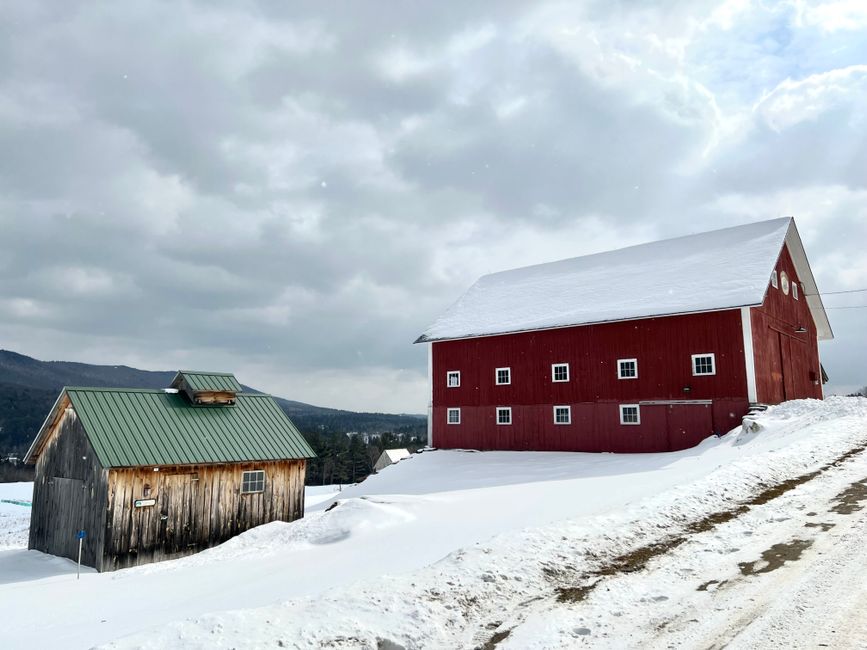

Vermont
Your complete statewide energy guide: electricity rates, solar panel installation, home batteries, backup generators and EV charging. Compare incentives and utilities, find your city guide, then request a quote and get matched with a licensed installer who serves your area.
Electricity price: where Vermont stands
The average a home paid per kilowatt-hour, compared with every state and D.C.
EIA Electric Power Monthly, residential average, July 2026 (preliminary). 1st is the cheapest.
Power outages: where Vermont stands
Minutes a typical customer was without power in 2024, compared with every state and D.C.
See the year-by-year table and all 51 states →
EIA-861 reliability reports, 2019 to 2024. 1st is the fewest minutes. The year chips show Vermont’s place each year, including major events.
Your Vermont energy guide
Vermont is a small state with high electricity prices and a lot of home solar. Green Mountain Power serves about four in five homes, with a co-op, a city utility and a handful of town utilities making up the rest. Net metering is still available, but the state is rewriting the rule. Ice, wind and flood storms cause long outages, which is why Green Mountain Power leases home batteries and pays customers who bring their own.
Vermont energy overview
Green Mountain Power serves about 81% of Vermont customers, Vermont Electric Co-op about 12% (mostly the north) and Burlington Electric Department about 6.5% (the city of Burlington), according to EIA 2024 data. Washington Electric Co-op and a few town utilities serve small areas. Winters are long and cold, with ice storms and heavy snow, and summer thunderstorms and river floods can also knock out lines. Vermont homes paid about 23.75 cents per kWh in July 2026, among the highest in the country, so solar and efficiency can pay off, but the rules for solar credits are changing.
Vermont at a glance
Price and outage ranks are at the top of the pageExplore energy guides by Vermont city
Find your local utility, installation costs, rebates, permits, solar information and installer options for your Vermont city. Search, pick your city, or browse by region; 11 city guides are published.
Burlington and Champlain Valley
- Burlington Energy GuideSolar · Battery · Generators · EV chargers
- Essex Junction Energy GuideSolar · Battery · Generators · EV chargers
- South Burlington Energy GuideSolar · Battery · Generators · EV chargers
- St. Albans Energy GuideSolar · Battery · Generators · EV chargers
- Vergennes Energy Guide
- Winooski Energy GuideSolar · Battery · Generators · EV chargers
Central Vermont
Southern Vermont
Northeast Kingdom
No guide for that name yet. Try another spelling, or use the quote form below and choose “Another Arizona city”.
Regional guides
Your city is not listed? The guides above are the ones we have published so far. Use the quote request to ask for installers anywhere in Vermont, or read the incentives and laws below for the rules that apply statewide.
Explore Vermont energy solutions
Four ways to use your own power at home. Choose your city and we take you to its page for that solution, or to the Vermont quote form when the city has no page yet.
Solar panels and installation
Net-metered solar is exempt from Vermont’s 6% sales tax and, for systems under 50 kW, from municipal property tax. New home systems up to 15 kW earn about 15.7 cents per excess kWh after the August 2026 reset, so sizing the system close to your own use usually pays best.
- Register with the PUC online; for systems up to 15 kW the registration also serves as the utility interconnection request.
- Choose whether to keep or transfer the renewable energy credits: keeping them costs 4 cents per kWh.
- Winter sun is weak (about 1.1 kWh per square metre a day in December in Burlington), so plan on most of the year’s output arriving from spring to fall.
No city yet? Request an Arizona quote
Home battery backup
Green Mountain Power leases two Powerwall-type batteries for $55 a month over 10 years or $5,500 once, and also pays customers who buy their own battery. In return GMP can use the stored power at peak times.
- Lease: whole-home backup; GMP shares access to the battery.
- Bring Your Own Device: GMP lists $850 per kW (3-hour battery) or $950 per kW (4-hour) up to 10 kW, plus $100 per kW in constrained areas.
- Both programs need a smart meter and internet; BYOD requires grid charging to be enabled.
No city yet? Request an Arizona quote
Standby generators
Ice storms, wind and floods can leave homes without power for a day or more, so a standby generator or a portable one with a transfer switch is common in rural Vermont. A transfer switch is electrical work for a licensed electrician.
- Never run a generator indoors or in a garage; carbon monoxide kills.
- A transfer switch keeps power from flowing back into the lines and hurting line crews.
- Ask your town about zoning for a generator pad and your fuel supplier about propane or gas hookups.
No city yet? Request an Arizona quote
Home EV charger installation
Green Mountain Power offers rebates on new and used electric vehicles through December 31, 2026 and a free Level 2 home charger for customers who enroll in a charging rate. Burlington Electric has its own rebates. Vermont’s state EV rebates closed in October 2024.
- GMP: $1,500 (new) or $1,000 (used) toward an all-electric vehicle.
- Burlington Electric: up to $5,000 for a new all-electric vehicle and up to $900 for a home charger.
- Charge on an off-peak or EV rate: GMP lists off-peak EV rates well below its standard rate.
- Public ports: 1,357 statewide
No city yet? Request an Arizona quote
How Vermont ranks among all states
The panels at the top give Vermont’s place for price and outages. Here you can pick any year and compare every state side by side.
Vermont in any year
Rank: 1st is the fewest minutes or interruptions among the 51 (50 states and D.C.). In every year from 2019 to 2024, Vermont ranked between 16th and 48th for outage time including major events.
Every state, side by side
| State | Price, July 2026 (rank) | Outage minutes, all events (rank) | Outage minutes, no major events (rank) |
|---|
Prices: EIA Electric Power Monthly, residential average, July 2026 (preliminary). Outages: EIA-861 reliability reports, minutes without power per customer per year (SAIDI), customer-weighted across each state’s utilities. Utilities report on slightly different standards and a few states have little data, so a gap of a few minutes or a place or two is not meaningful. Rankings change from year to year.
How net metering works in Vermont
Vermont net metering is set by Public Utility Commission (PUC) Rule 5.100. Your solar power first serves your own home. At the end of each billing period, any extra power you sent to the grid is turned into a bill credit, valued at the “blended residential rate” (the lower of your utility’s residential rate or the statewide average). The credit takes off your bill and can carry forward, but credits you do not use within 12 months expire at Green Mountain Power, and no cash is paid out. Two small add-ons apply to new systems: a “siting adjustor” (negative 5 cents per kWh for new home-size systems up to 15 kW) and a “REC adjustor” (zero if you let the utility keep the renewable energy credits, negative 4 cents if you keep them). These adjustors are multiplied by every kWh your panels make, not only the extra, so they are best read as a deduction from the credit.
The PUC reset the numbers on May 29, 2026. For applications filed from August 1, 2026 through July 31, 2028, the statewide blended residential rate is 20.71 cents per kWh, and the PUC’s own table shows new home systems up to 15 kW (Category I) at about 15.71 cents per kWh of compensation, compared with 14.40 cents before. Systems that applied before that date keep their own adjustors but get the higher blended rate. Green Mountain Power’s tariff, effective with bills on or after October 1, 2026, credits excess generation at 20.71 cents per kWh. Washington Electric Co-op’s 2026 tariff also lists 20.71 cents. Your own utility’s rate can be lower if its residential rate is below the statewide figure.
The rule is likely to change again. On September 9, 2026 the PUC opened a rulemaking (Case 26-1786-RULE) to rewrite Rule 5.100, saying it wants to pay for the value of the power and reward systems that match the home’s own use. A first workshop was set for October 2, 2026. Ask your installer which rules apply to your sign-up date.
| Utility type | Export rule | Examples |
|---|---|---|
| Investor-owned | Monthly bill credit at 20.71 cents per kWh (tariff effective Oct. 1, 2026) for new systems, less the siting and REC adjustors in your state certificate; credits expire after 12 months; no cash payout | Green Mountain Power |
| Cooperatives | Same state rule; credit at the lower of the co-op’s residential rate or the statewide rate. Washington Electric’s 2026 tariff lists 20.71 cents; a March 2026 Vermont Electric Co-op sample bill showed 18.116 cents before the August update | Vermont Electric Co-op, Washington Electric Co-op |
| Municipal | Also under Rule 5.100; credit at the blended residential rate, which can be lower than the statewide rate. Current Burlington Electric figure not confirmed | Burlington Electric Department; town utilities (Hardwick, Northfield, Ludlow, Jacksonville and others) |
Sources: PUC 2026 Biennial Update Order, Case 26-0291-INV, May 29, 2026; PUC Rule 5.100 (effective March 1, 2024), sections 5.126 and 5.127; Green Mountain Power net-metering tariff (effective Oct. 1, 2026); Washington Electric Co-op tariff (effective Aug. 1, 2026); PUC order opening Case 26-1786-RULE (Sept. 9, 2026). Checked Oct. 21, 2026.
Vermont energy incentives, rebates and tax credits
Statewide rules first, then the utility programs. Statuses were checked on October 21, 2026; amounts and rules change, so confirm on the program page before you count on one. The federal credits below have ended.
| Program | Available through | Eligible equipment | Amount or benefit | Eligibility | Status and source |
|---|---|---|---|---|---|
| Federal residential clean energy credit (25D) | Federal (IRS) | Rooftop solar and home batteries | Was 30% of cost | Not allowed for expenditures after December 31, 2025 | ENDED IRS FAQ |
| Federal home energy improvement credit (25C) | Federal (IRS) | Efficiency upgrades such as heat pumps, windows, insulation | Was up to 30% with annual limits | Ended for property placed in service after December 31, 2025 | ENDED IRS FAQ |
| Federal charger credit (30C) | Federal (IRS) | EV charging equipment | Was up to 30% of cost, with a cap | Ended for property placed in service after June 30, 2026 | ENDED IRS FAQ |
| Sales tax exemption for net-metering systems | State (Department of Taxes) | Equipment incorporated into a net-metering system; off-grid home energy systems; solar hot water | Exempt from Vermont’s 6% sales tax (claim with Form S-3E) | 32 V.S.A. 9741(46); whether a home battery is covered is not confirmed | ACTIVE Vermont Statutes, 32 V.S.A. 9741 |
| Property tax exemption for small solar | Municipal and education property tax | Solar plant under 50 kW that is net-metered or off-grid | Not taxed | Plant under 50 kW, net-metered or powering only its own property | ACTIVE Vermont Department of Taxes, solar valuation |
| Net-metering bill credit | Your electric utility under PUC Rule 5.100 | Solar PV that registers with the PUC | About 15.7 cents per excess kWh for new systems up to 15 kW (20.71 cents less the 5 cent siting adjustor, REC credits transferred) | Applications filed Aug. 1, 2026 to July 31, 2028; rule under rewrite | ACTIVE PUC 2026 Biennial Update Order |
| Powerwall-type battery lease | Green Mountain Power | Two leased batteries with whole-home backup | $55 a month for 120 months (total $6,600) or $5,500 once; early termination fee $850 | GMP residential customer with smart meter and internet; tariff available through Sept. 30, 2028 unless ordered otherwise, subject to annual MW limits | ACTIVE GMP Energy Storage System tariff |
| Bring Your Own Device battery incentive | Green Mountain Power | Customer-owned battery from a GMP-approved list | Backup-only: $850 per kW (3 hours) or $950 per kW (4 hours), up to 10 kW, plus $100 per kW in constrained areas; self-consumption: $850 flat; $3.97 monthly software fee | Own your home, smart meter, internet, grid charging enabled; available through Sept. 30, 2028, subject to annual MW limits | ACTIVE GMP BYOD tariff |
| Electric vehicle rebates | Green Mountain Power | New or used EV or plug-in hybrid | All-electric: $1,500 new purchase, $1,000 new lease or used; plug-in hybrid: $1,000 new purchase, $750 lease or used; extra low-income rebate (amount not stated) | Vehicle registered in Vermont at your GMP address; through Dec. 31, 2026 | ACTIVE GMP EV rebate terms |
| Free Level 2 home charger | Green Mountain Power | Level 2 charger with EV purchase or lease | Free charger; installation incentive up to $500 to $650 (GMP pages differ) | All-electric vehicle, WiFi, enroll in a GMP charging rate and share access | ACTIVE GMP EV rebate terms |
| Electric vehicle and home charger rebates | Burlington Electric Department | New or used EV; ChargePoint Home Flex charger | New all-electric $5,000 (income-qualified $5,700); new plug-in hybrid $2,000; used $1,300; charger $900 with an all-electric vehicle, $700 with a plug-in hybrid | Burlington Electric customer, vehicle registered in Burlington, enrol in BED’s EV rate for the charger; through Dec. 31, 2026 | ACTIVE Burlington Electric EV rebates |
| Heat pump and heat pump water heater rebates | Efficiency Vermont (statewide) | Heat pumps, heat pump water heaters, weatherization | Ducted and ductless heat pumps $375 to $2,200 plus $200 income bonus; heat pump water heater $600 plus $400 income bonus; utilities may add more | Listed in a Spring 2026 co-op newsletter; amounts and income limits change, check before buying | ACTIVE Efficiency Vermont rebates (as listed in VEC Co-op Life, Spring 2026) |
| Electric vehicle and charger incentives | Vermont Electric Co-op | EVs and chargers | Bill credits (2025: $250 plug-in hybrid, $500 all-electric, $500 more if income-qualified) and a free Level 2 charger or $250 credit | 2026 amounts not confirmed; members agree not to charge at peak times | NOT CONFIRMED VEC Co-op Life, Winter 2025 |
| Home battery program | Vermont Electric Co-op | Customer-owned grid-connected battery | 2025 plan lists $6.40 per kW per month for members who share control with VEC | Small program (20 participants in plan); 2026 terms not confirmed | NOT CONFIRMED VEC 2025 Tier III Plan |
| State EV purchase incentives (New PEV, Replace Your Ride, MileageSmart) | State of Vermont | Electric vehicles | Previously up to $5,000 | Ran out of money and closed in October 2024; no new appropriation reported in the February 2026 state review | ENDED Vermont Agency of Transportation incentive report, 2025 review |
Vermont allows plug-in solar of up to 1,200 watts per meter under Act 149, effective July 1, 2026; homes with net-metered solar cannot add one and exports are not paid.
Electricity providers across Vermont
Your provider depends on your address, not on your city. A ZIP code or a city can overlap several territories, so check the top of your electric bill or ask the utility with your street address. We do not guess a provider from a ZIP code.
| Utility | General service region | Structure | Solar export rules | Special programs |
|---|---|---|---|---|
| Green Mountain Power (investor-owned) | Most of Vermont; about 81% of customers (275,000) | Regulated by the PUC; residential Rate 1 at 22.639 cents per kWh energy rate in its Oct. 2026 tariff | Monthly credit at 20.71 cents per kWh for new net-metered systems, less adjustors; credits expire after 12 months | Powerwall-type lease ($55 a month), Bring Your Own Device battery incentive, EV rebates, free Level 2 charger |
| Vermont Electric Co-op (cooperative) | Northern and northeastern Vermont, including Newport; about 12% of customers | Member-owned; rates set with PUC oversight | Same Rule 5.100 credit at the lower of VEC’s own residential rate or the statewide rate; sample March 2026 bill credit 18.116 cents | EV and charger bill credits, battery program, Community Solar (2026 terms not confirmed) |
| Burlington Electric Department (municipal) | City of Burlington and the airport; about 6.5% of customers | City-owned; rates set locally and approved by the PUC | Rule 5.100 credit at its blended residential rate; current figure not confirmed | EV and charger rebates, heat pump water heater rebates, EV rate |
| Washington Electric Co-op (cooperative) | Central Vermont, small towns around Montpelier and Barre | Member-owned; says no rate increase in 2026 | Tariff effective Aug. 1, 2026 credits new systems at 20.71 cents per kWh; about 1,000 net-metering members | 2026 incentive programs listed; battery details not confirmed |
| Co-ops and municipal utilities | Small towns across the state; the state counts 14 municipal departments and 2 co-ops | Each sets its own rates and policies, with PUC oversight | All must follow Rule 5.100; credit rate depends on each utility’s own residential rate | Examples include Hardwick, Northfield, Ludlow and Jacksonville; ask your utility |
Customer shares: EIA-861, 2024. Territories are from the EIA-861 service-territory file and each utility’s own pages. Detail for each city is in the city guides.
Vermont electricity costs and regional differences
Vermont’s rates are set by the Public Utility Commission for Green Mountain Power and by boards for co-ops and city utilities. Prices are high because the state has few large customers per mile of line, spends heavily on storm repair, and buys a lot of renewable power.
| Measure | Scope | Value | Source and date |
|---|---|---|---|
| Residential average price | Vermont, July 2026 (preliminary) | 23.75 cents per kWh (U.S. 18.31) | EIA Electric Power Monthly |
| Average residential price | Vermont, July 2026 | 23.75 cents per kWh (preliminary); 22.14 cents in July 2025 | EIA Electric Power Monthly Table 5.6.A, Sept. 2026 |
| Average residential price, year to date | Vermont, Jan to Jul 2026 | 23.95 cents per kWh (preliminary) | EIA Electric Power Monthly Table 5.6.B, Sept. 2026 |
| Standard residential energy rate | Green Mountain Power, Rate 1 | 22.639 cents per kWh | GMP net-metering tariff, effective Oct. 1, 2026 |
| Approved rate increase | Green Mountain Power | 5.5% on bills from Oct. 1, 2026 (GMP asked for 7.5%) | VTDigger, Sept. 8, 2026 (PUC order Aug. 2026) |
| Outage time with major events | Vermont, 2024 | 696.7 minutes per customer; 2.516 outages per customer | EIA-861 reliability data, 2024 |
| Outage time without major events | Vermont, 2024 | 275.0 minutes per customer; 1.661 outages per customer | EIA-861 reliability data, 2024 |
| Average solar cost | Vermont | $2.78 per watt before incentives (about $31,959 for 11.5 kW) | EnergySage, Oct. 2026 |
| 13 kWh home battery | Vermont | $14,926 before incentives | EnergySage, Oct. 2026 |
- Vermont prices ran about 30% above the U.S. average in July 2026 (our math from EIA).
- Green Mountain Power’s rate rises Oct. 1, 2026 by 5.5%; the PUC approved about a third of the $341 million in storm-hardening spending GMP asked for.
- Time-of-use and EV rates can cut the price of off-peak charging; GMP’s rate page lists Rate 72 at 17.919 cents off-peak (page undated, confirm).
Run your own numbers with the solar savings calculator and the battery backup calculator. Local detail is in your city guide.
| What it costs | Typical figure | Source |
|---|---|---|
| Rooftop solar, installed | $2.78 per watt (EnergySage, October 2026) | EnergySage Vermont |
| Home battery | About $14,926 for 13 kWh before incentives | EnergySage |
| Home EV charger install | About $800 to $3,000 before the charger (a U.S. range) | EnergySage, 2026 |
Solar and backup power across Vermont
Vermont is not one climate. What you plan for depends on where you live.
Burlington and Champlain Valley. The state’s largest cluster of homes is served mostly by Green Mountain Power, with Burlington Electric inside the city and Vermont Electric Co-op in the surrounding countryside. Winter ice and wind are the main outage causes,. Ask which utility serves your street before you plan solar. Read the Burlington energy guide.
Central Vermont. Montpelier, Barre and Rutland are mostly Green Mountain Power, with Washington Electric Co-op serving many small towns around Montpelier and Barre. The December 2025 ice storm hit central Vermont hardest, and the July 2023 floods damaged lines around Montpelier. Plan for long outages and backup power. Read the Central Vermont energy guide.
Southern Vermont. Bellows Falls and the rest of Windham and Bennington counties are served by Green Mountain Power, with the Village of Jacksonville running its own small utility. Southern Vermont often sees more ice from freezing rain, and thunderstorms in June 2026 knocked out power to thousands in Windsor and Bennington counties. Read the Southern Vermont energy guide.
Northeast Kingdom. Newport and the lake country are mostly served by Vermont Electric Co-op, with some Green Mountain Power territory. Winters are colder and lines run long distances through forest, so outages can last longer. A July 2026 tree outage in Newport affected over 1,200 customers.
Which approach fits?
| If you mainly want to | Consider | Why |
|---|---|---|
| Cut a bill that is mostly cooling or heating | Solar, sized to your own use | Power used at home saves the full retail price; what exports earn depends on your utility |
| Keep essentials on through storms or freezes | A battery, or solar plus a battery | The battery keeps lights, internet and a refrigerator on automatically |
| Run central air or heat for days in an outage | A standby generator (or a very large battery) | A generator runs as long as it has fuel; a battery is silent and automatic |
| Power a remote property without a utility | Off-grid solar, batteries and a generator | No service line needed; sized to your loads |
Details and costs are in each city’s guides. See also our backup power guide.
Vermont energy laws, licensing and permits
| Topic | What applies statewide | Where to check |
|---|---|---|
| Electrician license | Vermont licenses master and journeyman electricians; ask any installer for a license number and check it on the state list | Vermont licensed electricians list |
| Net-metering registration | Roof-mounted solar up to 500 kW and ground-mounted up to 15 kW register online with the PUC; a Certificate of Public Good is deemed issued on the 15th day after filing; for 15 kW or less the form also acts as the interconnection request | PUC Rule 5.100 |
| Utility interconnection | All net-metering systems also need utility approval under PUC Rule 5.500; the applicant pays for equipment and any grid upgrades | GMP interconnection process |
| HOA and deed restrictions | Covenants cannot prohibit solar collectors or clotheslines; an association may choose the roof location within 45 degrees of due south if it does not hurt output | 27 V.S.A. 544 |
| Plug-in solar | Up to 1,200 W per meter, smart meter, UL 3700 or equivalent; no utility approval; exports not paid; effective July 1, 2026 | Act 149 of 2026 |
| Electrical code and permits | 2025 Vermont Electrical Safety Rules adopt the 2023 National Electrical Code and require an electrical work notice before work | Vermont Electrical Safety Rules 25P023 |
| Fire and building code | Vermont Fire and Building Safety Code, 2025 edition (NFPA 1 and NFPA 101, 2021 editions); battery and generator details not confirmed here | Division of Fire Safety codes |
| Solar sales claims | State guidance warns sellers not to call power renewable or solar if they sell its renewable energy credits; ask what happens to the RECs | Vermont solar marketing guidance |
Find your city’s installation requirements. Choose your city above for local permits, codes and utility steps.
Vermont EV charging and alternative fuel corridors
Vermont has 1,357 public charging ports at 549 locations: 1,008 Level 2 and 333 DC fast (Alternative Fuels Data Center, public and open stations, read 2026-10-22). DC fast ports are listed in 56 of the 122 Vermont cities with public chargers. About 11,900 battery-electric cars were registered through 2025, so home charging does most of the work.
Drive on another fuel? See every alternative fuel station in Vergennes: hydrogen, propane, natural gas, E85 ethanol, biodiesel and renewable diesel.
Where the fast chargers are. The biggest counts are in Brattleboro (37), Vergennes (20), St Johnsbury (20), South Burlington (19), Bennington (13), Rutland (12).
Vermont has received $21.2 million in federal NEVI funds and has obligated all of it. As of June 30, 2026 the state had $8 million contracted for nine priority fast-charging locations and expected up to 12 more locations to be offered that fall. Check the state’s fast-charging status map for open sites.
| Fuel | Public stations in Vermont | Station directories |
|---|---|---|
| EV charging | 549 locations | Statewide map · EV charging guide |
| Propane autogas | 2 | Propane guide |
| E85 ethanol | 0 | E85 guide |
| Compressed natural gas (CNG) | 0 | CNG guide |
| Biodiesel | 0 | Biodiesel guide |
| Renewable diesel, hydrogen, LNG | 0, 0, 0 | Few or none listed in Vermont |
Station directories by city (each has its own map, addresses and directions): Barre · Essex Junction · Montpelier · Rutland · South Burlington · St. Albans · Winooski.
Vermont energy updates
Verified statewide developments only, each with a date and an official source. Last checked 2026-10-21.
The blended residential rate rose to 20.71 cents per kWh and the siting adjustor for new home systems moved to negative 5 cents, effective August 1, 2026 for two years.
Source: Vermont PUC, Case 26-0291-INVAct 149 lets homes use plug-in solar devices up to 1,200 W per meter from July 1, 2026; exports are unpaid.
Source: Vermont Legislature, Act 149A new rulemaking (Case 26-1786-RULE) will redesign Rule 5.100; a first workshop was set for October 2, 2026.
Source: Vermont PUC orderRegulators approved a 5.5% increase effective October 1 (GMP asked for 7.5%) and about $113 million of the $341 million of storm-hardening spending it requested.
Source: VTDiggerThe lease and Bring Your Own Device tariffs now say they are available through September 30, 2028, subject to annual limits; lease price stays $55 a month.
Source: Green Mountain Power tariffGet a quote and connect with licensed installers in your area
Ready to move forward? Tell us where your property is and which project you are considering: solar panels, a home battery, a standby generator or an EV charger. We reply ourselves and match you with a licensed installer who serves your area. It is free, with no obligation, and nothing is shared with an installer unless you choose one. We only say an installer serves your area when we have checked it.
Start your request
1. Choose your project. 2. Choose your location. 3. Continue to the form, which asks the project questions and your contact details.
Nothing is typed or sent on this step. We reply ourselves, and your details go only to an installer you choose.Are you a licensed installer in Vermont? Join SolutionEnergy and get requests from homeowners and businesses →
Vermont energy FAQs
What is the average electricity rate in Vermont?
Statewide, the residential average was 23.75 cents per kWh in July 2026 (EIA, preliminary), against 18.31 cents for the U.S. Individual utilities and plans differ, so check your own bill.
Does Vermont have net metering?
Yes. Under PUC Rule 5.100 extra solar power earns a bill credit. For applications filed from August 1, 2026 to July 31, 2028 the statewide credit rate is 20.71 cents per kWh, less a siting adjustor (negative 5 cents for new home systems) and a REC adjustor if you keep your renewable credits. The PUC is also rewriting the rule.
What changed on August 1, 2026?
The PUC raised the statewide blended residential rate by 2.31 cents to 20.71 cents and cut the siting adjustor for new Category I and II systems by 1 cent, to negative 5 cents. The PUC says new systems net out about 1.31 cents higher, and most existing systems about 2.31 cents higher.
Is there a Vermont solar tax credit?
We found no state income tax credit. Net-metering equipment is exempt from the 6% sales tax and solar under 50 kW that is net-metered or off-grid is exempt from municipal property tax. The federal 25D credit does not apply to spending after Dec. 31, 2025.
Will I pay sales tax on a home battery?
The statute exempts equipment incorporated into a net-metering system, but we could not confirm that a home battery is covered. Ask the Department of Taxes or your installer before you rely on it.
Can I get a home battery from my utility?
Green Mountain Power leases two batteries for $55 a month for 10 years or $5,500 once, and pays customers who buy their own battery through Bring Your Own Device. Both tariffs run through Sept. 30, 2028 unless ordered otherwise, with yearly limits. About 5,600 customers were enrolled by late September 2026, according to WCAX.
Is plug-in or balcony solar legal in Vermont?
Yes, since July 1, 2026, for devices up to 1,200 watts per meter that meet UL 3700 and use a smart meter. Exports are not paid and net-metered homes cannot add one.
Do I need a permit for rooftop solar?
Home-size roof systems register with the Public Utility Commission and need utility interconnection approval; electrical work needs a licensed electrician and an electrical work notice. Ask your town about any local building or zoning rules.
Why are Vermont outages so long?
Ice storms, heavy wind, snow and floods bring down lines across a rural state. In 2024 the average Vermont customer lost 696.7 minutes of power including major events, or 275 minutes without them (EIA). A December 2025 ice storm hit central Vermont, and floods in July 2023 caused more than 10,000 outages statewide at the peak.
Are there state electric vehicle rebates?
Vermont’s state purchase incentives (New PEV, Replace Your Ride and MileageSmart) ran out of money and closed in October 2024. Green Mountain Power and Burlington Electric offer their own rebates through Dec. 31, 2026.
Will the net-metering rules change again?
Probably. The PUC opened a rulemaking on Sept. 9, 2026 to rewrite Rule 5.100 and held a first workshop on Oct. 2, 2026. Systems that file now keep the adjustors set in their certificate.
Where can I find EV charging stations across Vermont?
The Department of Energy map lists 1,357 public ports, and our city pages list stations near you.
How do I find qualified installers in my city?
Choose your city in the directory above, or use the quote request. We reply ourselves and suggest licensed installers that serve your area.
Sources, editorial policy and updates
| Figure or rule | Scope | Source | Data period | Verified |
|---|---|---|---|---|
| Residential electricity price, U.S. comparison | Vermont statewide | EIA Electric Power Monthly | July 2026 (preliminary) | 2026-10-03 |
| Outage minutes and customer counts by utility | Vermont statewide and by utility | EIA-861 | 2024 | 2026-10-21 |
| Net-metered home solar systems | Vermont residential, net-metered only | EIA-861 Net Metering | 2024 | 2026-10-03 |
| Solar resource | Vermont cities | NASA POWER | 2001-2020 | 2026-10-03 |
| Weather hazards | Vermont statewide | FEMA National Risk Index | December 2025 | 2026-10-03 |
| Public charging and fuel stations | Vermont statewide | Alternative Fuels Data Center | Read 2026-10-22 | 2026-10-22 |
| Federal credits | U.S. | IRS | In force 2026 | 2026-10-21 |
| Net-metering rate, adjustors, effective date | Statewide | PUC 2026 Biennial Update Order (Case 26-0291-INV) | Aug. 1, 2026 to July 31, 2028 | 2026-10-21 |
| Net-metering rule text | Statewide | PUC Rule 5.100 | Effective Mar. 1, 2024 | 2026-10-21 |
| Rule 5.100 rewrite | Statewide | PUC Order opening Case 26-1786-RULE | Sept. 9, 2026 | 2026-10-21 |
| GMP net-metering credit | Green Mountain Power | GMP Self Generation and Net Metering tariff | Effective Oct. 1, 2026 | 2026-10-21 |
| GMP battery programs | Green Mountain Power | GMP Energy Storage and BYOD tariffs | Effective Oct. 1, 2026 | 2026-10-21 |
| Electricity prices | Vermont | EIA Electric Power Monthly Table 5.6.A | July 2026 (preliminary) | 2026-10-21 |
| Utility shares and outage minutes | Vermont | EIA-861 2024 | 2024 | 2026-10-21 |
| Plug-in solar and HOA law | Statewide | Act 149 of 2026 | Effective July 1, 2026 | 2026-10-21 |
| Sales and property tax exemptions | Statewide | 32 V.S.A. 9741; Department of Taxes | Current statute | 2026-10-21 |
| Solar and battery costs | Vermont | EnergySage | Oct. 2026 | 2026-10-21 |
General information, not financial, tax, legal or electrical advice. Estimates are ours and are not promises. See our editorial policy. Full source notes for this page are kept with the site’s data files and refreshed when a program changes.