In short: Virginia’s home electricity price jumped about 11% in a year, to 17.55 cents per kWh in July 2026, while customers averaged about 418 minutes without power in 2024. One-to-one net metering survived the 2026 review for Dominion customers, so solar keeps its full retail value here.
Virginia sits in the middle on price, just under the U.S. average, but the direction is up, and coastal storms and inland wind and ice keep backup power on people’s minds. Two companies, Dominion Energy Virginia and Appalachian Power, serve about four in five customers, and co-ops cover much of the rest. Here is what the state’s own numbers mean for your next step.
Virginia at a glance
- Residential electricity price: 17.55 cents per kWh in July 2026, up from 15.78 cents in July 2025; the U.S. average was 18.31 cents (EIA, preliminary). The 2026 average through July was 16.83 cents.
- Outages, 2024: about 418 minutes per customer with major events and 166 without; 1.6 interruptions per customer with major events and 1.3 without (EIA-861).
- Solar resource: 4.29 kWh per square meter per day at Virginia Beach and 4.28 near the state’s center (NASA POWER), roughly 1,250 kWh a year per kW of panels by our estimate.
- Net metering: full retail. The State Corporation Commission (SCC) kept one-to-one annual netting for Dominion’s successor tariff (final order April 30, 2026, with a $1 monthly fee for new customers) and kept Appalachian Power’s net metering in 2025.
- Plug-in (balcony) solar law: signed but not yet in effect. HB 395 (2026) allows up to 1,200 W per customer from January 1, 2027.
- Electric vehicles: about 134,900 battery-electric and 39,300 plug-in hybrid vehicles through 2025; 5,526 public charging ports at 1,824 locations, 1,848 of them DC fast (AFDC, October 2026).
- Largest utilities (2024): Dominion Energy Virginia (66% of customers), Appalachian Power (14%), Northern Virginia Electric Cooperative and Rappahannock Electric Cooperative (about 4.5% each).
- Top weather hazards: winter weather and strong wind rated relatively high for expected annual loss; hurricanes, ice storms, tornadoes, cold and heat waves relatively moderate (FEMA National Risk Index, December 2025).
- Wildfire shutoffs: no program found at Dominion or Appalachian Power in Virginia.
Backup power in Virginia
Major events more than doubled Virginia’s 2024 outage time, from 166 to 418 minutes. That pattern, an ordinary baseline plus a few big storms, matches FEMA’s hazard list: no single dominant threat, but many moderate ones. Hampton Roads faces hurricanes and nor’easters; the Shenandoah Valley and Southwest Virginia get ice and heavy snow; thunderstorm winds reach everywhere. The right backup depends a lot on where you live in the state.
- Coastal homes: a standby generator on natural gas or propane handles the multi-day outages a hurricane can bring. Place it per the maker’s clearances and above likely flood levels; a licensed electrician installs the automatic transfer switch, with permits.
- Suburban Northern Virginia and Richmond: outages are usually shorter, so a home battery, especially with solar, covers most of them silently. Try the battery backup calculator.
- Rural and mountain homes: long ice-storm outages and well pumps call for more energy than most batteries hold; a dual-fuel portable or standby generator is the budget answer. Size it with the generator sizing tool.
- Apartments and townhomes: a portable power station keeps phones, Wi-Fi, a CPAP and lights going.
Any portable generator runs outdoors only, at least 20 feet from the house with exhaust pointed away from doors and windows, never in a garage (CPSC), and connects only through a transfer switch or interlock installed by a licensed electrician. More in our generators and home batteries guides.
Solar in Virginia
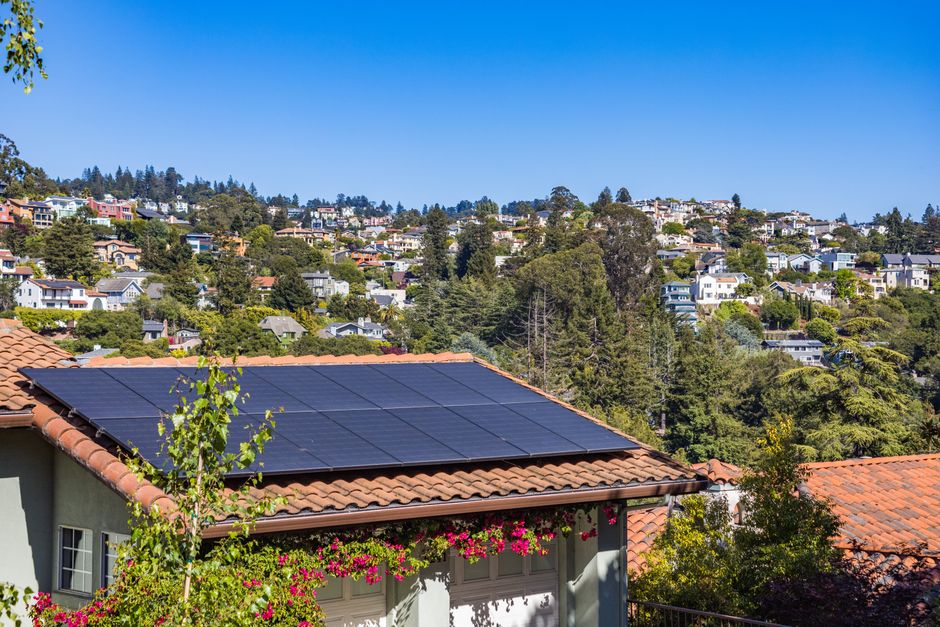
Virginia is one of the friendlier Southeast states for home solar on paper. Net metering credits exports at the retail rate with annual netting, so a kWh you send to the grid in June is worth about the same as one you use in January. That keeps the math simple. By our rough estimate a 6 kW array would make around 7,500 kWh a year, worth about $1,300 a year at 17.55 cents. With prices up 11% in a year, that value rises as rates rise. These are estimates, not promises.
Solar is already common here: EIA counted about 69,500 residential net-metered systems in 2024. A state law also keeps your property tax from rising: residential solar of 25 kW or less is fully exempt from local property tax (Va. Code 58.1-3661). New Dominion net metering customers pay a $1 monthly administrative fee under the SCC’s 2026 order, and the federal credit ended for home systems finished after December 31, 2025. Read our net metering guide, compare prices in solar panel cost, check your roof with the solar potential tool and start from the solar guide.
Plug-in solar becomes legal on January 1, 2027, under HB 395: up to 1,200 W per customer or unit, with notice to your utility on a Commission form. Until then, a balcony kit still needs your utility’s interconnection approval.
Home batteries in Virginia
Because net metering already credits exports at retail, a battery in Virginia does not earn much by shifting solar to the evening. Its value is mainly backup, which is why few solar owners have one so far: EIA counted fewer than 700 battery-paired residential systems in 2024. If outages are your concern, a battery paired with solar can keep essentials running for days in sunny weather. We found no state battery rebate to confirm; ask your utility or co-op about any program. See home battery cost and the batteries hub.
EV charging in Virginia
Virginia had about 134,900 battery-electric cars at the end of 2025, roughly 24 for every public port, so home charging carries most of the load. At 30 kWh per 100 miles (a typical figure on fueleconomy.gov labels) and 17.55 cents, charging costs about $5.25 per 100 miles, or roughly $630 for 12,000 miles a year (our estimate, before charging losses). A time-of-use or EV rate can cut that; ask Dominion, Appalachian Power or your co-op. The federal charger credit ended for equipment placed in service after June 30, 2026. In townhome communities, check HOA rules before installing a charger. See home EV charging and the EV charging cost calculator.
Drive on another fuel? See every alternative fuel station in Virginia: hydrogen, propane, natural gas, E85 ethanol, biodiesel and renewable diesel.
Off-grid, small wind and micro-hydro
Inland Virginia’s wind is weak: about 3.9 meters per second at 50 meters near the state’s center and 1.8 at 10 meters (NASA POWER), well under the Department of Energy’s 4.5 m/s threshold. The coast reads higher, about 6.5 m/s at 50 meters near Virginia Beach, but small turbines sit far lower and local rules and buildings matter, so measure first. Mountain properties with steady streams may suit micro-hydro, but we have no state data on it yet. See off-grid power, wind energy and hydroelectric power.
Licensing and permits
Contractors, including electrical specialty contractors, and tradesmen such as electricians are licensed statewide by the Virginia Department of Professional and Occupational Regulation (DPOR) through its Board for Contractors. Check any license with DPOR’s license lookup. Building and electrical permits come from your city or county, and solar or batteries connected to the grid need your utility’s interconnection approval.
Local guides in Virginia
Utilities, rates, outage records, permit offices and local programs for each area:
Where we cover in Virginia
- Northern Virginia: Arlington, Alexandria, Fairfax, Ashburn, Leesburg, Manassas, Woodbridge
- Richmond: Richmond, Henrico County, Chesterfield County
- Hampton Roads: Virginia Beach, Chesapeake, Norfolk, Newport News
- Roanoke: Roanoke
- Charlottesville: Charlottesville
Local pages will follow as we verify local information and installers.
Get quotes in Virginia
Are you a licensed installer in Virginia? Join SolutionEnergy and get requests from homeowners and businesses →
Tell us about your project and we will connect you with a licensed, independent installer who serves Virginia. It is free, there is no obligation, and only the installer you choose gets your details. See how it works and our incentives guide.
Frequently asked questions
Does Virginia still have net metering in 2026?
Yes. Virginia law (Va. Code 56-594) provides retail-rate net metering. In its April 30, 2026 final order, the SCC kept one-to-one annual netting for Dominion’s successor tariff, adding a $1 monthly administrative fee for new customers. Appalachian Power’s net metering was kept in 2025. Co-ops have their own terms.
Do solar panels raise property taxes in Virginia?
No, for typical homes. Under Va. Code 58.1-3661, residential solar systems of 25 kW or less are fully exempt from local property tax. Most home systems are well under that size. Larger systems may be treated differently, so check with your local commissioner of the revenue if yours is unusually big.
When will balcony solar be legal in Virginia?
On January 1, 2027. HB 395, passed in 2026, adds section 56-596.8 to the Code of Virginia and allows plug-in solar of up to 1,200 W per customer or unit, with notice to the utility on a form set by the State Corporation Commission. Until then, a plug-in kit needs your utility’s interconnection approval.
Why did Virginia electricity prices go up?
EIA’s figures show the average residential price rising from 15.78 cents per kWh in July 2025 to 17.55 cents in July 2026, about 11%. EIA reports the average, not the reasons; your utility’s rate filings with the SCC explain the specific charges on your bill. Rising rates make solar and efficiency upgrades pay back faster.
What size generator does a Virginia home need for a hurricane?
It depends on what you must run. Essentials such as a fridge, sump pump and lights usually fit a 3,500 to 5,000-watt portable; adding a 240 V well pump takes about 7,500 W or more, and central air or the whole house needs a standby unit. Add up your appliances in our generator sizing tool, and have a licensed electrician install the transfer switch.
Sources
Prices: EIA Electric Power Monthly, July 2026 (preliminary). Outages, utilities and solar adoption: EIA-861, 2024. Solar and wind resource: NASA POWER, 2001 to 2020 averages; kWh and dollar figures are our estimates. Hazards: FEMA National Risk Index, December 2025. EVs and charging: AFDC, read October 3, 2026. Net metering: Virginia State Corporation Commission. Plug-in solar and property tax: Code of Virginia. Licensing: Virginia DPOR. All checked October 2026.