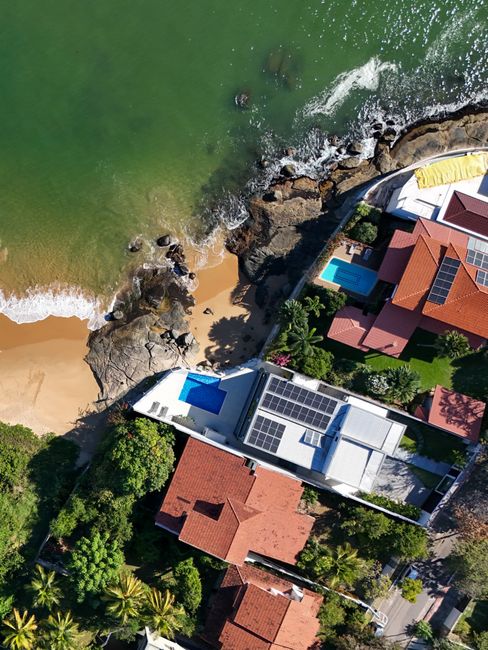
In short: Virginia Beach, Chesapeake, Norfolk and Newport News are all on Dominion Energy, which averaged 14.09¢ per kWh for homes in 2024. Hampton Roads gets the most sun of our Virginia metros, about 1,270 kWh per kW a year (estimate), and Norfolk is rated “Relatively High” for coastal flooding (FEMA).
This page covers Virginia Beach, Chesapeake, Norfolk and Newport News. Statewide rules (net metering after the 2026 SCC order, the solar property tax exemption, the 2027 plug-in solar law, contractor licensing) are on our Virginia energy guide.
Hampton Roads at a glance
- Dominion Energy Virginia serves all four cities (EIA, 2024): 14.09¢/kWh average for homes in 2024; outages 172 minutes per customer with major events, 131 without. These are Virginia-wide figures; EIA does not publish them for Hampton Roads alone.
- Sun: about 4.35 kWh per square meter per day at Norfolk (NASA POWER, 2001 to 2020). Our rough estimate: about 1,270 kWh a year per kW of panels.
- Top hazards (FEMA National Risk Index): Norfolk is “Relatively Moderate” overall, with coastal flooding and lightning “Relatively High”. Virginia Beach: lightning “Relatively High”; coastal flooding, hurricanes and tornadoes “Relatively Moderate”. Newport News: winter weather “Relatively High”. Chesapeake: coastal flooding, hurricanes, inland flooding and tornadoes “Relatively Moderate”.
- Public charging: 165 ports in Norfolk, 124 in Newport News, 122 in Virginia Beach and 100 in Chesapeake, about 510 in all (AFDC, October 3, 2026).
- Home solar: Dominion had about 53,400 net-metered home solar systems across Virginia at the end of 2024 (EIA).
The price is a 2024 average from EIA-861 (home revenue divided by home sales), so it includes fixed charges. Virginia’s statewide price has since risen (17.55¢ in July 2026), which makes every kWh you produce or save worth more.
Your utility and what it means
One utility makes Hampton Roads simpler than most metros: whichever of the four cities you live in, the rules come from Dominion and the SCC.
- Solar: net metering credits exported energy at retail over the year (see our state page for the 2026 SCC order and the $1 monthly fee for new customers). Your installer files Dominion’s interconnection paperwork; you need Dominion’s approval before the system runs.
- EV charging: Dominion’s EV Charger Rewards program pays $125 for a qualifying Level 2 charger and $40 a year if you let Dominion briefly adjust charging during peak events. It is for single-family homes on a standard rate, so it cannot be combined with the Off-Peak Plan. Check the program page; terms change.
- Storms: Dominion’s outage numbers are an average across the state. A hurricane or nor’easter that hits the coast can mean far longer outages here than the average suggests.
Backup power in Hampton Roads
Coastal storms set the plan here. Hurricanes rate “Relatively Moderate” across all four cities, and Norfolk’s coastal flooding rates “Relatively High”. Water changes where backup equipment can go: a generator, battery or transfer switch in a flood-prone garage or yard can be ruined by the same storm it was bought for.
- Houses: a standby generator on natural gas covers the multi-day outages a hurricane can bring. Set it per the maker’s clearances and above likely flood levels; ask your city about flood-zone rules first.
- Shorter outages and solar homes: a home battery switches over silently and recharges from solar after the storm passes; mount it above flood levels.
- Apartments and older Norfolk homes: a portable power station keeps phones, a CPAP, fans and a fridge going for a while and can be carried upstairs.
- Safety: portable generators outdoors only, 20 feet or more from the house, exhaust away from doors and windows, never in a garage (CPSC); carbon monoxide alarms on every level; a transfer switch or interlock installed by a licensed electrician with a permit.
Size your system with the generator sizing calculator or the battery backup calculator, and see our backup power guide and generator installation.
Solar in Hampton Roads
A rough estimate: a 7 kW system at about 1,270 kWh per kW makes roughly 8,900 kWh a year, worth about $1,250 a year at Dominion’s 2024 average of 14.09¢. That is the best sun among our Virginia metros, and retail net metering keeps exported energy close to full value over the year. These are estimates, not promises.
Wind matters on the coast. Newport News, for example, asks for roof plans designed for a 118 mph ultimate design wind speed and structural calculations sealed by a registered design professional. Expect the same care from any installer here. Try our solar potential tool, then read solar panel cost and solar installation.
Batteries
With retail net metering, a battery earns little by shifting solar to the evening; in Hampton Roads its job is storm backup. Pair it with solar so it can recharge in the sunny days that often follow a storm, and keep it above flood levels. See home battery installation, home battery cost and solar battery storage.
EV charging
The four cities have about 510 public charging ports. At home, a labelled estimate at about 30 kWh per 100 miles and Dominion’s 2024 average price: about $4.23 per 100 miles, roughly $510 a year for 12,000 miles. Dominion’s charger rewards or a time-of-use plan can lower that.
Drive on another fuel? See every alternative fuel station in Virginia Beach: hydrogen, propane, natural gas, E85 ethanol, biodiesel and renewable diesel.
A Level 2 charger needs an electrical permit and a licensed electrician; in flood-prone garages, ask about mounting height. The federal charger credit ended for chargers placed in service after June 30, 2026. See EV charger installation and our EV charging cost calculator.
Permits and inspections
Each of the four is an independent city with its own permit office; there is no county layer.
- Newport News: the Department of Codes Compliance publishes residential solar requirements for one- and two-family homes: a site plan, a roof diagram with fire access pathways, sealed structural calculations, and an electrical diagram showing disconnects, inverter, overcurrent protection and signs.
- Norfolk: the Development Services Center publishes a solar permitting checklist; ask it about flood-zone rules for generators too.
- Virginia Beach: permits come from the Planning Department’s Office of Permits and Inspections; ask it which permits your solar, generator or charger project needs.
- Chesapeake: ask the City’s permits office about building, electrical and zoning approval before you sign.
- Who does the work: a DPOR-licensed contractor and electrician (look them up through our state page), a licensed gas fitter for generator gas lines, and HOA approval first where you have one.
Cities we cover
- Virginia Beach
- Chesapeake
- Norfolk
- Newport News
Get help
Tell us about your project and we will connect you with a licensed, independent installer who serves the Hampton Roads area. It is free, there is no obligation, and only the installer you choose gets your details. See how it works.
Are you a licensed installer in Virginia Beach? Join SolutionEnergy and get requests from homeowners and businesses →
Hampton Roads energy FAQ
Who provides electricity in Virginia Beach, Norfolk, Chesapeake and Newport News?
Dominion Energy Virginia serves all four cities (EIA, 2024). That means one set of solar and EV rules across the metro, set by Dominion’s tariffs and the State Corporation Commission. Parts of nearby Suffolk are served by a co-op instead.
Where should a generator go in a flood-prone neighborhood?
Above likely flood levels and at the clearances the maker sets, with the transfer switch above flood levels too. Norfolk rates “Relatively High” for coastal flooding (FEMA), so ask your city permit office about flood-zone rules before you place it.
Does solar make sense on the coast?
The numbers are good: about 4.35 kWh per square meter per day at Norfolk, the best of our Virginia metros, and retail net metering. Our rough estimate is about $1,250 a year for a 7 kW system. Ask for racking and attachments designed for coastal wind loads.
How much does it cost to charge an EV at home in Hampton Roads?
About $4.23 per 100 miles at Dominion’s 2024 average price and 30 kWh per 100 miles, roughly $510 a year for 12,000 miles (our estimate). Prices have risen since 2024; Dominion’s EV Charger Rewards pays $125 for a qualifying charger and $40 a year.
Sources
Utility areas, prices, outages and home solar counts: EIA-861, 2024 data. EV program: Dominion EV Charger Rewards program site. Hazards: FEMA National Risk Index, December 2025. Sun: NASA POWER, 2001 to 2020. Charging ports: AFDC Station Locator, October 3, 2026. Permits: Newport News Department of Codes Compliance; Norfolk and Virginia Beach permit offices. Generator safety: CPSC. Checked October 3, 2026.