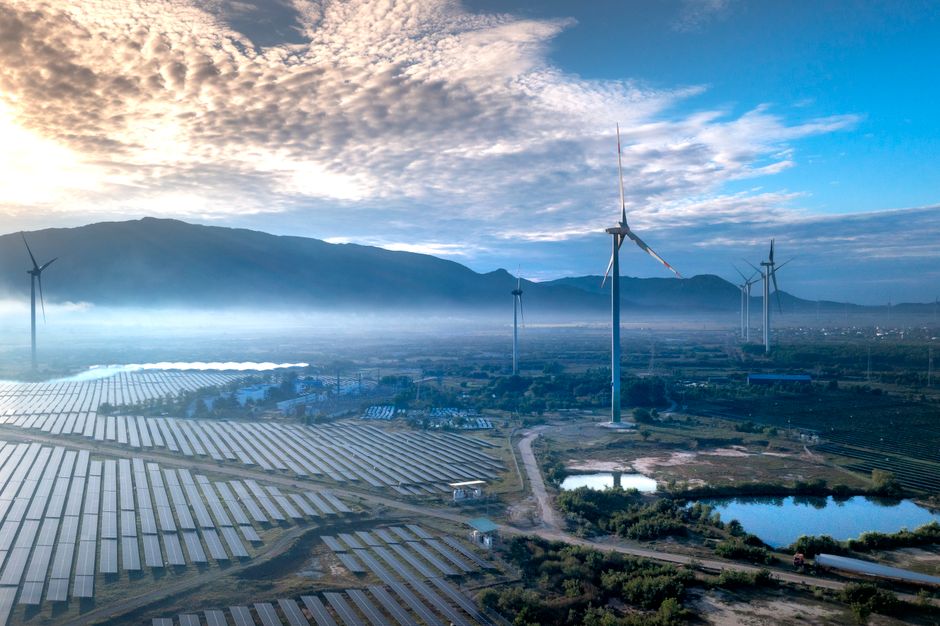
In short: a hybrid energy system combines two or more sources, such as solar, a battery, a generator, wind or micro-hydro, under one set of controls. The most common is solar plus a battery. Adding wind, hydro or a generator makes sense when one source falls short in some season, mainly off the grid or where outages are long.
Every source has a weak spot. Solar sleeps at night and fades in winter, batteries run down, generators need fuel, wind comes and goes, and streams dry up. A hybrid uses each where it is strong. This page shows the common combinations, how the controls tie them together, how to size one, what the parts cost and when a simpler system is the better answer.
Hybrid systems at a glance
- Solar plus battery is now the norm: 46% of new home solar systems in the second quarter of 2026 included a battery (Wood Mackenzie).
- Wind and sun complement each other: in much of the U.S., wind is weak in summer when the sun is strongest and strong in winter when sunlight is short (DOE).
- Storage is sized in days: off-grid battery banks are typically sized to carry the load for one to three days (DOE).
- A generator shrinks everything else: DOE notes an engine generator can reduce the size of the other components and recharge the batteries when they run low.
Common combinations
| Combination | Best for | Main limit |
|---|---|---|
| Solar + battery (grid-tied) | Homes that want backup and to use more of their own solar, especially under net billing | A long, cloudy outage drains the battery |
| Solar + battery + generator | Long outages, off-grid homes and cabins, critical loads | Fuel, noise, maintenance and carbon monoxide safety |
| Generator + battery (no solar) | Quiet nights: the battery runs essentials and the generator recharges it during the day | Still depends on fuel |
| Solar + wind + battery (+ generator) | Open, windy rural land, off-grid, northern winters | Wind needs a tall tower, zoning approval and upkeep |
| Solar + micro-hydro + battery | Properties with a year-round stream and real drop | Water rights, permits and dry seasons |
How the controls tie it together
DOE notes that adding a generator makes a system more complex, but modern electronic controllers can run it automatically. In a typical setup:
- Hybrid inverter or inverter-charger: turns battery and solar power into household AC, and charges the battery from solar, the grid or a generator.
- Charge controllers: manage each charging source, such as solar panels or a wind turbine, so the battery is not overcharged.
- Generator auto-start: starts the generator when the battery drops to a set level and stops it when charged.
- Transfer equipment: separates your home from the grid during an outage. Grid-connected generation is designed to stop when the grid is down, to protect line workers, unless it is set up with storage as a home microgrid (DOE).
- Monitoring: shows production, battery level and fuel use so you can spot problems early.
Parts from different makers don’t always talk to each other. Ask the installer to confirm that the inverter, battery, generator and any turbine are listed as compatible, and who supports the system when something fails.
Grid-tied hybrid or off-grid hybrid?
A grid-tied hybrid keeps the utility as the backstop. Solar runs the house in the day, the battery covers evenings or outages, and the grid fills any gap. It is the common choice where net billing pays little for exported power, because storing your own solar is worth more than selling it. See net metering for your state’s rules. Sizing is forgiving, since the grid is always there except in an outage.
An off-grid hybrid has no backstop, so every kilowatt-hour must come from your own sources, in the worst week of the year. DOE notes that many hybrid systems are stand-alone and that most rely on batteries and an engine generator when neither wind nor sun is producing. Designing for winter, not the yearly average, is the difference between a system that works and one that leaves you running a generator for weeks.
When a hybrid makes sense, and when it doesn’t
It makes sense when you are off the grid or far from a line (DOE puts a line extension at $15,000 to $50,000 per mile), when outages last days, when winter solar is weak and you have wind or water, or when you have loads that must never stop, such as medical equipment, a well pump or refrigeration.
It doesn’t when a single source already covers you. Most grid-connected suburban homes are best served by solar plus a battery, or by a battery or generator alone for backup. Adding a wind turbine to a small lot rarely pays; read our honest small wind check first. Every extra source adds cost, maintenance and points of failure.
How to size a hybrid system
- List your loads in kWh per day, summer and winter separately, and the largest motor you must start. Cut waste first; efficiency is cheaper than generation.
- Size storage for one to three days of the worst-season load, divided by the battery’s usable share (about 80% for many lithium iron phosphate batteries).
- Size the main source, usually solar, for the worst month you want it to carry on its own.
- Fill the gap with a generator, wind or hydro, depending on your site.
Worked example (ours): a cabin that uses 6 kWh a day in winter and wants two days of storage needs about 6 × 2 ÷ 0.8 ÷ 0.92 ≈ 16 kWh of battery (the 0.92 allows for battery losses, from NREL’s 85% round-trip figure). If its December solar can only cover half the load, a generator or turbine supplies the rest. Our off-grid planner runs this math with real sunshine data for your location; the battery backup and generator sizing calculators help with grid-tied backup. Treat every result as an estimate that an installer must confirm.
What the parts cost
There is no single price for a hybrid system, but the parts have sourced benchmarks:
| Part | Benchmark | Source |
|---|---|---|
| Rooftop solar (home) | Median quote $2.57 per watt (H1 2026); median installed price $4.0 per watt (2024) | EnergySage; Berkeley Lab |
| Home battery | About $1,130 per kWh quoted (H1 2026) | EnergySage |
| Home standby generator | $8,000 to $16,000 installed, including the generator | Generac |
| Small wind | $5,000 to $10,000 per kW installed | DOE (2021) |
| Micro-hydro | No official current range found | See micro-hydro |
Those are grid-tied home figures from different years and methods; off-grid systems add charge controllers, heavier inverters and often a generator. Federal home credits (25D) ended for expenditures after December 31, 2025 (IRS); check state programs on your state page and in incentives.
Safety and permits
- Licensed work: the wiring between sources, the panel and any grid connection is done by a licensed electrician, with permits and inspection. Grid-tied systems also need the utility’s interconnection approval.
- Generators: outdoors only, at least 20 feet from the house with the exhaust pointed away from windows, doors and vents, never in a garage or shed (CPSC). Put battery-powered carbon monoxide alarms on every level. Read generator safety.
- Batteries: follow the maker’s placement and temperature limits. For cold sheds and cabins, some lithium iron phosphate batteries include built-in heating pads for charging in cold weather.
Questions to ask an installer
- Which months did you design for, and how many days of storage does the design give at that load?
- Are the inverter, battery, generator and any turbine listed as compatible, and who supports the whole system?
- How many hours a year do you expect the generator to run, and on what fuel?
- What is your license number, and who pulls the permits and arranges inspection and utility approval?
- What does maintenance involve, and what is covered by each warranty?
Where to go next
Building off the grid? Start with off-grid power systems and cabin power. Adding storage to solar you already have? See solar battery storage. Weighing backup options? Compare them in backup power and generator vs home battery. Have a stream? Check micro-hydro.
Get help designing a hybrid system
Tell us what you want to power, where, and which sources you already have. Tell us about your project and we will connect you with a licensed, independent installer who serves your area. It is free, there is no obligation, and only the installer you choose gets your details. Read how it works.
Hybrid system questions
What is a hybrid solar system?
Usually, solar panels paired with a battery through a hybrid inverter, often still connected to the grid. The battery stores daytime solar for the evening and for outages. The term also covers systems that add a generator, wind turbine or micro-hydro, mainly off the grid. What makes it hybrid is more than one source under shared controls.
Is a solar and wind hybrid worth it?
On open, windy land, especially off the grid, it can be: DOE notes that wind is often strongest in winter when solar output is lowest, so the two fill each other’s gaps. On a small or sheltered lot it rarely is, because the turbine can’t reach steady wind. Check the site rules on our small wind page first.
Can I add a generator to my solar and battery system?
Often yes, if your inverter or battery system supports a generator input; many do, with automatic start. If not, a transfer switch can still let a generator power the house. A licensed electrician should confirm compatibility and install it with a permit. Keep any generator outdoors, 20 feet or more from the house.
How many days of battery storage do I need?
DOE says off-grid battery banks are typically sized for one to three days of use. With a generator as backup, one to two days is usually enough, because the generator covers longer cloudy spells. Without one, plan on the high end, and remember winter loads and short days. For grid-tied backup, size for your typical outage.
Sources: U.S. Department of Energy Energy Saver, “Hybrid Wind and Solar Electric Systems,” “Off-Grid or Stand-Alone Renewable Energy Systems” and small wind installation guidance (archived 2024 copies), and Consumer Guide to Small Wind (2021); Wood Mackenzie/ACP U.S. Energy Storage Monitor (September 2026); EnergySage H1 2026 market highlights; Berkeley Lab Distributed Solar and Storage 2025 Data Update; Generac standby installation cost page; NREL ATB residential battery storage; CPSC generator safety (2026); IRS One Big Beautiful Bill provisions. Written by the SolutionEnergy editorial team; last reviewed October 2026.