In short: most off-grid cabins run on solar panels, a lithium battery bank and an inverter, with a generator for cloudy weeks. A weekend cabin with lights, a fridge and phones may need only a large power station and panels; a full-time cabin with a well pump needs a wired system. Size it for winter, and plan propane or wood for heat.

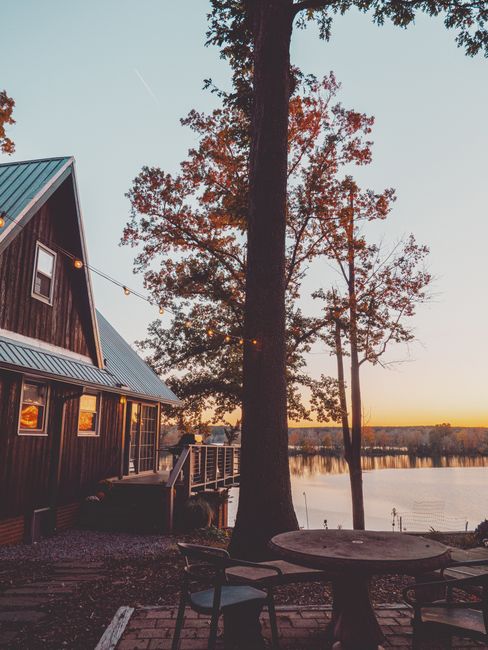
Picture the first evening at the cabin: the lake goes quiet, the porch light comes on, the fridge hums and someone’s charging a phone by the window. Getting there without a power line is very doable. This guide walks through typical cabin loads, three example systems, kits versus an installer, cold-weather and safety issues, and what drives the cost. It is part of our off-grid power section.
Cabin power at a glance
- Why off-grid: a new power line can cost $15,000 to $50,000 per mile, so in remote spots a stand-alone system is often cheaper (U.S. Department of Energy).
- The parts: panels, batteries, a charge controller, an inverter, safety disconnects and meters (DOE’s “balance of system”), plus usually a generator.
- Storage: off-grid battery banks are typically sized for one to three days of use (DOE).
- The big loads to avoid on electricity: heat, hot water, cooking and drying. Propane, wood or solar hot water handle those far more cheaply.
Step 1: add up what the cabin uses
Everything else follows from this number. Multiply each item’s watts by the hours you use it each day. These are the defaults in our calculators, from ENERGY STAR, Honda, Champion and maker data; your own labels are better.
| Item | Running watts | Example hours a day | About kWh a day |
|---|---|---|---|
| Efficient refrigerator | 192 (cycles on and off) | 5 running hours | 1.0 |
| 8 LED bulbs | 9 each | 5 | 0.36 |
| Router or satellite internet modem | 20 (check yours; satellite units can use more) | 24 | 0.48 |
| Laptop | 65 | 3 | 0.2 |
| TV, 45 to 59 inch | 85 | 3 | 0.26 |
| Ceiling fan | 30 | 6 | 0.18 |
| CPAP | 56 | 8 | 0.45 |
| Microwave | 1,500 | 0.2 | 0.3 |
| Coffee maker | 600 | 0.3 | 0.18 |
| Well pump, 1 HP | 2,000 (4,000 to start) | 0.5 | 1.0 |
The kWh column is our arithmetic. Two items shape the whole system: a well pump, because its starting surge sets the inverter size, and anything that heats, such as a space heater, water heater or electric range, which can use more in an hour than the rest of the cabin uses in a day. Our off-grid planner does this list for you, summer and winter.
Cut the load before you buy
DOE’s advice for any off-grid system is to reduce the electricity you need before you size anything, because saving energy costs less than generating it. At a cabin that usually means: an efficient fridge instead of an old spare, LED lights throughout, a router and modem on a switch or timer so they’re off when nobody is there, a propane or wood stove for heat, and propane or solar for hot water and cooking. Each kilowatt-hour you remove from the winter day saves panels, batteries and generator hours. Keep a notebook of what you really use on your first few trips; it beats any estimate.
Step 2: pick a system size
Three examples, with our own estimates. Battery size uses the same method as our planner: daily use × days of storage ÷ 80% usable ÷ 0.92 for losses.
| Weekend cabin | Seasonal cabin | Full-time cabin | |
|---|---|---|---|
| Daily use | About 1 kWh: lights, phones, a small fridge or cooler | About 3 to 4 kWh: fridge, lights, internet, fan, TV, laptop | About 6 to 10 kWh: all of that plus a well pump, washer and tools |
| Storage (2 days) | About 2.5 to 3 kWh | About 8 to 11 kWh | About 16 to 27 kWh |
| Typical setup | A large portable power station plus portable or fixed panels | A fixed solar array, lithium battery bank and inverter-charger | A larger array, battery bank and 240 V inverter, plus a generator |
| Who installs | You | You or an electrician, depending on the kit and local rules | A licensed electrician, with permits where required |
Panel size depends on your winter sun. A rough rule: divide daily use by the kWh that 1 kW of panels makes on a December day at your site. If your site makes 2 kWh per kW on a December day, a 3.5 kWh cabin needs about 1.75 kW of panels before losses (our example; the planner uses NREL’s PVWatts data for your location). Ask your installer about tilt and snow clearing; winter output, not summer, is what limits a cabin system.
Step 3: kit, package or installer?
- Power station plus panels: no wiring at all. Good for weekend cabins, sheds and as a first step. See portable power stations, solar generators and portable solar panels.
- DIY solar kit: panels, controller, battery and inverter sold together. Handy owners can mount and connect many of them; anything wired into the cabin’s circuits should meet code and be inspected where required. See DIY solar kits.
- Professional installation: the right call for full-time cabins, 240 V well pumps, generator integration and anywhere your county or lender requires permits and inspection. Work is done by a licensed electrician.
Off-grid doesn’t mean off the books: many counties still require electrical permits for permanent systems, and insurers may ask whether the work was inspected. Check with the county building office before you buy.
Winter, batteries and backup
- Design for December. Short days and snow can cut solar output to a fraction of summer. If you use the cabin in winter, either size up the array and battery or plan generator hours.
- Keep batteries warm. Batteries in an unheated cabin face freezing temperatures. Some lithium iron phosphate batteries have built-in heating pads for cold-weather charging; Renogy, for example, lists a self-heating 100 Ah model with 110 W heating pads. Follow the maker’s temperature limits.
- Battery type: lithium iron phosphate allows about 80% of its capacity to be used routinely; lead-acid makers such as Trojan recommend 50% or less for long life, so lead-acid banks need to be bigger.
- Generator backup: a dual-fuel inverter generator running on propane is a common choice, since propane stores for years. Connect it through the inverter-charger or a transfer switch installed by a licensed electrician.
Generator safety at the cabin
Carbon monoxide is the danger, and cabins are small. CPSC says to run generators outdoors only, at least 20 feet from the building with the exhaust pointed away from windows, doors and vents, and never in a cabin, garage, shed, crawlspace or on a porch, even with doors open. Choose a model with an automatic CO shut-off, and put battery-powered CO alarms in the cabin, especially near beds. Propane heaters and stoves also need proper venting and a CO alarm. Read generator safety.
What drives the cost
We have no official installed-cost range for cabin systems, so we won’t print one. Five things decide the price: winter daily use (the single biggest factor), days of storage, battery chemistry, whether you need 240 V for a well pump, and whether a pro installs it. Two benchmarks help: home batteries were quoted at about $1,130 per kWh installed in the first half of 2026 (EnergySage, grid-tied homes), and a line extension runs $15,000 to $50,000 per mile (DOE). The federal home credit (25D) ended for expenditures after December 31, 2025 (IRS). When you compare quotes, ask each installer for the daily kWh, storage days and winter month they designed for; two quotes built on different loads can’t be compared. For buy-it-yourself prices, see our kit and power station guides.
Wind or water at the cabin?
If the cabin sits on an open ridge, a small turbine can fill solar’s winter gap; DOE says off-grid hybrids are practical with average wind of about 9 mph at the turbine. If a stream with real drop runs past, micro-hydro can run day and night. Both need more site work and permits. See small wind, micro-hydro and hybrid systems.
Get help with your cabin’s power
Tell us where the cabin is, when you use it and what you want to run. Tell us about your project and we will connect you with a licensed, independent installer who serves your area. It is free, there is no obligation, and only the installer you choose gets your details. Read how it works.
Cabin power questions
How much solar do I need for an off-grid cabin?
Start from daily use. A weekend cabin using about 1 kWh a day may get by with a few hundred watts of panels and a large power station. A seasonal cabin using 3 to 4 kWh might need roughly 1.5 to 2 kW, depending on its winter sun. Our off-grid planner estimates it for your location with real sunshine data.
Can a portable power station run a cabin?
A small weekend cabin, often yes: lights, phones, a laptop and an efficient fridge, recharged by portable panels. It struggles with well pumps, microwaves used often, and any heating, and it can’t feed the cabin’s wiring without a transfer switch or inlet installed by an electrician. Many owners start this way and add a fixed system later.
Do I need a permit for off-grid solar at my cabin?
Often, for a permanently wired system. Rules vary by county: some require an electrical permit and inspection for any fixed solar and battery system, while plug-in power stations and portable panels usually need none. Ask your county building office before buying. Inspected work also helps with insurance and when you sell.
Do I need a generator with off-grid solar?
For summer-only cabins, often not. For winter use or full-time living, usually yes, unless you oversize the panels and batteries considerably. DOE notes a generator can shrink the rest of the system and recharge the batteries when they run low. Run it outdoors, 20 feet or more from the cabin, with CO alarms inside.
How do I power a well pump off-grid?
Size the inverter for the pump’s starting surge: a 1 HP pump can need about 4,000 watts to start (Champion’s chart). Many well pumps run on 240 volts, so you need a 240 V inverter or a pump made for solar. Have a licensed electrician wire it. A storage tank filled on sunny days reduces how often the pump starts.
Sources: U.S. Department of Energy Energy Saver, “Off-Grid or Stand-Alone Renewable Energy Systems” and “Hybrid Wind and Solar Electric Systems” (archived 2024 copies), and Small Wind Guidebook; our calculator defaults from ENERGY STAR data, Honda’s wattage guide, Champion’s wattage chart and the ResMed AirSense 11 user guide; NREL ATB (85% battery round trip); Trojan Battery maintenance guide; Renogy self-heating LiFePO4 listing; EnergySage H1 2026 market highlights; CPSC generator safety (2026); IRS One Big Beautiful Bill provisions. Written by the SolutionEnergy editorial team; last reviewed October 2026.