In short: Warwick and Coventry are Rhode Island Energy towns. Its homes paid about 28.3¢ per kWh on average in 2024 and lost about 104 minutes to outages (EIA). Kent County’s weather risk is rated relatively low overall, a step below Providence County, so here the bill, not the storm, usually drives the decision.
This page covers what is local to Kent County: the utility’s numbers and programs, the county’s hazards, Warwick and Coventry permits and charging. Statewide rules (net metering, the REG tariff, the Renewable Energy Fund grant, the sales tax exemption and licensing) are in our Rhode Island energy guide.
Kent County at a glance
- Utility: Rhode Island Energy, the only electric utility EIA lists in Kent County. About 28.3¢ per kWh on average in 2024 for homes on its own supply (EIA-861).
- Outages (2024): about 104 minutes per customer counting major storms, 61 without; under one interruption a year (EIA-861, Rhode Island Energy as a whole).
- Sun: about 3.99 kWh per square meter per day (NASA POWER, 2001 to 2020). Our rough estimate: about 1,170 kWh a year per kW of panels.
- Top hazards: overall risk “relatively low”; hurricanes, ice storms, lightning and inland flooding are “relatively moderate”, and no hazard is rated higher (FEMA National Risk Index, December 2025).
- Public charging: 120 ports at 47 locations in Warwick; few public ports are listed in Coventry (AFDC, October 3, 2026).
Your utility and what it means
Rhode Island Energy delivers the power and, unless you choose a competitive supplier or your town runs an aggregation plan, also supplies it through Last Resort Service. Residential Last Resort prices are fixed for six months and reset in April and October; in 2024, about 26% of its households bought supply elsewhere (EIA-861).
- Solar: net metering or the REG tariff, plus the state grant; see our state page.
- ConnectedSolutions for batteries: $225 per average kW delivered during summer peak events (June to September, 2 to 3 hours between 3 and 8 pm), a rate Rhode Island Energy intends to hold for five summers; its program guide notes regulatory approval is pending.
- ConnectedSolutions for EVs: $50 to enroll an eligible EV or charger, then $20 a year; you can opt out of any event.
- PowerUpRI: home charger rebates from the state Office of Energy Resources and the Rhode Island Infrastructure Bank; check the PowerUpRI page for amounts.
Backup power in Kent County
With outages averaging under two hours and no hazard rated above “relatively moderate”, most Kent County homes can size backup modestly. The exceptions are homes where a short outage is still a problem: a basement that needs a sump pump during heavy rain (inland flooding is one of the county’s moderate risks), a private well in rural Coventry, or someone at home on medical equipment.
- Most homes: a portable power station covers phones, Wi-Fi, lights and a CPAP for a typical outage.
- Sump, well or medical needs: a home battery switches over automatically and can earn ConnectedSolutions payments; a standby generator covers longer storms. Use the battery backup calculator or the generator sizing tool, and compare in backup power.
Generator safety (CPSC): outdoors only, at least 20 feet from the house, exhaust away from doors, windows and vents, never in a garage. Use battery-powered carbon monoxide alarms on every level. A licensed electrician installs any transfer switch with a permit; see generator installation.
Solar in Kent County
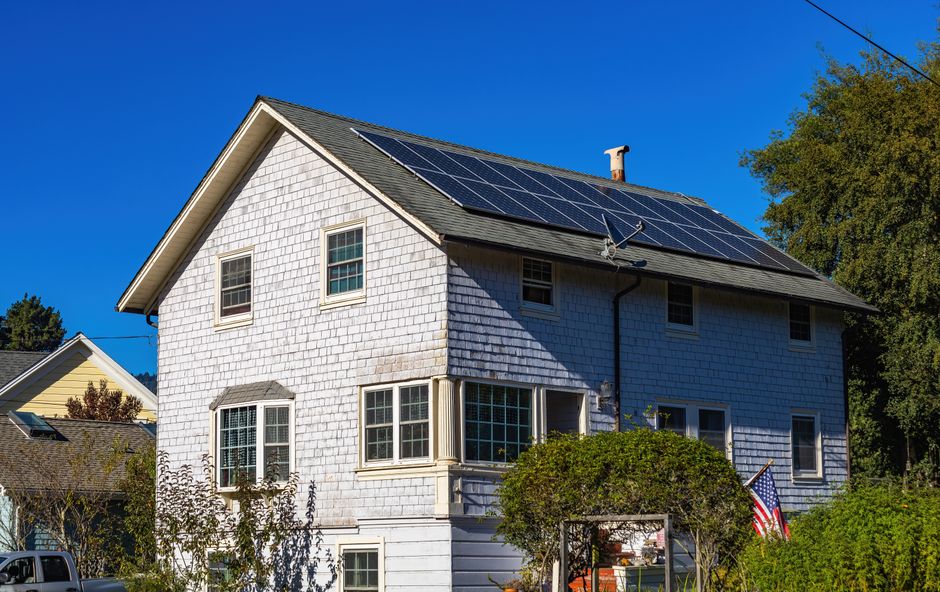
By our rough estimate, each kW of panels makes about 1,170 kWh a year. At the 2024 average price of 28.3¢, power that offsets your own use is worth about $330 a year per kW (an estimate, not a promise). Suburban roofs in Warwick and Coventry often have better sun than city lots, but trees still decide a lot. Check yours with the solar potential tool, compare quotes in the solar savings calculator and read solar installation.
Batteries
Because ConnectedSolutions events happen in summer and most New England outages in winter, an enrolled battery can earn payments and still be full for a winter storm; the program does not call events during an outage or in the two days before a predicted severe one. A battery without solar earns less because it can only cover what the house is using. See battery cost and home battery installation.
EV charging
Warwick has 120 public ports (AFDC, October 2026); in Coventry, plan on charging at home. At about 30 kWh per 100 miles, home charging costs roughly $8.50 per 100 miles at the 2024 average price (an estimate). Try the EV charging cost calculator and see EV charger installation.
Drive on another fuel? See every alternative fuel station in Warwick: hydrogen, propane, natural gas, E85 ethanol, biodiesel and renewable diesel.
Permits and inspections
- One solar permit statewide: since January 1, 2018, every Rhode Island city and town uses the state’s single solar permit application, covering building and electrical work (300-RICR-00-00-3).
- Warwick: the Building Department, Sawtooth Annex Building, 2nd floor, 65 Centerville Road (401-738-2007). Ask how to apply online.
- Coventry: the Building Official accepts online applications only (no paper permits), with a kiosk in the office for help; electrical inspections are booked through the portal and done Monday, Wednesday and Friday.
- Who does the work: a state-licensed electrician and registered contractor; Rhode Island Energy approves interconnection. Condo owners need association approval.
Cities we cover
- Warwick
- Coventry
Get help
Are you a licensed installer in Warwick? Join SolutionEnergy and get requests from homeowners and businesses →
Tell us about your project and we will connect you with a licensed, independent installer who serves the Kent County area. It is free, there is no obligation, and only the installer you choose gets your details. Read how it works.
Kent County energy FAQ
Who is the electric utility in Warwick?
Rhode Island Energy delivers power throughout Kent County. You can take its Last Resort Service supply, whose residential price resets each April and October, or choose a competitive supplier; Rhode Island Energy still delivers the power and handles outages.
How do I get a building or electrical permit in Coventry?
Online only: Coventry no longer accepts paper permit applications. If you need help, the building inspector’s office has a kiosk. Inspections are scheduled through the same portal, and electrical inspections happen on Mondays, Wednesdays and Fridays.
Do I need a generator in Kent County?
Many homes don’t. Outages averaged about 104 minutes in 2024 and the county’s hazards rate relatively low overall. A generator or battery makes sense if a sump pump, well pump or medical device can’t stop; otherwise a portable power station covers most outages.
Can a home battery earn money in Warwick?
Yes, through ConnectedSolutions: $225 per average kW the battery delivers during summer peak events. A battery averaging 5 kW would earn about $1,125 a summer as an illustration. Your installer enrolls it through an approved battery partner.
Sources
Utility area, 2024 prices, outages and supply shopping: EIA-861, 2024 data. Programs and supply rules: Rhode Island Energy (ConnectedSolutions battery and EV pages, 2024–2026 battery program guide, Last Resort Service page). Statewide solar permit: Rhode Island Secretary of State, 300-RICR-00-00-3. Permits: City of Warwick and Town of Coventry. Hazards: FEMA National Risk Index, December 2025. Sun: NASA POWER, 2001 to 2020. Charging ports: AFDC Station Locator, October 3, 2026. Generator safety: CPSC. Checked October 3, 2026.