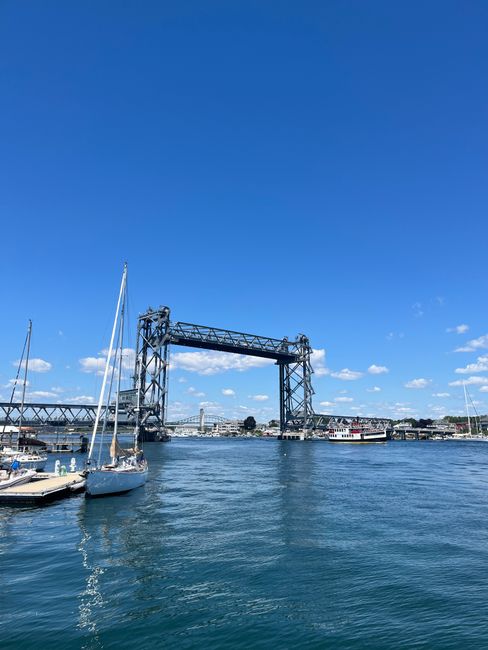
In short: On New Hampshire’s Seacoast, Portsmouth, Dover and Exeter now run community power programs that buy their own electricity supply. Unitil serves part of Exeter and the coastal towns, and averaged 23.3¢ per kWh in 2024. FEMA rates Rockingham County relatively high for coastal flooding and ice storms, and Portsmouth designs roofs for 50 psf of snow.
Below: the Seacoast’s utilities and supply programs, what they mean for solar, batteries and EV charging, Portsmouth’s solar permit checklist, and storm planning near the coast. Statewide rules (NEM 2.0, the plug-in solar law, licensing, incentives) are in our New Hampshire energy guide.
The Seacoast at a glance
- Utilities: Unitil serves part of Exeter and towns such as Hampton, Stratham, Greenland and Seabrook. EIA also lists Eversource and the NH Electric Co-op in Rockingham and Strafford counties, and Liberty in Rockingham. Your bill says which one you have.
- Price, 2024 average: Unitil about 23.3¢ per kWh, Eversource 22.7¢, the Co-op 23.8¢ (EIA-861, revenue divided by sales, homes on the utility’s own supply). Statewide prices rose sharply in 2026.
- Outages, 2024: Unitil 593 minutes per customer with major events, 98 without; Eversource 786 and 82 (EIA-861).
- Sun: about 3.76 kWh per square meter per day in Portsmouth (NASA POWER, 2001–2020). Our rough estimate: about 1,100 kWh a year per kW of panels.
- Top hazards: FEMA’s National Risk Index (December 2025) rates Rockingham County “relatively high” for coastal flooding and ice storms, and Strafford County “relatively high” for ice storms.
- Public charging: Portsmouth 57 public ports, Dover 28, Rochester 23, Exeter 19 (AFDC, October 2026).
Your utility and what it means
Community power: Portsmouth Community Power, Dover Community Power and Exeter Community Power are all operating through the Community Power Coalition of New Hampshire. Each sets the supply part of your bill; your utility still delivers the power, restores outages and approves solar. If you have solar, ask the program how it credits exported supply, since NEM 2.0 credits supply, transmission and a quarter of distribution. Rochester residents can ask the city whether a program is planned.
- Unitil: offers New Hampshire homes a whole-house time-of-use rate and an EV time-of-use rate on a separate meter. We found no Unitil home battery program for New Hampshire, and its charger rebates are for Massachusetts.
- Eversource: its home battery incentive paid $230 per kWh up to $3,000 in May 2026, for listed Enphase or FranklinWH batteries enrolled in three summers of demand response (about 40 events a year, 3 to 8 p.m.). Funding is limited.
- NH Electric Co-op: members with solar or a battery can choose a net metering time-of-day rate that pays more for exports from 4 to 8 p.m. on weekdays. See our Lakes Region guide for more on Co-op programs.
Backup power on the Seacoast
Coastal storms are the Seacoast’s particular risk. In the April 2024 spring nor’easter, Unitil counted more than 35,400 customer outages across its system, and the last 277 homes waiting for power were mostly on the New Hampshire Seacoast. Ice storms, rated relatively high in both counties, bring the longest outages. Near the water, keep a generator, battery or transfer switch above likely flood levels, and ask your installer about it.
- Long outages: a generator with a transfer switch runs heat, a sump pump and the fridge for days. See generator installation and the generator sizing tool.
- Automatic, quiet backup: a home battery, sized with the battery backup calculator.
- Apartments and condos: a portable power station.
Compare options in our backup power guide. Run generators outdoors only, at least 20 feet from the house with the exhaust pointed away, and keep carbon monoxide alarms inside (CPSC).
Solar on the Seacoast
By our rough estimate, a 6 kW system in Portsmouth makes about 6,600 kWh a year. Used at home, that would have been worth about $1,490 at Eversource’s 2024 average price or $1,540 at Unitil’s, and more at 2026 prices. Exports are worth less under NEM 2.0, so size the system to your own use. These are estimates, not quotes.
Portsmouth’s own design figures show what a Seacoast roof must handle: 50 pounds per square foot of snow and winds up to 130 mph. That is why the city asks for a structural engineer’s letter on the roof and mounting. Plug-in “balcony” solar is not usable yet; Dover’s energy commission and electrical inspector have urged caution until state safety standards exist.
Check your roof with the solar potential tool and solar savings calculator, then read how solar installation works, what it costs and how net metering works. Ask your assessor about any local solar property tax exemption.
Home batteries on the Seacoast
Eversource customers get the most help: a 10 kWh battery would earn $2,300 at May 2026 terms. Co-op members with solar can store power and export it in the 4 to 8 p.m. window, when the Co-op’s time-of-day credit is higher. Unitil customers pay full price, so the case rests on backup. See battery costs and battery installation.
EV charging on the Seacoast
At 30 kWh per 100 miles, home charging costs about $6.80 per 100 miles at Eversource’s 2024 average price or $7.00 on Unitil (our estimate); off-peak rates lower that. Portsmouth has the region’s largest public network, 57 ports at 20 locations. A Level 2 charger needs a 240-volt circuit and an electrical permit. See EV charger installation and the EV charging cost calculator.
Drive on another fuel? See every alternative fuel station in Portsmouth: hydrogen, propane, natural gas, E85 ethanol, biodiesel and renewable diesel.
Permits and inspections
- Portsmouth: the Inspection Department (1 Junkins Avenue) publishes a solar permitting checklist. Rooftop solar needs an electrical permit, a building permit and, in the Historic District, a land use permit. Applications go through the city’s online permitting system, with a site plan, an electrical diagram, spec sheets and the engineer’s roof letter. A permit lapses if work does not start within a year.
- Dover, Rochester and Exeter: apply to your city or town building department.
- Utility approval: your utility must approve a grid-tied solar or battery system before it is switched on.
Use a New Hampshire-licensed electrician (license checks are on the state page), and check HOA or condo rules before you sign.
Cities we cover
- Portsmouth
- Dover
- Rochester
- Exeter
Get help on the Seacoast
Are you a licensed installer in Portsmouth? Join SolutionEnergy and get requests from homeowners and businesses →
Tell us about your project and we will connect you with a licensed, independent installer who serves the Seacoast area. It is free, there is no obligation, and only the installer you choose gets your details. Read how it works.
Seacoast energy questions
Do Portsmouth, Dover and Exeter have community power?
Yes. All three run programs through the Community Power Coalition of New Hampshire, which buys electricity supply for enrolled customers. Your utility still delivers the power and handles outages. Compare the program’s supply price with the utility’s default rate on your bill.
What permits does rooftop solar need in Portsmouth?
An electrical permit and a building permit, plus a land use permit inside the Historic District. The city’s checklist asks for a site plan, an electrical diagram, equipment spec sheets and a letter from a New Hampshire-licensed structural engineer on the roof and mounting.
Which Seacoast towns does Unitil serve?
Unitil’s list includes part of Exeter and towns such as Hampton, Hampton Falls, Stratham, Greenland, North Hampton and Seabrook. Portsmouth, Dover and Rochester appear on its gas list, not its electric list. Check your bill to be sure.
Can I use a plug-in solar panel in Dover?
Not yet. New Hampshire’s plug-in solar law allows up to 1,200 watts, but use is not legal until the state Department of Energy certifies a safety standard. Dover’s energy commission and electrical inspector have asked residents to wait.
Sources
EIA-861, 2024 (price = residential revenue ÷ sales; outages; service territory); Unitil service area, EV time-of-use and April 6, 2024 storm pages; Eversource New Hampshire home battery incentive page (archived May 2026); NH Electric Co-op time-of-day rates page; Community Power Coalition of New Hampshire member page; City of Portsmouth Inspection Department and Solar Permitting Checklist (updated January 2023); City of Dover notice of September 2, 2026; NASA POWER, 2001–2020; FEMA National Risk Index, December 2025; AFDC station data; CPSC. Read October 2026 unless noted. Estimates are ours and labelled.