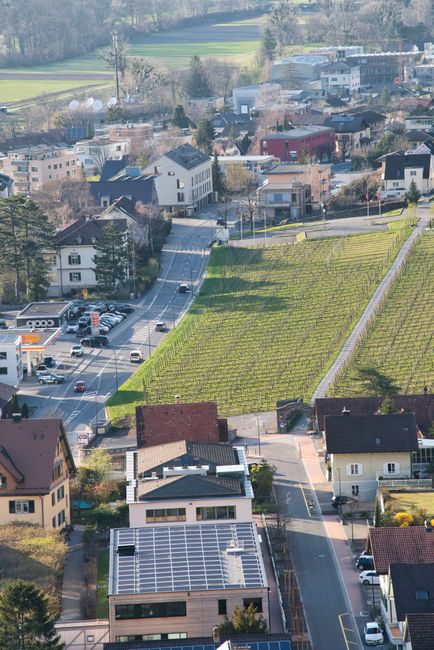
In short: Most Bay Area homes are on PG&E, whose full-service customers paid about 39.6¢ per kWh in 2024 and lost 509 minutes of power including major events, well above California’s 280. High prices make self-used solar valuable; long outages and wildfire shutoffs make backup power worth planning.
This page covers San Jose, Fremont and Santa Rosa: PG&E’s numbers and programs, community choice power, wildfire shutoffs and fast solar permits. For statewide rules (NEM 3.0, SGIP, CSLB licensing, plug-in solar), see our California energy guide.
Bay Area at a glance
- PG&E, full service: about 39.6¢ per kWh for homes in 2024 (EIA-861).
- Community choice customers: more PG&E homes buy their power from a community choice provider, such as San Jose Clean Energy, Ava Community Energy or Sonoma Clean Power, than from PG&E. They pay PG&E for delivery (about 25.8¢ per kWh on average in 2024) plus the provider’s generation charge.
- Outages: PG&E customers lost 509 minutes of power in 2024 including major events and 276 without them, with about two interruptions per customer (EIA-861, systemwide).
- Sun: about 5.3 kWh per square meter per day in San Jose and 5.1 in Santa Rosa (NASA POWER, 2001–2020). Our rough estimate: about 1,550 and 1,500 kWh a year per kW of panels.
- Top hazards: FEMA’s National Risk Index (December 2025) rates Santa Clara and Alameda counties “very high” for earthquake and inland flooding, with wildfire, heat waves and landslides “relatively high”; Sonoma County is “relatively high” for wildfire, earthquake, drought, landslide and flooding.
- Public charging: San Jose had 2,301 public charging ports, Fremont 325 and Santa Rosa 238 (AFDC Station Locator data, October 3, 2026).
Your utility and what it means
PG&E owns the lines in San Jose, Fremont and Santa Rosa; a few nearby cities, such as Santa Clara, Palo Alto and Alameda, run their own utilities with different rules. Your bill shows whether a community choice provider supplies your power.
- Solar credits: new PG&E solar goes on the CPUC’s Net Billing Tariff (NEM 3.0): solar you use yourself saves the full rate, while exports earn hourly values usually far below retail.
- Rate plans: PG&E’s Home Charging EV2-A plan is cheapest from midnight to 3 p.m. every day; EV-B uses a separate meter and is cheapest from 11 p.m. to 7 a.m.; the Electric Home plan (E-ELEC) is for homes with an EV, a battery or a heat pump.
- Backup programs: PG&E lists a $300 Generator and Battery Rebate for eligible customers, a free backup power transfer meter, free portable batteries for qualifying customers who use medical devices, a rebate on permanent battery storage, and a meter socket adapter program that can simplify solar, battery and EV charger installs.
Backup power in the Bay Area
PG&E’s 2024 outage time, 509 minutes per customer including major events, was the highest of the big California utilities, and even without major events it was 276 minutes. On top of that, PG&E de-energizes lines in high fire-threat areas during dangerous fire weather: the CPUC lists PG&E Public Safety Power Shutoff reports for seven events in 2024, four in 2025 and four so far in 2026, most recently September 12. Only lines in high fire-threat areas are switched off; check the CPUC’s fire-threat map for your address.
A home battery with solar can ride through a shutoff and recharge by day; a generator gives more runtime per dollar, and PG&E’s free transfer meter (for eligible customers) can make connecting one simpler. A portable power station covers phones, Wi-Fi and a CPAP, and PG&E’s $300 rebate can apply to some. Compare options in our backup power guide, size them with the battery backup calculator or generator sizing calculator, and run generators outdoors, at least 20 feet from the house (CPSC). See generator installation.
Solar in the Bay Area
By our rough estimate, a kW of panels makes about 1,550 kWh a year in San Jose and 1,500 in Santa Rosa. At PG&E’s 2024 full-service average of 39.6¢, the output you use at home is worth roughly $600 a year per kW. Exports earn far less under NEM 3.0, so the best setups are sized to your own use, shift laundry, dishwashers and EV charging into the sunny hours (which EV2-A already prices low until 3 p.m.), and add a battery for the evening.
Community choice customers save PG&E’s delivery charge plus their provider’s generation charge for each kWh they avoid, so check both lines on your bill. These are estimates, not promises. Try the solar potential tool and solar savings calculator, and read how solar installation works and our net metering guide.
Batteries
With long outages, shutoffs and NEM 3.0, a battery earns its keep twice here. PG&E administers the state’s SGIP battery incentive in its territory, now mostly for income-qualified and vulnerable households, and lists its own rebate for permanent battery storage; check both pages for current amounts and eligibility. PG&E’s E-ELEC and EV2-A plans reward a battery that charges in the cheap hours and runs the house in the 4 to 9 p.m. peak. See home battery installation and battery costs.
EV charging
At PG&E’s 2024 full-service average, a car using about 30 kWh per 100 miles costs roughly $12 per 100 miles to charge at home (our estimate); on EV2-A, charging after midnight costs less. PG&E’s Empower EV charger program closed on December 31, 2024. A Level 2 charger needs an electrical permit and a licensed C-10 electrician; see EV charger installation, charging an EV with solar and the EV charging cost calculator.
Drive on another fuel? See every alternative fuel station in San Jose: hydrogen, propane, natural gas, E85 ethanol, biodiesel and renewable diesel.
Permits and inspections
- San Jose: solar panels, batteries and Level 2 chargers need permits, which you can apply for online through SJPermits.org; see the city’s solar and battery projects page and EV charging page.
- Fremont: an Instant Solar Permit through SolarAPP+ covers eligible rooftop solar, with or without a battery, for registered contractors.
- Santa Rosa: licensed contractors use SolarAPP+ and the city’s online permit center for instant permits on eligible rooftop systems, including those with batteries (Santa Rosa solar page); owner-builders have other options.
- Interconnection and contractors: PG&E must approve grid-connected systems. Use a CSLB-licensed C-10 or C-46 contractor, and check HOA rules.
Cities in this guide
- San Jose
- Fremont
- Santa Rosa
Get help
Are you a licensed installer in San Jose? Join SolutionEnergy and get requests from homeowners and businesses →
Tell us about your project and we will connect you with a licensed, independent installer who serves the Bay Area. It is free, there is no obligation, and only the installer you choose gets your details. Read how it works.
Bay Area energy questions
Does PG&E help pay for a generator or battery?
PG&E lists a $300 Generator and Battery Rebate for eligible customers, a free backup power transfer meter, free portable batteries for qualifying customers who use medical devices, and a permanent battery storage rebate. Eligibility depends mostly on where you live and your circumstances; check PG&E’s backup power page.
How often does PG&E shut off power for wildfire risk?
The CPUC lists PG&E Public Safety Power Shutoff reports for seven events in 2024, four in 2025 and four in 2026 through September. Each one affects only lines in high fire-threat areas, not whole cities. Sign up for PG&E alerts and check the CPUC fire-threat map.
Is solar worth it in San Jose with a community choice provider?
Usually the math is similar: each kWh you produce and use avoids PG&E’s delivery charge plus San Jose Clean Energy’s generation charge. Exports are credited under NEM 3.0. Compare your bill’s two parts with a solar quote, and run our solar savings calculator with your own rate.
Which PG&E rate is best for charging an EV?
PG&E offers EV2-A (whole home, cheapest midnight to 3 p.m. every day), EV-B (separate meter, cheapest 11 p.m. to 7 a.m.) and E-ELEC for electrified homes. Which is best depends on your whole household’s usage; PG&E’s rate comparison tools can show you.
Sources
Utility prices, service areas and outage minutes: U.S. Energy Information Administration, EIA-861 2024 data (prices are 2024 averages; “full service” means PG&E supplies and delivers the power). PG&E backup power, EV rate plan and Empower EV pages; San Jose Clean Energy; CPUC SGIP and PSPS post-event reports. City of San Jose, City of Fremont and City of Santa Rosa permit pages. Sun: NASA POWER, 2001–2020. Hazards: FEMA National Risk Index, December 2025. Charging ports: AFDC, October 3, 2026. Generator safety: CPSC. Checked October 3, 2026. Estimates are ours and labelled as such.