In short: Hurricane Helene did its worst damage to Georgia Power’s grid around Augusta, with nearly 4,000 broken poles. Members of Jefferson Energy Cooperative, which also serves the area, averaged about 172 hours without power in 2024. Power costs about 15.5¢ per kWh from Georgia Power and 13.3¢ from Jefferson, so long-outage backup comes first.
This page covers Augusta and Evans, in Richmond and Columbia counties. Statewide rules, licensing and averages are on our Georgia energy guide. Here we cover the utilities that serve the Augusta area, what Helene showed, and how the local numbers change each choice.
Augusta at a glance
- Georgia Power: serves much of Augusta-Richmond County and Columbia County. About 15.5¢ per kWh for homes (2024 average). Company-wide outages in 2024: 128 minutes per customer on normal days, 1,516 minutes (about 25 hours) with major storms (EIA-861).
- Jefferson Energy Cooperative: serves parts of both counties. About 13.3¢ per kWh. Outages in 2024: 109 minutes on normal days, but 10,318 minutes (about 172 hours, or seven days) counting major events.
- Planters EMC: listed by EIA in parts of Richmond County; about 14.5¢ per kWh (no outage figures reported).
- Sun: 4.63 kWh per square meter per day (NASA POWER, 2001 to 2020), about 1,350 kWh a year per kW of panels by our rough estimate.
- Top hazards: ice storms, lightning, strong wind and tornadoes rated “relatively high” in Richmond County, with hurricanes “relatively moderate”; ice storms “relatively high” in Columbia County (FEMA National Risk Index, December 2025).
- Public charging: 137 public ports in Augusta (AFDC, October 3, 2026).
Your utility and what it means
Georgia Power. New home solar goes on “RNR Instantaneous Netting”: solar you use as it is made saves the full retail price, and each exported kWh earns the 2026 solar avoided cost of about 3.2¢ plus a 4¢ adder approved by the Public Service Commission, about 7.2¢. Home systems are limited to 10 kW AC, the program is open until it reaches a capacity cap, and applications go through Georgia Power’s PowerClerk portal, then a witness test and permission to operate. For EVs and batteries, the Overnight Advantage plan charges about 2¢ per kWh from 11 p.m. to 7 a.m., with a high summer weekday peak from 2 to 7 p.m. and a peak-demand charge. Georgia Power lists a rebate of up to $150 for a home Level 2 charger, while funds last.
Jefferson Energy Cooperative and Planters EMC. Co-ops set their own solar, export and EV terms, separate from Georgia Power’s. We could not confirm them, so ask your co-op for its interconnection rules and the price it pays for exported power before you sign a contract.
Backup power in Augusta
Georgia Power’s own account of Helene is blunt: “the Augusta area saw the most severe damage.” Crews found over 2,000 trees on lines, over 1,000 damaged transformers, more than 10,000 spans of wire down and nearly 4,000 broken poles, and one 2.5-mile stretch of road near the center of Augusta had only three poles left standing. Jefferson’s 2024 record of about seven days without power per member tells the same story for co-op homes.
Helene was a severe hurricane for an inland city, but FEMA also rates ice storms, strong wind and tornadoes high for Richmond County. So plan for a week-long outage, in summer or winter:
- Essentials: a portable power station for phones, lights, Wi-Fi and medical devices.
- A day or more: a home battery, ideally with solar to refill it once the storm passes.
- A week: a natural gas or propane standby generator, or a portable one with a transfer switch and a safe fuel plan.
Helene brought thousands of trees down on Augusta’s lines, so trimming limbs over your service line and your roof is part of backup planning. The CPSC says to run portable generators outdoors only, at least 20 feet from the house with exhaust pointed away, never in a garage, and to keep battery-backed CO alarms on every level. A licensed electrician should install the transfer switch or interlock. See our backup power guide, the generator sizing tool and generator installation.
Solar in Augusta
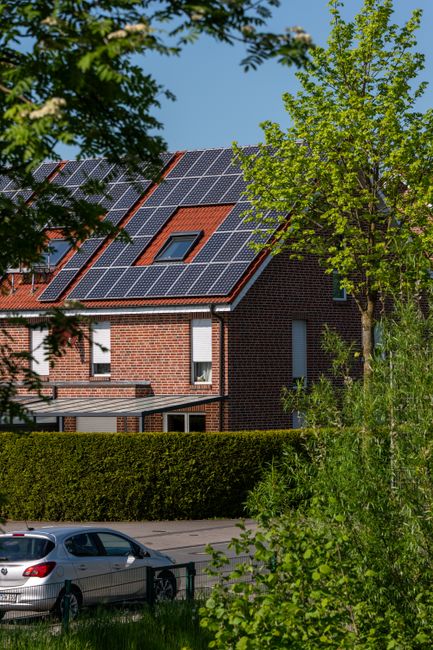
Each kW of panels in Augusta makes about 1,350 kWh a year by our estimate. Used at home, that is worth about $210 a year at Georgia Power’s 15.5¢, or about $180 at Jefferson’s 13.3¢; exported to Georgia Power at about 7.2¢ it is worth about $100. A system matched to your daytime use, or paired with a battery, keeps more of the higher value. Augusta’s permit office asks for an engineer’s structural report on the roof, so budget for it in the quote.
The federal 25D credit ended for systems completed after 2025. Check your roof with the solar potential calculator, compare solar costs and read solar installation.
Home batteries in Augusta
Georgia Power notes that grid-tied solar shuts off in a blackout unless a battery is installed. After a storm like Helene, a battery with panels can keep a fridge, lights and fans going day after day, where a battery alone runs out in about a day. Many Augusta homes will be better served by a battery for short outages plus a generator for long ones. See battery installation, home battery cost and the battery backup calculator.
EV charging in Augusta
Augusta has 137 public charging ports. At home, at about 30 kWh per 100 miles, Georgia Power’s 15.5¢ average works out to about $4.65 per 100 miles or $560 for 12,000 miles a year; Jefferson’s 13.3¢ gives about $4 and $480 (estimates). A Level 2 charger needs a 240-volt circuit, a permit and a licensed electrician: see EV charger installation and the EV charging cost calculator.
Drive on another fuel? See every alternative fuel station in Augusta: hydrogen, propane, natural gas, E85 ethanol, biodiesel and renewable diesel.
Permits and inspections
- Augusta-Richmond County: Planning and Development handles building permits and posts permit requirement checklists. Its permit FAQ says solar panels need a permit, with two sets of plans showing mounting and electrical work and a structural evaluation report from an engineer.
- Columbia County (Evans): the county’s residential building applications include a generator permit packet and an electrical service change packet; applications are submitted online.
Use a licensed electrical contractor (license lookup on the state page), who normally pulls permits and files the utility’s interconnection application. In Evans and other HOA communities, check covenants for panels and generator placement first.
Cities we cover
- Augusta
- Evans
Get help in Augusta
Are you a licensed installer in Augusta? Join SolutionEnergy and get requests from homeowners and businesses →
Tell us about your project and we will connect you with a licensed, independent installer who serves the Augusta area. It is free, there is no obligation, and only the installer you choose gets your details. See how it works.
Augusta energy FAQ
How bad was Hurricane Helene for Augusta’s power grid?
The worst in Georgia Power’s territory, by the company’s own account: nearly 4,000 broken poles, more than 10,000 spans of wire down and over 2,000 trees on lines in the Augusta area. Statewide, Helene caused more than 1.5 million customer outages, the most destructive storm in Georgia Power’s history.
Which utility serves my home in Augusta or Evans?
Mostly Georgia Power, with Jefferson Energy Cooperative serving parts of Richmond and Columbia counties and Planters EMC listed in parts of Richmond County. Your bill shows which one, and that decides your rates, solar export credit and any EV plan.
What backup lasts through a week-long outage?
A standby generator on natural gas, or on propane with a large enough tank, is the most practical choice for a week. Solar with a battery can also carry essentials for days if the panels survive and the sun returns. A battery alone usually covers about a day of essential loads.
What does Augusta require for a solar permit?
A building permit with two sets of plans covering mounting and electrical work, plus a structural evaluation report from an engineer showing the roof can carry the panels, according to Augusta’s permit FAQ. Your installer normally prepares and submits these.
Sources
U.S. Energy Information Administration, Form EIA-861 for 2024 (sales, reliability, service territories), read October 3, 2026. Georgia Power: Hurricane Helene storm page and 2025 anniversary release, rooftop solar FAQ, RNR-11 tariff, Overnight Advantage plan and EV rebate page, read October 3, 2026. Augusta Planning and Development permit pages and FAQ; Columbia County building applications. FEMA National Risk Index (December 2025). NASA POWER, 2001 to 2020. AFDC Station Locator, October 3, 2026. CPSC generator safety guidance.