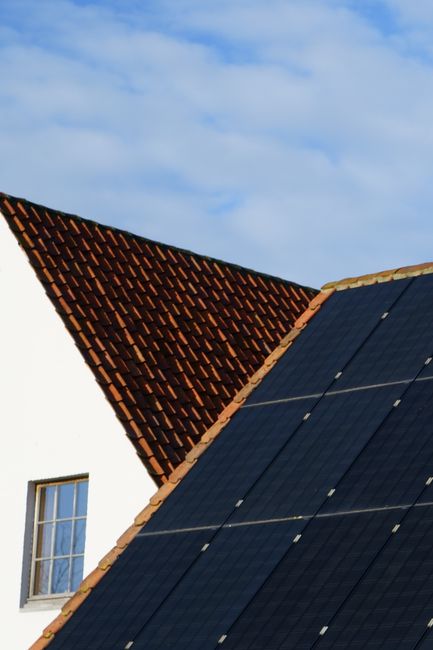
In short: Almost every home in Philadelphia and its suburbs gets power over PECO’s wires. In 2024 a PECO customer lost about 60 minutes of power on normal days and 212 minutes with major storms counted (EIA). PECO pays a $500 solar rebate, and Philadelphia homes can get a single electrical permit for small rooftop systems.
For statewide rules (net metering law, contractor registration and changes at other utilities), see our Pennsylvania energy guide.
Philadelphia area at a glance
- PECO: the wires company for Philadelphia, West Chester, Doylestown and King of Prussia. Homes buying PECO’s own supply paid about 16.2¢ per kWh on average in 2024. Outages: 212 minutes per customer with major events, 60 without; 0.97 interruptions a year (EIA-861, 2024).
- Supplier choice: about 331,000 PECO households, roughly one in five, bought their supply from another company in 2024 (EIA). PECO’s price to compare for regular home service was 11.76¢ per kWh in October 2026 (PAPowerSwitch, the Public Utility Commission’s shopping site).
- Borough utilities: Lansdale, Hatfield, Perkasie and Quakertown run their own electric systems (EIA-861).
- Sun: about 4.07 kWh per square meter per day in Philadelphia (NASA POWER, 2001 to 2020), the sunniest of Pennsylvania’s big metros. Our rough estimate: about 1,190 kWh a year per kW of panels.
- Top hazards: FEMA’s National Risk Index (December 2025) rates Philadelphia County “very high” for cold waves, heat waves and winter weather, and “relatively high” for coastal and inland flooding, hurricanes, ice storms and strong wind. Montgomery County is “very high” for strong wind.
- Public charging: 517 public ports at 175 locations in Philadelphia, 101 in King of Prussia, 52 in West Chester and 27 in Doylestown (AFDC, October 3, 2026).
Your utility and what it means
PECO owns the poles, wires and meters, so it handles outages, solar interconnection and net metering, even if another company sells you the electricity. Supply can be shopped: compare offers against PECO’s price to compare on PAPowerSwitch, the state’s official comparison site.
- Solar: PECO bills net-metered homes only for the net energy used each period, with credits when you send more to the grid than you take. Under state law, excess left at the end of the year is paid at the price to compare (11.76¢ for PECO’s regular home rate in October 2026). PECO’s Ways to Save program lists a $500 rebate for a new home solar system; apply within 90 days after PECO marks the system in service. Customers with another supplier can still get it.
- Time-of-use: PECO’s optional Time-Of-Use supply rate (June to November 2026) charges 31.43¢ per kWh on weekdays from 2 to 6 p.m., 8.36¢ off-peak and 5.77¢ from midnight to 6 a.m., plus delivery charges. You must buy supply from PECO to use it.
- Batteries and EVs: PECO’s Flex & Save program pays battery owners who let PECO draw on the battery during summer and winter peaks (PECO’s example: $80 per kW of average output per season, about $480 a year on average) and EV owners $60 a season, up to $120 a year, for managed charging. EV owners can also claim a $50 Smart Driver rebate for telling PECO about a new EV.
- Borough utilities: if Lansdale, Hatfield, Perkasie or Quakertown sends your bill, its rules apply instead; ask the borough.
Backup power in Philadelphia
On ordinary days PECO’s record is good: about an hour without power per customer in 2024. The storms are what count. Major events more than tripled the figure to 212 minutes, and FEMA rates the city very high for heat waves, cold waves and winter weather, so the outage that matters may come in a July heat wave or a January ice storm. Protect the furnace blower or boiler pump, sump pump, fridge and any medical device first.
For an apartment or row home without a yard, a portable power station covers phones, Wi-Fi, lights and a CPAP. A home battery runs indoors without fumes and switches on by itself. A generator gives the most hours, but the U.S. Consumer Product Safety Commission says to run it outdoors only, at least 20 feet from the house, exhaust away from windows, doors and vents, never in a garage or basement. On a block of attached houses that spot may not exist, which makes a battery the safer choice. Compare options in backup power and size them with the battery backup calculator or the generator sizing tool. A transfer switch for a generator needs a licensed electrician; see generator installation.
Solar in Philadelphia
Philadelphia gets more sun than Pittsburgh or Scranton: about 1,190 kWh a year per kW of panels by our rough estimate, less on shaded or north-facing roofs. EIA counted 21,660 net-metered home solar systems on PECO’s grid in 2024. Check your roof with the solar potential tool and run the solar savings calculator with a real quote. If you join PECO’s time-of-use rate, solar made between 2 and 6 p.m. on weekdays offsets the most expensive hours; PECO notes this may benefit net-metered customers.
For an independent option, Solarize Greater Philadelphia, run by the Philadelphia Energy Authority and Philadelphia Green Capital Corp, helps homeowners in Philadelphia, Bucks, Chester, Delaware and Montgomery counties with vetted installers, approved panels and storage, and negotiated consumer protections. More in solar installation and how net metering works.
Batteries in Philadelphia
With net metering still crediting exports, a battery around Philadelphia is mostly about backup, plus whatever PECO’s Flex & Save pays. The program runs in two seasons, June to August and January to February. During peak events PECO tells your battery to send some stored power to the grid, and the payment depends on the kilowatts it actually delivers, so battery size and a steady internet connection matter. Ask the installer whether your model can enroll and how much stays in reserve for outages. See home battery installation and battery cost.
EV charging in Philadelphia
Philadelphia has 517 public ports, and the King of Prussia area another 101 (AFDC, October 3, 2026). Many Philadelphians park on the street, so public chargers matter more here. With a driveway or garage, home charging is the cheap option. PECO’s super off-peak supply price of 5.77¢ from midnight to 6 a.m. is about half its 11.76¢ standard price to compare, before delivery charges. If you prefer the standard rate, Flex & Save pays up to $120 a year for managed charging instead; you cannot do both. A Level 2 charger needs a 240 V circuit from a licensed electrician and an electrical permit; in Philadelphia, chargers meeting L&I’s EV charger standard qualify for an EZ permit. Estimate costs with the EV charging calculator and read EV charger installation.
Drive on another fuel? See every alternative fuel station in Philadelphia: hydrogen, propane, natural gas, E85 ethanol, biodiesel and renewable diesel.
Permits and inspections
- Philadelphia: the Department of Licenses and Inspections (L&I) issues permits. Its solar permit guide says rooftop systems of 10 kW or less on one- or two-family homes that are not on the historic register can use an EZ permit (an Electrical Permit only). Larger or historic projects need a Building Permit and plans too. You must file PECO’s interconnection application first, a licensed electrical contractor must do the wiring, and a licensed electrical inspection agency does the inspections. Other wiring, such as a generator transfer switch, needs an Electrical Permit; EV chargers that meet the city’s EV charger permit standard can use an EZ permit without plans; you can check a contractor’s license with the city.
- Suburbs: West Chester, Doylestown and Upper Merion Township (King of Prussia) issue their own permits under Pennsylvania’s Uniform Construction Code, either with their own staff or through certified third-party agencies (Pennsylvania Department of Labor and Industry).
- Utility: solar and grid-tied batteries need PECO’s approval to connect before they are switched on.
- Condos and HOAs: get association approval in writing before you sign.
Cities we cover
- Philadelphia
- West Chester
- Doylestown
- King of Prussia
Get help
Are you a licensed installer in Philadelphia? Join SolutionEnergy and get requests from homeowners and businesses →
Tell us about your project and we will connect you with a licensed, independent installer who serves the Philadelphia area. It is free, there is no obligation, and only the installer you choose gets your details. Read how it works.
Philadelphia energy FAQ
Do I need a building permit for solar panels in Philadelphia?
Not always. L&I’s EZ permit covers rooftop systems of 10 kW or less on one- or two-family homes that are not on the historic register: you need only an Electrical Permit, filed after PECO’s interconnection application. Larger or historic projects also need a Building Permit and plans. A licensed electrical contractor must do the work.
Does PECO give a rebate for solar panels?
PECO’s Ways to Save program lists $500 for a new home solar system on a PECO residential account. It is paid after PECO approves the interconnection and the system is in service, and you must apply within 90 days of that. Check the program page before you sign.
Can I buy my electricity from someone other than PECO?
Yes. PECO still delivers the power and handles outages, but you can buy supply from a licensed supplier. Compare offers with PECO’s price to compare (11.76¢ per kWh for regular home service in October 2026) on PAPowerSwitch.
Is a generator safe at a Philadelphia row home?
Only if you can run it outdoors at least 20 feet from any house, with the exhaust away from windows, doors and vents, never in a basement, garage or narrow gap between houses (CPSC). On attached blocks a battery or power station is often safer.
Can PECO pay me for my home battery?
Through Flex & Save, yes. PECO draws on enrolled batteries during summer and winter peak events and pays by the kilowatts delivered; its example is $80 per kW per season, about $480 a year on average. Payments vary and funds are limited.
Sources
EIA-861 data for 2024 (utilities, prices, outages, supplier customers, solar counts). PAPowerSwitch, Pennsylvania Public Utility Commission (read October 3, 2026). PECO Time-Of-Use, EV, solar rebate and Flex & Save pages, read October 3, 2026. Solarize Greater Philadelphia. City of Philadelphia L&I solar permit guide. Pennsylvania Department of Labor and Industry, Uniform Construction Code. Sun: NASA POWER, 2001 to 2020. Hazards: FEMA National Risk Index, December 2025. Charging: Alternative Fuels Data Center, October 3, 2026. Generator safety: CPSC.