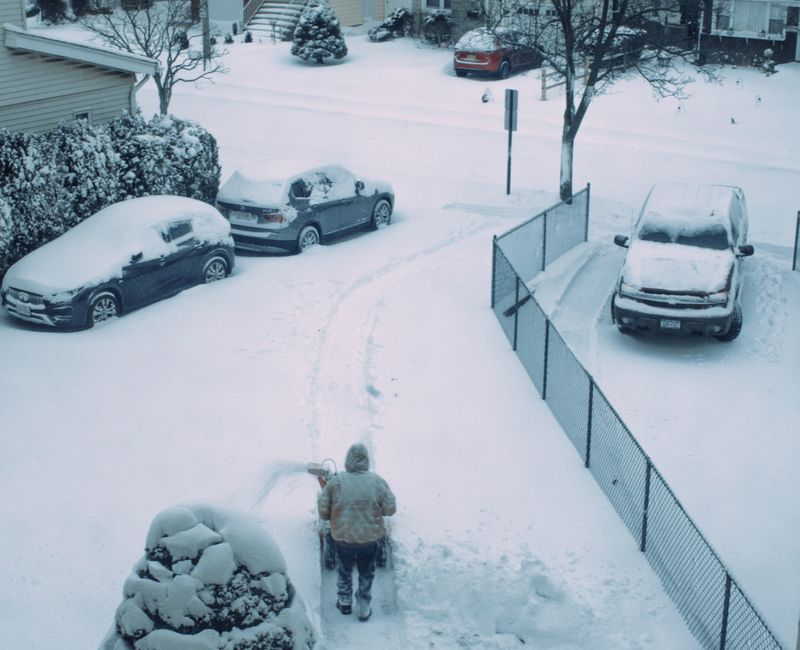
In short: Appleton is on We Energies (about 19.2¢ per kWh in 2024) and Oshkosh on Wisconsin Public Service (about 16.2¢), whose customers lost about 465 minutes of power each with major storms. The July 27, 2026 tornado forced crews to rebuild parts of the Fox Valley grid from the ground up.
This page covers what is specific to the Fox Valley: two investor-owned utilities plus city utilities in Kaukauna and Menasha, their solar and EV credits, the 2026 storms, permits and charging. For statewide rules, including the Focus on Energy solar rebate and tax exemptions, see our Wisconsin energy guide.
Fox Valley at a glance
- We Energies (Appleton): about 19.2¢ per kWh for homes in 2024. Outages: 296 minutes per customer with major events, 109 without (EIA-861, 2024).
- Wisconsin Public Service, WPS (Oshkosh): about 16.2¢ per kWh. Outages: 465 minutes with major events, 95 without; 1.22 interruptions a year (EIA-861, 2024).
- City utilities: Kaukauna, about 12.5¢, with 229 minutes of outages including major events but under 7 minutes without; Menasha, about 12.4¢ (EIA-861, 2024). Alliant Energy also serves parts of Winnebago and Calumet counties.
- Sun: about 3.8 kWh per square meter per day, from 1.2 in December to 6.1 in June (NASA POWER, 2001 to 2020). Our rough estimate: about 1,110 kWh a year per kW of panels.
- Top hazards: Outagamie County is “very high” for cold waves and “relatively high” for hail, lightning, tornadoes and winter weather; Winnebago County is “relatively high” for cold waves, hail, lightning, strong wind and tornadoes (FEMA National Risk Index, December 2025).
- Public charging: 48 ports at 19 locations in Appleton and 20 at 7 locations in Oshkosh (AFDC, October 3, 2026).
Your utility and what it means
- We Energies, solar: use and exports are netted each billing period, and a monthly surplus is credited at $0.03636 per kWh on the standard flat rate in 2026 (tariff CGS NM, systems under 300 kW).
- WPS, solar: the net energy billing rate (PG-4) covers renewable systems up to 20 kW sized to your expected use; the meter runs backward, and monthly surplus is credited at $0.03584 per kWh in 2026. You keep the renewable energy credits.
- EV pilots, both utilities: battery-electric owners on the standard rate get a 4¢ credit for each kWh used between midnight and 8 a.m., up to 400 kWh a month; time-of-use customers get a smaller credit on top of off-peak prices. Plug-in hybrids are not eligible.
- Kaukauna and Menasha: city utilities set their own solar and EV terms; ask yours.
Backup power in the Fox Valley
Storm days, not ordinary days, set the outage record here. WPS customers averaged about 1.6 hours without power in 2024 on normal days, but nearly 7.8 hours once major events were counted; the April 2024 winter storm alone meant restoring power to more than 120,000 WPS customers (EIA; WPS). On July 1, 2026, winds above 50 mph cut power to more than 19,000 WPS customers in northeast Wisconsin.
Then on July 27, 2026, an EF-3 tornado and severe storms crossed the state. We Energies restored more than 131,000 customers, replaced more than 100 poles, and said that in parts of the Fox Valley crews were rebuilding the electric system from the ground up. Natural gas was shut off to more than 250 customers in Menasha. That is a reminder that a gas standby generator depends on gas service too, and a home battery or portable power station can bridge the gap. Compare them in backup power options and size yours with the generator sizing tool or the battery backup calculator.
After a storm: We Energies noted that some Fox Valley homes had damaged wiring, conduit or meter enclosures, which belong to the homeowner and must be repaired by a qualified electrician before power can be restored. Generator safety: the CPSC says outdoors only, at least 20 feet from the house, never in a garage; use battery-backed CO alarms and a transfer switch installed by a licensed electrician (generator installation).
Solar in the Fox Valley
Panels here make about 1,110 kWh a year per kW by our rough estimate. Used at home, that is worth about $215 a year per kW in Appleton at We Energies’ 2024 average and about $180 in Oshkosh at WPS’s. Both utilities credit monthly surplus at about 3.6¢, roughly $40 a year per kW if it were all exported, so a system sized to your use pays best. In Kaukauna and Menasha, city power at about 12.5¢ means smaller savings per kWh. These are estimates; check yours with the solar potential tool and the solar savings calculator.
With hail rated “relatively high” in both counties, ask about panel hail ratings and how your homeowner’s policy covers a rooftop system. WPS caps net energy billing at 20 kW, which covers nearly every home. Read solar installation and how net metering works; the Focus on Energy rebate is on the Wisconsin page.
Batteries in the Fox Valley
WPS reported 78 batteries alongside 1,859 home solar systems in 2024 (EIA). With exports credited at about 3.6¢ by both utilities, storing midday surplus for the evening keeps more of its value, and a battery covers the short outages that make up most of the year. We found no utility battery rebate. A battery with solar goes through the utility’s interconnection process. See home battery installation and home battery cost.
EV charging in the Fox Valley
At about 30 kWh per 100 miles, home charging costs roughly $5.80 per 100 miles on We Energies, $4.90 on WPS and $3.80 in Kaukauna at 2024 averages (our estimates), less with the overnight EV credits. Appleton has 48 public ports and Oshkosh 20 (AFDC, October 3, 2026). A Level 2 charger needs a 240-volt circuit, a permit and a licensed electrician. See EV charger installation and the EV charging cost calculator.
Drive on another fuel? See every alternative fuel station in Appleton: hydrogen, propane, natural gas, E85 ethanol, biodiesel and renewable diesel.
Permits and inspections
- Appleton, Oshkosh and nearby towns: electrical and building permits come from your city, village or town inspection office; solar, standby generators, batteries and Level 2 chargers all involve electrical work that needs one.
- Licensing: check your electrician with the state’s DSPS credential lookup (linked from the Wisconsin page).
- Utility approval: We Energies, WPS or your city utility must approve solar and battery interconnection. Check HOA rules in writing.
Cities we cover
- Appleton
- Oshkosh
Get help
Are you a licensed installer in Appleton? Join SolutionEnergy and get requests from homeowners and businesses →
Tell us about your project and we will connect you with a licensed, independent installer who serves the Fox Valley area. It is free, there is no obligation, and only the installer you choose gets your details. Read how it works.
Fox Valley energy FAQ
Which utility serves my home in the Fox Valley?
Appleton is mainly We Energies and Oshkosh is Wisconsin Public Service, while Kaukauna and Menasha have city-owned utilities, and Alliant Energy serves some areas nearby. Your bill shows your utility; it decides your solar credit, EV credit and interconnection rules.
How do WPS and We Energies credit extra solar power?
Both net your use and exports monthly and credit any surplus at an avoided energy cost rate: $0.03584 per kWh at WPS and $0.03636 at We Energies on the standard rate in 2026. WPS’s net energy billing covers systems up to 20 kW.
My meter box was damaged in a storm. Who fixes it?
After the July 2026 tornado, We Energies explained that wiring, conduit and meter enclosures on the house belong to the homeowner and must be repaired by a qualified electrician before the utility can safely restore power. Call a licensed electrician, then tell your utility the repair is done.
Is there an EV charging discount in Appleton or Oshkosh?
Yes. We Energies (Appleton) and WPS (Oshkosh) both run residential EV pilots: a 4¢ credit per kWh used between midnight and 8 a.m. on the standard rate, up to 400 kWh a month, for battery-electric vehicles registered at the home.
Sources
Utilities, prices, outages and solar and battery counts: U.S. Energy Information Administration, EIA-861 data for 2024. We Energies CGS NM tariff and EV pilot pages, and its July 30, 2026 storm release; WPS PG-4 tariff (effective January 1, 2026), EV pilot page, and April 2024 and July 2026 storm releases. Sun: NASA POWER, 2001 to 2020. Hazards: FEMA National Risk Index, December 2025. Charging: Alternative Fuels Data Center. Generator safety: CPSC. All checked October 3, 2026.