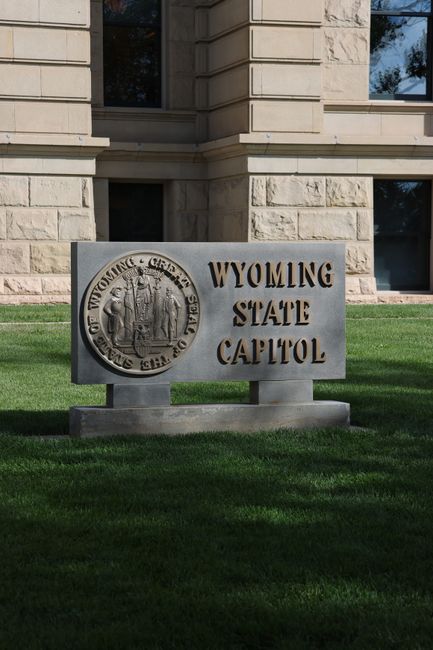
In short: Cheyenne pays more for power than the rest of Wyoming: Black Hills Energy (Cheyenne Light, Fuel & Power) averaged about 17¢ per kWh in 2024. Its grid was very reliable, about 33 outage minutes per customer, and Cheyenne’s strong sun makes solar worth more here than elsewhere in the state, about $1,360 a year for 6 kW by our estimate.
Below: what Black Hills Energy and High West Energy mean for solar, wind, batteries and EV charging, how wildfire shutoffs work, and how permits work in Cheyenne’s online system. For statewide rules (net metering up to 25 kW, licensing, small wind), see our Wyoming energy guide.
Cheyenne at a glance
- Utilities: Black Hills Energy, through Cheyenne Light, Fuel & Power, serves the city. In Laramie County, EIA also lists High West Energy, Wheatland Rural Electric, Wyrulec and the town of Pine Bluffs. Check your bill.
- Price, 2024 average: Black Hills Energy (Cheyenne) about 17.0¢ per kWh, the highest residential average among Wyoming’s larger utilities; High West Energy about 14.4¢ (EIA-861, revenue divided by sales).
- Outages, 2024: Cheyenne Light, Fuel & Power about 33 minutes per customer, with or without major events, and one interruption every two years on average (EIA-861).
- Sun: about 4.57 kWh per square meter per day, from 2.0 in December to 6.9 in July (NASA POWER, 2001–2020). Our rough estimate: about 1,335 kWh a year per kW of panels.
- Top hazards: FEMA’s National Risk Index (December 2025) rates Laramie County “very high” for winter weather and “relatively high” for cold waves, ice storms and lightning; wildfire, hail, strong wind and tornadoes are “relatively moderate”.
- Public charging: 46 public ports at 18 locations in Cheyenne (AFDC, October 2026).
Your utility and what it means
Black Hills Energy customers get Wyoming’s net metering law: systems up to 25 kW, with surplus carried forward month to month and any balance at the end of the year paid at avoided cost (details on the state page). Cheyenne has taken to it more than anywhere else in Wyoming: EIA counted 1,171 net-metered home solar systems on Cheyenne Light, Fuel & Power at the end of 2024, more than on Rocky Mountain Power’s whole Wyoming system, plus 103 home wind turbines. Black Hills’ programs here:
- Ready EV home charger rebate: up to $500 for a qualifying Wi-Fi-connected Level 2 charger bought and installed in 2026, installed by a qualified electrician with the needed permits; the application must reach Black Hills by December 31, 2026, and you agree to share charger usage data. See Ready EV for the qualifying models.
- Emergency Public Safety Power Shutoffs: a last-resort step in specific high-risk fire areas, announced by phone, email, text and media. Outages may last several hours or multiple days, until lines are inspected (Black Hills Energy).
High West Energy is a cooperative serving parts of Laramie and Albany counties; EIA counted 237 member home solar systems and 30 small wind turbines on its lines. Ask High West about its own net metering and programs.
Backup power in Cheyenne
In the city, outages were rare and short in 2024. Two situations still call for backup. First, winter: FEMA rates Laramie County “very high” for winter weather and “relatively high” for ice storms and cold waves, and a furnace needs power to run. Second, homes in high-risk fire areas outside the city, where Black Hills Energy may call a planned shutoff that can last several hours or days.
- Battery with solar: shutoffs come in dry, windy, usually sunny weather, so panels can keep recharging a battery. See battery installation.
- Generator: for long winter outages or homes on wells; natural gas or propane avoids storing gasoline. In fire season, set it on gravel away from dry grass. See generator installation.
- Portable power station: phones and medical devices, and it leaves with you in an evacuation. See portable power stations.
Size it with the battery backup calculator or the generator sizing tool, and compare options in our backup power guide. Generators run outdoors only, at least 20 feet from the house with the exhaust pointed away, with carbon monoxide alarms inside (CPSC).
Solar in Cheyenne
Cheyenne combines strong high-plains sun with the highest power price among Wyoming’s larger utilities, which is why solar is more common here. By our rough estimate, a 6 kW system makes about 8,000 kWh a year, worth about $1,360 at Black Hills’ 2024 average price if sized to your yearly use, since monthly surplus carries forward at retail. For High West members at 14.4¢, about $1,150. Year-end surplus is paid only at avoided cost, so oversizing does not pay. Panels must be rated for the area’s wind and hail. These are estimates, not quotes.
Cheyenne is also windy, and the net metering law covers small wind as well; the state page covers the wind data and what to check. Model a roof with the solar potential tool and solar savings calculator, then read how solar installation works, what it costs and how net metering works.
Home batteries in Cheyenne
Because monthly net metering already credits solar at retail, a battery adds little to savings in Cheyenne; its value is backup for winter storms and fire-season shutoffs. We found no Black Hills Energy battery program in Wyoming (Rocky Mountain Power’s battery incentive on the state page does not apply to Cheyenne Light customers). See home batteries and battery costs.
EV charging in Cheyenne
At Black Hills’ 2024 average price, home charging costs about $5.10 per 100 miles by our estimate (30 kWh per 100 miles), still well below gasoline for most cars, and about $4.30 on High West. Cold and wind raise use in winter. The Ready EV rebate can cover up to $500 of a qualifying Level 2 charger in 2026. Cheyenne has 46 public ports, and the interstates meet here. See EV charger installation and the EV charging cost calculator.
Drive on another fuel? See every alternative fuel station in Cheyenne: hydrogen, propane, natural gas, E85 ethanol, biodiesel and renewable diesel.
Permits and inspections
- City of Cheyenne: Building Permitting & Licensing (2101 O’Neil Ave.) issues building, electrical, mechanical and plumbing permits in city limits and is fully online: applications and inspection requests go through the OpenGov portal (Cheyenne permits). The city uses the 2024 ICC codes.
- Contractors: Cheyenne licenses contractors in pairs, a company license plus an individual qualified supervisor, so ask to see both.
- Outside city limits: ask Laramie County Planning & Development.
- Utility approval: Black Hills Energy or your co-op must approve a grid-tied system.
Electricians are licensed by the state (lookup on the state page). If you have an HOA, check its rules on panels, turbines and generators.
Cities we cover
- Cheyenne
Get help in Cheyenne
Are you a licensed installer in Cheyenne? Join SolutionEnergy and get requests from homeowners and businesses →
Tell us about your project and we will connect you with a licensed, independent installer who serves the Cheyenne area. It is free, there is no obligation, and only the installer you choose gets your details. Read how it works.
Cheyenne energy questions
Why is electricity more expensive in Cheyenne?
EIA’s 2024 figures put Cheyenne Light, Fuel & Power (Black Hills Energy) at about 17¢ per kWh, against about 13.4¢ for Rocky Mountain Power in Wyoming. Each utility’s rates are set separately by the Wyoming Public Service Commission. The upside is that solar saves more here.
Does Black Hills Energy offer a rebate for home EV chargers in Cheyenne?
Yes, for 2026: up to $500 for a qualifying Level 2 smart charger, installed by a qualified electrician with permits, with the application received by December 31, 2026. You agree to share charger data. Check the Ready EV page for the current list of qualifying chargers.
Can Black Hills Energy shut off power for wildfire risk near Cheyenne?
Yes, in specific high-risk fire areas, as a last resort. Customers are notified by phone, email, text and media, and outages may last several hours or days until lines are inspected. Keep your contact details current with Black Hills Energy.
How do I get a solar permit in Cheyenne?
Through the city’s OpenGov portal; Cheyenne’s Building Permitting & Licensing office takes all permit applications and inspection requests online. Your installer normally files, and Black Hills Energy must approve the connection before the system is turned on.
Sources
EIA-861, 2024 (price = residential revenue ÷ sales; outages; service territory; net-metered systems); Black Hills Energy Ready EV page and 2026 rebate form, and Emergency Public Safety Power Shutoff page (archived 2026); City of Cheyenne Building Permitting & Licensing (archived September 2026); NASA POWER, 2001–2020; FEMA National Risk Index, December 2025; AFDC station data; CPSC. Read October 2026 unless noted. Estimates are ours and labelled.