This article contains affiliate links: if you buy through them we may earn a commission, at no extra cost to you. Learn more.
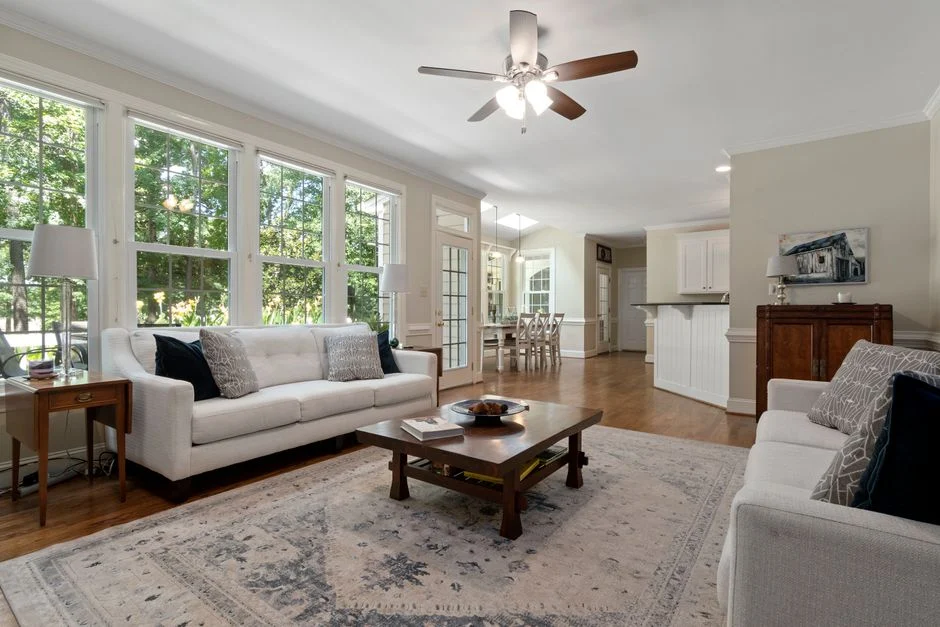
It’s the third week of a heat wave. The kids have friends over, the AC hasn’t stopped since breakfast, and the sun is pouring through the big west window right onto the couch. Everyone’s comfortable, and nobody wants to think about what July is going to cost. You don’t have to sweat to save money; you just have to stop paying to cool heat you let in.

In short: to lower your electric bill in summer, keep heat out (close blinds on sunny windows, seal leaks), cool smarter (set the thermostat higher when you’re out, use ceiling fans so you can raise it about 4°F, change filters), and shift heavy chores to cooler, cheaper hours. Air conditioning is the single largest electricity use in U.S. homes.
Summer bills are climbing. In its September 2026 outlook, the U.S. Energy Information Administration (EIA) put the average residential bill for June to August 2026 at $196 a month, up 5.8% from $185 in 2025, with the West South Central states (Texas, Louisiana, Oklahoma, Arkansas) highest at $226. Here are 18 ways to bring yours down, from free habits to a few smart buys, with the source behind each number.
Why summer bills spike
Air conditioning used 19% of all home electricity in the U.S. in 2020, more than any other use, according to EIA’s Residential Energy Consumption Survey. In summer that share is much higher, because almost all of it lands in four months. EIA expects the average home to use 1,074 kWh a month this summer at about 18.25 cents per kWh. Every degree you let the house drift up, every hour of sun you block and every leak you seal takes a bite out of that.
| Region (EIA) | Average summer bill 2025 | Forecast 2026 |
|---|---|---|
| United States | $185 | $196 |
| New England | $199 | $199 |
| Middle Atlantic | $197 | $207 |
| South Atlantic | $198 | $208 |
| West South Central | $211 | $226 |
| Mountain | $165 | $179 |
| Pacific | $164 | $180 |
Monthly averages for June, July and August, from EIA’s Short-Term Energy Outlook, September 2026 (Table SF02). Not adjusted for inflation.
Cool smarter: thermostat and AC
1. Set it as high as you’re comfortable, and higher when you’re out
The Department of Energy (DOE) says the smaller the difference between indoor and outdoor temperatures, the lower your cooling bill. Its advice: set the thermostat as high as is comfortable when you’re home (while still controlling humidity), and warmer than normal when you’re away. Turning it back 7 to 10°F for 8 hours a day can save as much as 10% a year on heating and cooling, per DOE. And no, the AC doesn’t burn the savings catching up: a warmer house gains heat more slowly.
2. Don’t drop the setting to cool faster
Setting the thermostat colder than normal when you first turn on the AC won’t cool the house any faster, DOE says. It just overcools and costs more. Pick your number and leave it.
3. Let a smart thermostat do the remembering
Most people forget to raise the setting on the way out. A smart or programmable thermostat does it on schedule and cools the house back down before you get home. ENERGY STAR says certified smart thermostats save about 8% of heating and cooling bills, or $50 a year, on average. See our best smart thermostats and best thermostat settings for summer and winter.
4. Run ceiling fans counterclockwise, only in occupied rooms
DOE says a ceiling fan lets you raise the thermostat about 4°F with no loss of comfort, and in moderate climates fans can sometimes replace air conditioning altogether. In summer, run them counterclockwise for a breeze. Fans cool people, not rooms, so turn them off when you leave.
5. Keep lamps and TVs away from the thermostat
A thermostat that feels heat from a lamp or TV thinks the room is warmer than it is and keeps the AC running, DOE warns. Move them, and keep furniture off the supply registers and return grilles.
6. Check the filter every month
ENERGY STAR says to inspect, clean or change the filter in your central AC, furnace or heat pump once a month; a dirty filter raises energy costs and can damage the equipment. Summer is when it clogs fastest. DOE also suggests vacuuming air intake vents and scheduling regular maintenance for the cooling system.
7. Seal the ducts you can reach
ENERGY STAR says about 20 to 30% of the air moving through a typical home’s ducts is lost through leaks, holes and loose connections. Ducts in a hot attic are the worst offenders, because the leaking air is the air you paid to cool. Seal reachable joints with duct mastic or foil tape; a heating and cooling contractor can test and seal the rest.
Keep the heat out
8. Close blinds and curtains on sunny windows
DOE says about 76% of the sunlight that falls on standard double-pane windows enters the home as heat. Yet 75% of residential window coverings stay in the same position every day, according to a study DOE cites. Close them on east windows in the morning and on south and west windows in the afternoon. DOE’s numbers on what helps:
- Cellular shades can cut unwanted solar heat through windows by up to 60% when tightly fitted.
- Medium-colored drapes with white plastic backing can reduce heat gain by 33%.
- Exterior awnings can reduce summer solar heat gain by up to 65% on south windows and 77% on west windows (they also block welcome winter sun).
9. Seal the leaks that let hot air in
Air leaks work both ways: the gaps that leak heat out in January pull hot, humid air in during July. DOE recommends caulk and weatherstripping around doors and windows. ENERGY STAR estimates that air sealing plus attic insulation saves an average of 15% on heating and cooling costs. A hot attic over a poorly insulated ceiling is a summer bill driver too: see best DIY attic insulation.
10. Use the bathroom and kitchen fans, briefly
DOE suggests running the bathroom fan during showers to remove heat and humidity, and making sure bathroom and kitchen fans vent outdoors, not into the attic. Turn them off when the job is done, or they’ll pull out the cool air you paid for.
11. Don’t cook up extra heat
An oven running for an hour adds heat your AC then has to remove. On hot days, use the grill outside, a microwave, a slow cooker or an induction burner, and save the oven for cooler evenings. (This one is common sense rather than a lab figure; how much it saves depends on your kitchen.) See best induction cooktops.
12. Switch hot-running bulbs to LED
Old bulbs add heat as well as light. DOE says LEDs use up to 90% less energy and last up to 25 times longer, and suggests lighting that runs cooler in summer. See best LED light bulbs.
Use power at better times and in smaller amounts
13. Shift laundry and dishes off-peak
If you’re on a time-of-use plan, summer late afternoons and evenings are often the most expensive hours of the year. Running the dishwasher, washer and dryer at night (and charging an EV overnight) can cost less per kWh and keeps that heat out of the house during the hottest hours. Check your plan’s hours: time-of-use rates explained.
14. Wash in cold water and run full loads
ENERGY STAR says about 90% of a clothes washer’s energy goes to heating water. Cold water and full loads (DOE’s advice for dishes and clothes alike) cut that, and air-drying outside on a hot day costs nothing.
15. Set the water heater to 120°F
DOE says water heating accounts for about 18% of a home’s energy use, and notes the Consumer Product Safety Commission recommends no more than 120°F to prevent scalding. Lower setting, lower bill.
16. Cut standby power from the “summer stuff”
Pool pumps, garage fridges, dehumidifiers and game consoles get a workout in summer. Lawrence Berkeley National Laboratory puts standby power alone at 5 to 10% of home electricity. An energy-monitoring smart plug shows what each device uses and can switch it off on a schedule. See phantom power.
17. Cool one room instead of the whole house
If you have central air but spend summer nights in one bedroom, an efficient window unit there lets you raise the central setting. Size it right: DOE says a room AC typically needs about 20 Btu per square foot, and an oversized unit cools poorly and doesn’t dry the air well. The ENERGY STAR Midea U-shaped 10,000 Btu unit below is rated at about 500 kWh a year, roughly $92 a year at July 2026’s average price (our estimate: 500 × $0.1831; your use will differ). See best energy efficient air conditioners.
18. Control mini splits and window units with a schedule
Ductless mini splits and window ACs come with an IR remote, not a thermostat on the wall, so they often run all day at one setting. A plug-in controller such as the Mysa for mini splits learns the remote’s signals and adds schedules and app control. See best smart thermostat for a mini split.
Our top picks for a cheaper summer
Prices change often. The prices below are what we saw at the maker or a major retailer in October 2026; check the current price before you buy.
ecobee Smart Thermostat Enhanced
- ENERGY STAR certified
- Radar occupancy sensor
- About $164.99 on sale (maker, Oct 2026)
Midea U-Shaped Smart Inverter Window AC 10,000 BTU (MAW10V1QWT)
- ENERGY STAR, CEER 15.0
- About 500 kWh a year
- 115 V, cool only
Mysa Smart Thermostat for Mini-Splits (Mysa AC)
- Controls the unit by infrared
- Works with window and portable ACs too
- About $139, no subscription (maker, Oct 2026)
Kasa Smart Plug Mini with Energy Monitoring EP25 (2-pack)
- 15 A / 1.8 kW
- Usage history in the app
- Schedules and remote off
- ecobee Smart Thermostat Enhanced: ENERGY STAR certified, with a built-in occupancy sensor so it can raise the setting when the house is empty. Check that your wiring is compatible first.
- Midea U-Shaped 10,000 BTU: an inverter window AC with a CEER of 15.0 and a 2-year warranty. Cooling only; it doesn’t heat.
- Mysa AC: plugs in near a ductless mini split, window or portable AC and sends it infrared commands on your schedule. Mysa says there are no subscriptions.
- Kasa EP25: plug the dehumidifier, the garage fridge or the TV corner into it and see what each costs. Works with Apple Home, Alexa and Google Home.
Check the ecobee Smart Thermostat Enhanced price on Amazon
Check the Midea U-Shaped window AC price on Amazon
Check the Mysa AC price on Amazon
Check the Kasa EP25 smart plug price on Amazon
Keep exploring: start with our full guide on how to lower your electric bill, then the winter version, how to lower your electric bill in winter. See what uses the most electricity, our smart thermostats guide, and whether a heat pump makes sense when your AC wears out. Hurricane or heat-wave outages? See portable power stations. Everything in this section lives in Energy Saving Tips; for the science of heat, read thermal energy and radiant energy.
Summer electric bill questions
What temperature should I set my AC to save money?
DOE doesn’t name one number for summer. It says to set the thermostat as high as is comfortable when you’re home and need cooling, warmer when you’re away, and that the smaller the gap between indoor and outdoor temperatures, the lower your bill. A ceiling fan lets you go about 4°F higher with the same comfort.
Is it cheaper to leave the AC on all day in summer?
Generally no. DOE explains that a warmer house gains heat more slowly, so raising the setting while you’re out saves energy rather than making the AC “work harder” later. Use a smart or programmable thermostat to start cooling shortly before you return. Pets, people with health conditions and very humid homes may need a smaller setback.
Do fans use a lot of electricity?
Far less than air conditioning. That’s why DOE recommends them: a ceiling fan lets you raise the thermostat about 4°F without losing comfort. ENERGY STAR ceiling fans are up to 60% more efficient than conventional ones, per DOE. Just remember fans cool people, not rooms, so switch them off when you leave.
Why is my electric bill so high in summer?
Mostly air conditioning, the largest electricity use in U.S. homes (19% of the year’s total in 2020, per EIA), concentrated into a few hot months. Prices are up too: EIA expects the average summer 2026 bill to be $196 a month, 5.8% more than 2025. Sun through windows, leaky ducts and a dirty filter make it worse.
How much does a window air conditioner cost to run?
Check the yellow EnergyGuide label: it lists estimated yearly kWh. The ENERGY STAR Midea U-shaped 10,000 Btu unit is rated at about 500 kWh a year, roughly $92 at July 2026’s average U.S. price of 18.31 cents per kWh (our estimate). Hotter climates and longer hours mean more; a right-sized, ENERGY STAR model keeps it down.
Leave a Reply