This article contains affiliate links: if you buy through them we may earn a commission, at no extra cost to you. Learn more.
You’re standing in the driveway with a coffee, looking up at the roof and trying to picture it covered in panels. A solar company’s quote says 22. Your neighbor across the street got 16. A friend in Arizona says she needed only 12. So, how many solar panels do I need for my house? The answer comes from two numbers you can find yourself in about ten minutes.
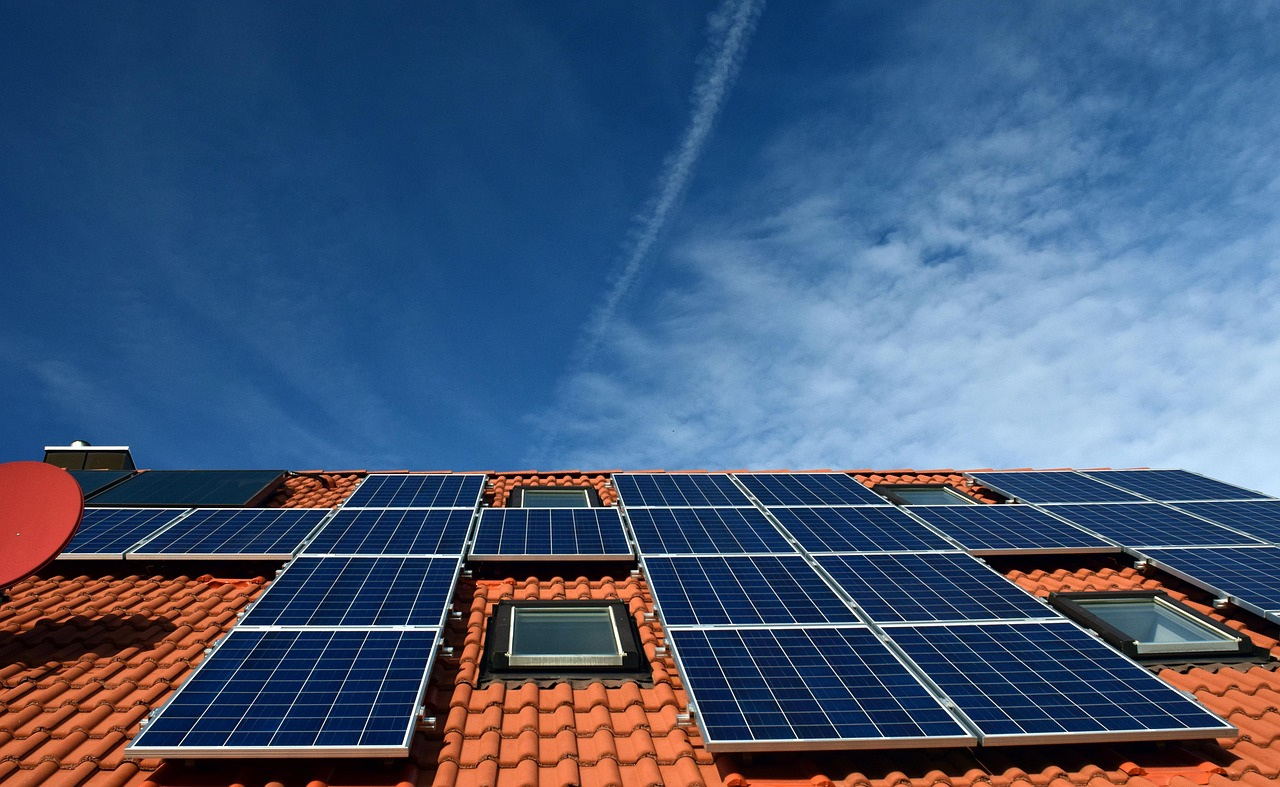
The short answer: divide your yearly electricity use (kWh) by how much 1 kW of panels makes a year where you live, then divide by your panel’s size. For an average U.S. home using 865 kWh a month, that’s about 15 panels of 400 watts in sunny Phoenix and about 24 in cloudier Seattle, by our estimates from NREL’s PVWatts calculator.
The formula in one line
Number of panels = yearly kWh you use ÷ yearly kWh each kW of panels makes in your area ÷ panel size in kW.
That’s it. The rest of this guide shows how to find each number and what to adjust for. Every result here is an estimate for planning; a solar installer’s design, with your real roof angle and shading, is what you should buy from.
Step 1: Find how much electricity you use
Look at 12 months of electric bills (most utilities show a year of history in their app or online account) and add up the kWh. A full year matters because air conditioning and heating swing your use a lot between seasons.
For comparison, the U.S. Energy Information Administration (EIA) says the average home used 865 kWh a month in 2024, or about 10,380 kWh a year. That varies widely by state: EIA notes that homes in Louisiana used more than twice as much electricity from the grid as homes in Hawaii or California.
Plan for changes. If you’ll buy an electric car or switch to a heat pump, add that use now. The Department of Energy says today’s electric cars use about 25 to 40 kWh per 100 miles. At 30 kWh per 100 miles, 12,000 miles a year adds about 3,600 kWh (our example), roughly a third more than the average home uses. See our EV charging with solar guide.
Use less first. Every kWh you cut is a panel you don’t have to buy. A plug-in meter shows what an old fridge or a dehumidifier really draws, and a whole-home monitor shows where the rest goes. Our how to lower your electric bill guide has the cheapest fixes.
Step 2: Find what 1 kW of panels makes where you live
This is where location matters. The free PVWatts calculator (pvwatts.nlr.gov), made by the Department of Energy’s national lab in Golden, Colorado (formerly NREL, now the National Laboratory of the Rockies), uses typical-year weather data built from long-term satellite records for your address. Enter your address, set the system size to 1 kW, keep the default 14% system losses (for wiring, dust, shading, mismatch and aging), and set your roof’s tilt and direction. It returns the kWh per year for each kW of panels.
We ran it for 1 kW of standard panels on a south-facing roof tilted 20 degrees:
| City | Average sun (peak sun hours a day) | kWh per year from 1 kW of panels |
|---|---|---|
| Phoenix, Arizona | About 6.5 | About 1,755 |
| Seattle, Washington | About 4.0 | About 1,090 |
“Peak sun hours” is the day’s sunlight packed into the number of hours at full strength (1 kW per square meter). Phoenix gets about 6.5 a day on average; Seattle about 4. If you only know your sun hours, a rough shortcut from these two runs is: yearly kWh per kW ≈ sun hours × 365 × 0.75. The 0.75 covers system losses plus heat and inverter losses. It’s our approximation; PVWatts for your own address is better.
Seasons matter too. PVWatts says the same 1 kW in Seattle makes about 140 kWh in July but only about 33 in December. With full net metering, summer extra covers winter; with net billing, it doesn’t work so neatly (more below).
Step 3: Work out the system size
Divide your yearly use by the kWh per kW. For the average home (10,380 kWh a year):
- Phoenix: 10,380 ÷ 1,755 ≈ 5.9 kW
- Seattle: 10,380 ÷ 1,088 ≈ 9.5 kW
Those numbers line up with what installers actually build. Berkeley Lab found that the median U.S. home solar system installed in 2024 was 7.2 kW, with most between about 4 and 11 kW.
Step 4: Convert kW to panels
Multiply kW by 1,000 to get watts, then divide by your panel’s wattage and round up. Most home panels now are in the 400-watt class; Qcells’ Q.TRON BLK M-G2+ line, for example, runs from 405 to 430 watts. With 400-watt panels:
- Phoenix: 5,910 W ÷ 400 ≈ 15 panels
- Seattle: 9,540 W ÷ 400 ≈ 24 panels
Quick sizing table (our estimates)
Here’s the whole method for four common usage levels, using PVWatts figures for 1 kW and 400-watt panels. Find your monthly use, then read across.
| Monthly use | Yearly use | Phoenix: system size / panels | Seattle: system size / panels |
|---|---|---|---|
| 500 kWh | 6,000 kWh | 3.4 kW / 9 panels | 5.5 kW / 14 panels |
| 865 kWh (U.S. average) | 10,380 kWh | 5.9 kW / 15 panels | 9.5 kW / 24 panels |
| 1,100 kWh | 13,200 kWh | 7.5 kW / 19 panels | 12.1 kW / 31 panels |
| 1,500 kWh | 18,000 kWh | 10.3 kW / 26 panels | 16.5 kW / 42 panels |
These assume a south-facing roof with little shade. East- or west-facing roofs, steep or flat roofs, and trees all lower output, which means more panels for the same energy. Use your own address in PVWatts and recheck.
Step 5: Check your roof space
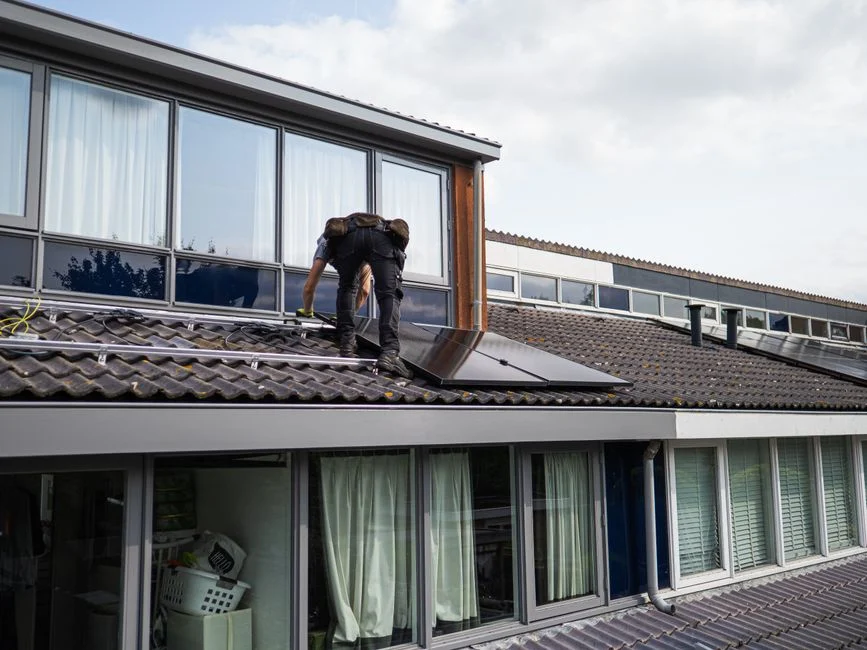
A 400-watt-class panel is about the size of a door laid flat, but wider. The Qcells Q.TRON BLK M-G2+ measures 67.8 × 44.6 inches, about 21 square feet, and weighs 46.7 pounds. So 15 panels need about 315 square feet of panel area and 24 panels about 500, before gaps between rows and the clear paths fire codes may require at roof edges and ridges. Berkeley Lab found that home systems installed in 2024 typically covered 16% to 41% of the total roof area.
If your roof is small or shaded, higher-wattage panels help a little; a smaller system that covers part of your bill still saves money. Your installer handles the permit and the utility’s interconnection approval, which is required before a grid-tied system can be switched on.
How net metering changes the right size
The method above aims to cover 100% of your yearly use. That makes sense where your utility credits exported power at the full retail price (classic net metering), because summer surplus pays for winter shortfall. Under net billing, as in California since April 2023, exported power earns a lower credit, so a system that covers 100% of your yearly use may not pay back as well. There, many homeowners size for daytime use, shift chores to midday, or add a battery. Our net metering guide explains the difference, and many utilities also cap system size relative to your past use.
Smaller jobs: panels for a power station
Not ready for a rooftop system, or renting? Portable folding panels charge a portable power station for outages and camping. The same math works at small scale: one 200-watt panel × 5 peak sun hours × 0.75 ≈ 750 Wh a day (our estimate; panels laid flat or partly shaded make less). That’s about three-quarters of a 1,024 Wh station on a good day, so two panels refill it in one sunny day. More in our best portable solar panels and what size portable power station guides.
Prices change often. The prices below are what we saw at the maker or a major retailer in October 2026; check the current price before you buy.
Emporia Vue 3 Home Energy Monitor (16 sensors)
- 2 x 200A mains + 16 circuit sensors
- Tracks solar and net metering
- About $199.99 (maker's price)
P3 Kill A Watt P4400
- Plug-in meter, no app
- Watts, volts, amps, cumulative kWh
- About $32.99 (maker's price)
Jackery SolarSaga 200W (bifacial)
- 200W, IP68
- 14.33 lb
- Plugs into Jackery DC8020 inputs
EcoFlow NextGen 220W Bifacial Portable Solar Panel
- 220W front / 175W rear
- IP68, 15.4 lb
- About $399 (maker's price)
The Emporia Vue 3 clamps onto your main lines and up to 16 circuits inside the breaker panel, so you see exactly when and where you use power, and later how much your panels make. It goes inside the panel, so have a licensed electrician install it. The Kill A Watt P4400 plugs into a wall outlet and measures one appliance at a time, up to 15 amps.
Check the Emporia Vue 3 price on Amazon
For a power station, the Jackery SolarSaga 200W is rated IP68 and plugs into Jackery’s DC8020 inputs; the EcoFlow NextGen 220W is bifacial (220 W front, 175 W rear) and comes with a solar-to-XT60 cable.
Check the Jackery SolarSaga 200W price on Amazon
Keep exploring: start at our solar panels for home guide, then check how much solar panels cost, whether they’re worth it and buying vs leasing. Want backup when the grid goes down? See home battery backup and portable power stations. For the science, read solar energy or radiant energy, or browse all solar articles.
Solar panel sizing questions
How many solar panels does it take to power a house?
For an average U.S. home using about 10,380 kWh a year, our PVWatts-based estimate is about 15 panels of 400 watts in a very sunny place like Phoenix and about 24 in a cloudier place like Seattle. Your number depends on your use, your roof’s direction and shade, and your panels’ wattage.
How many solar panels do I need for 1,000 kWh a month?
That’s 12,000 kWh a year. By our estimate, Phoenix needs about 6.8 kW, or 18 panels of 400 watts; Seattle needs about 11 kW, or 28 panels. Many places fall somewhere in between. Run your address in PVWatts with a 1 kW system to get your own multiplier.
How much power does one solar panel make in a day?
A 400-watt panel makes about 0.4 kW × peak sun hours × 0.75 by our rule of thumb: roughly 2 kWh a day in Phoenix and 1.2 kWh in Seattle, averaged over the year. Summer days make much more and winter days much less.
Should I size my system to cover 100% of my bill?
Only if your utility credits exports at or near the retail price. Under net billing, exports earn less, so a smaller system plus a battery or daytime load shifting can pay back better. Many utilities also limit system size based on your past use. Ask your installer which tariff your quote assumes.
Do I need more panels if I add a battery?
Not necessarily. A battery stores power your panels already make; it doesn’t create more. If you want enough solar to recharge the battery every day and also run the house, you may want a few extra panels. Batteries also lose a little energy charging and discharging; Tesla rates Powerwall 3’s solar-to-battery-to-home efficiency at 89%.
Can I use the federal tax credit to pay for extra panels?
Not for a system installed in 2026. The IRS says the 30% residential clean energy credit is not allowed for expenditures made after December 31, 2025, and an expenditure counts as made when installation is completed. Check state and utility programs instead; see our solar tax credit 2026 guide.