
This article contains affiliate links: if you buy through them we may earn a commission, at no extra cost to you. Learn more.
The electric bill lands on the kitchen table in August, bigger than last year’s, and someone says it out loud: “Should we just get solar?” A neighbor two doors down did it last spring and talks about it at every barbecue. But the 30% federal tax credit that made the math easy is gone, and the quotes you see online run from “pays for itself in six years” to “never.” So, are solar panels worth it in 2026?
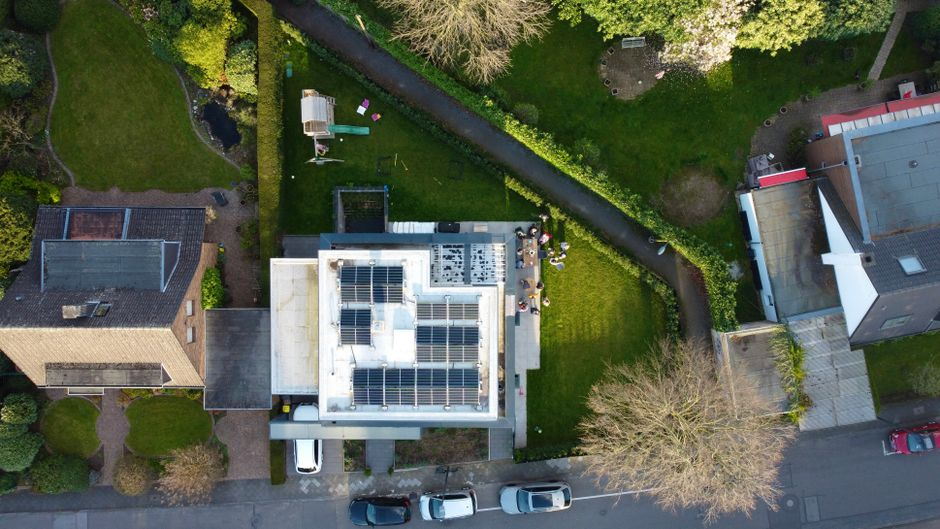
The short answer: for many homeowners, yes. Solar is worth it when you own a sunny roof that won’t need replacing soon, pay high electricity rates, plan to stay at least 10 years and get credit for the power you export. EnergySage puts the average payback at about 10 years. In low-rate states, or with poor export credits, it can take 15 years or more.
Below: what changed in 2026, the payback math with real 2026 prices and rates (our estimates, clearly labelled), the pros and cons, who should wait, and cheaper ways to start.
What changed for solar in 2026
- No federal credit for buyers. The IRS says the 30% residential clean energy credit (25D) isn’t available for property placed in service after December 31, 2025. What counts is when the system is installed, not when you signed or paid.
- Leases and PPAs still carry a credit, for now. The solar company owns those systems and can claim a business credit (48E). Under the July 2025 tax law, that credit ends for solar unless construction began by July 4, 2026, or the system is placed in service by the end of 2027. EnergySage notes lease and PPA providers may pass part of the savings on.
- Prices are not falling much. Berkeley Lab found installed prices roughly flat from 2023 to 2024 after inflation. EnergySage’s 2026 marketplace average is about $2.60 per watt.
- Electricity keeps getting pricier. The EIA expects the average home rate to rise from 18.2 cents per kWh in 2026 to 18.6 cents in 2027. Every cent makes solar’s output worth more.
- The market is shrinking. SEIA and Wood Mackenzie reported residential installations down 12% year over year in the second quarter of 2026 and expect the segment to contract about 23% for the year, largely because the 25D credit ended.
The payback math (our estimates)
Payback is simple in principle: system price ÷ yearly savings = years to break even. Yearly savings ≈ kWh the panels make × what you’d have paid per kWh. Here’s how we built the table below, so you can redo it with your own numbers:
- System: 7.2 kW, the median US home system installed in 2024 (Berkeley Lab).
- Price: $2.60 per watt, EnergySage’s 2026 average before incentives = $18,720. We used the same price everywhere so the table shows the effect of sun and rates. Local prices differ: EnergySage shows about $2.27/W in Arizona and $2.90/W in Massachusetts.
- Output: kW × EnergySage’s production ratio for each place (kWh per watt per year): 1.6 Arizona, 1.5 California, 1.1 Massachusetts, New York and Washington. For the “US average” row we assumed 1.3, the middle of EnergySage’s 1.1–1.6 range.
- Rate: each state’s average residential price, January to July 2026 (EIA).
- Big assumption: every kWh the panels make is worth the full retail rate, which is true only with full net metering or if you use all of it yourself.
| Example | Yearly output | Rate | Yearly value | Simple payback | Had the 30% credit applied |
|---|---|---|---|---|---|
| California (but see note) | ≈10,800 kWh | 33.3¢ | ≈$3,590 | ≈5.2 years | ≈3.6 years |
| Massachusetts | ≈7,920 kWh | 30.1¢ | ≈$2,390 | ≈7.8 years | ≈5.5 years |
| New York | ≈7,920 kWh | 29.4¢ | ≈$2,330 | ≈8.0 years | ≈5.6 years |
| Arizona | ≈11,520 kWh | 15.4¢ | ≈$1,780 | ≈10.5 years | ≈7.4 years |
| US average sun and rate | ≈9,360 kWh | 18.2¢ | ≈$1,700 | ≈11.0 years | ≈7.7 years |
| Washington | ≈7,920 kWh | 14.4¢ | ≈$1,140 | ≈16.4 years | ≈11.5 years |
The California note: new California customers take service on the Net Billing Tariff, which credits exported power at its value to the grid rather than the retail rate, so the 5-year figure above is far too rosy for a home that exports a lot. EnergySage’s own California average payback is about 7.7 years, and many California buyers add a battery to use more of their own power. The lesson applies everywhere: check how your utility pays for exports before you trust any payback figure, including ours.
What moves the numbers
- A higher price per watt. At Berkeley Lab’s 2024 median of $4.00 per watt ($28,800 for 7.2 kW), the US-average payback stretches to about 17 years and Massachusetts to about 12, by the same math. That’s why three quotes matter.
- Financing. Berkeley Lab found loan-financed systems priced $1.20 per watt higher than cash systems at the median in 2024, before interest.
- Rising rates shorten payback; our table holds rates flat.
- Panel aging lengthens it slightly. A median of about 0.5% less output each year (NREL researchers’ review) costs our US-average example roughly $80 a year by year ten.
- Repairs. Budget for an inverter replacement if its warranty is shorter than the panels’.
- Local incentives such as state rebates, performance payments or property and sales tax exemptions shorten it. Check DSIRE and your utility.
Over 25 years, with 0.5% yearly aging and flat rates, our US-average example produces about $40,000 worth of electricity on an $18,720 system: roughly $21,000 ahead, by our estimate. EnergySage, using its own models and rate assumptions, reports average 25-year savings of about $60,500, with most shoppers between $41,000 and $155,000.
Solar panels pros and cons
Pros
- Lower bills for decades. Panels typically last 25 to 30 years (EnergySage), long after the typical payback.
- A hedge against rising rates. Once it’s paid for, your solar power costs the same every year.
- Home value. The Department of Energy cites research finding buyers have paid a premium of about $15,000 for a home with an average-sized solar array, and such homes have sold faster.
- Low upkeep. No moving parts on the roof; mostly keeping an eye on the monitoring app.
- Cleaner power. The EIA says solar systems produce no air pollution or greenhouse gases while operating and make back the energy used to build them within one to four years.
- Backup, with a battery. Add storage and you can keep essentials running in an outage and refill from the sun each day.
Cons
- High upfront cost and no federal credit for buyers in 2026.
- Savings depend on rules you don’t control. Utilities and states can change how they pay for exports; California’s 2023 switch to net billing is the best-known case.
- No power in an outage without a battery. Grid-tied inverters shut down when the grid does.
- Your roof matters. Shade, a north-facing roof or an old roof that needs replacing soon can sink the math.
- Moving complicates it. If you sell before payback, you rely on buyers to value the system; a lease must be transferred or bought out.
- Wide price and quality gaps between installers. Berkeley Lab found median prices from $2.70 to $6.50 per watt among the 100 largest residential installers in 2024.
Who should go solar, and who should wait
| Likely worth it | Think twice or wait |
|---|---|
| Rates above about 20¢ per kWh | Rates near 12–15¢ with weak export credits |
| Unshaded south, east or west roof | Heavy shade or mostly north-facing roof |
| Roof less than about 10 years old, or replaced first | Roof due for replacement soon |
| Staying 10+ years | Planning to move in a few years |
| Full net metering, or a battery to use your own power | Exports credited at a low rate and no plan to use more at midday |
| Cash or a low-rate loan | A high-fee loan that pushes the price far above cash |
If you’d rather not pay upfront, a lease or PPA can lower your bill from day one, though you give up most long-term savings and the home value boost. Our buy vs lease solar panels guide compares the two, and net metering explained shows how export rules work.
If rooftop solar doesn’t pay for you: smaller ways in
Prices change often. The prices below are what we saw at the maker in October 2026; check the current price before you buy. Installer batteries are priced by quote.
Jackery Solar Generator 1000 v2
- 1,070 Wh, 1,500 W AC
- Includes a 200 W SolarSaga panel
- About 7.5 hours to charge from solar (Jackery)
EcoFlow DELTA Pro 3 + 400W Portable Solar Panel
- 4,096 Wh, 4,000 W, 120/240 V
- Up to 2,600 W solar input
- Station alone about $2,799 (maker's price, October 2026)
EcoFlow STREAM Microinverter
- 1,200 W at 120 V, UL 1741
- EcoFlow: permitted in Utah, Maryland and Colorado
- About $369 (maker's price, October 2026)
Tesla Powerwall 3
- 13.5 kWh usable, 11.5 kW continuous
- Built-in solar inverter
- Sold and installed by Tesla and certified installers
- A solar generator (power station plus folding panel) costs a fraction of a rooftop system, needs no permit and covers essentials in an outage. It won’t cut your bill much. See the best solar generators.
- Plug-in solar is legal only where state law or your utility allows it; EcoFlow’s own page lists Utah, Maryland and Colorado for its STREAM system. Never plug a panel into an outlet against your utility’s rules. See balcony solar.
- A battery with rooftop solar makes sense where exports earn little or evening rates are high. Installed by Tesla or certified installers, with a permit. See home battery backup.
Keep exploring: start at our solar panels for home hub, then see how much solar panels cost and how many solar panels you need. Renting? Read solar panels for renters. For the background, see solar energy explained and green energy, and for state and utility money, home energy rebates and the solar tax credit in 2026. More in our solar energy category.
Are solar panels worth it: questions
Are solar panels worth it without the tax credit?
Often, yes, just more slowly. Losing the 30% credit stretches payback by roughly 40%: by our estimate, a US-average example goes from about 7.7 years to about 11. In high-rate states like Massachusetts and New York, payback can still be under 10 years. In low-rate states with weak export credits, it may stretch past 15.
How long does it take solar panels to pay for themselves?
EnergySage puts the average at about 10 years in 2026. Its state pages show about 7.3 years in Massachusetts, 7.7 in California, 12.9 in Texas and 13.2 in Arizona. Your own number depends on your quote, your rate, your sun and how your utility credits exports; divide the price by your expected yearly savings.
Is it better to lease or buy solar panels in 2026?
Buying usually saves the most over the system’s life and adds more to home value. Leasing or a PPA costs nothing upfront, and the solar company can still claim a business tax credit, part of which may show up in your payment. Compare the 25-year cost of each, and read lease terms on escalators, transfers and repairs.
Do solar panels increase home value?
Owned systems often do. The Department of Energy cites research showing buyers have paid about $15,000 more for homes with an average-sized solar array, and those homes sold faster. Leased systems can slow a sale, since the buyer must qualify to take over the lease or you must buy it out.
What are the biggest disadvantages of solar panels?
The upfront cost, savings that depend on your utility’s export rules, no power during an outage without a battery, and a roof that must be in good shape and mostly unshaded. Installer prices and quality vary widely, so a bad quote can turn a good home for solar into a poor deal.
Should I wait for solar prices to drop?
Berkeley Lab’s data show prices fell 70–80% over two decades, but only about $0.10–0.20 per watt a year since 2014, and they were roughly flat from 2023 to 2024. Every year you wait is a year of bills you could have cut, so if the math works today, waiting rarely pays. If it doesn’t, a better quote matters more than timing.