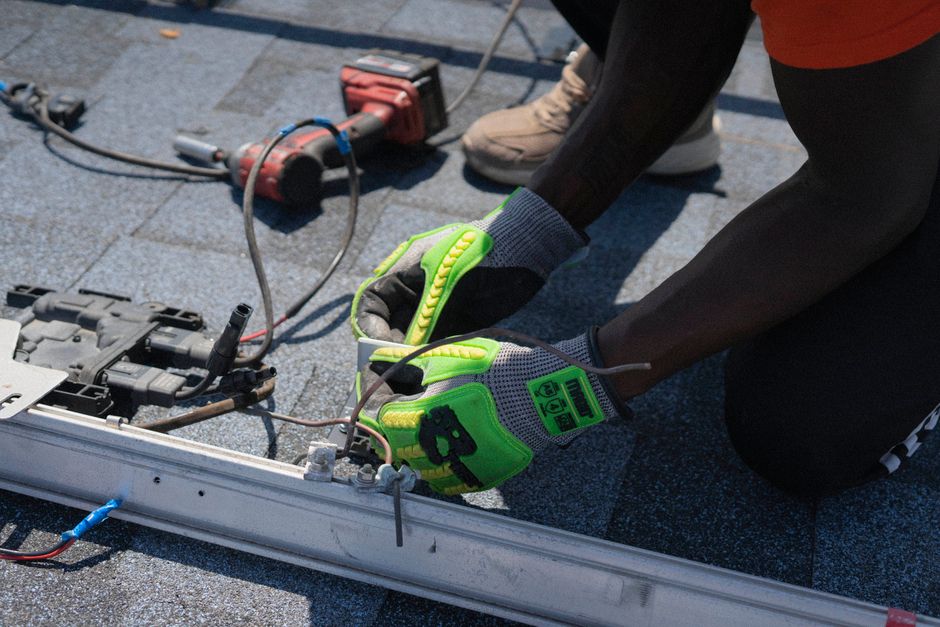
In short: a home solar installation runs from a site survey through design, permits, installation, inspection and the utility’s permission to operate. The work on the roof is the short part: the whole project took 4.5 to 6 months on average in 2023, from contract to switch-on (NREL). Most of that time goes on design, scheduling, permits and utility approval.
This page walks you through each step, the permits and paperwork behind it, what a home system costs and what moves the price, how to choose and check an installer before you sign, and how to find licensed installers near you. It’s written for homeowners first, with notes for small businesses. If you run a larger property, see commercial solar.
Solar installation at a glance
- Typical timeline: 4.5 to 6 months on average from contract signing to permission to operate for rooftop systems up to 20 kW in 2023; 8 to 9 months when a battery was included (NREL, November 2025 report).
- Permit review: often 1 to 2 weeks at the local building department, but anywhere from same-day to 6 weeks or more (NREL).
- Price: about $2.60 per watt before incentives on EnergySage quotes (about $16,080 for 6 kW and $31,135 for a typical 12 kW system, June 2026); Berkeley Lab’s 2024 median for owner-bought systems was $4.0 per watt.
- No federal homeowner credit for 2026 installs: the 30% credit (25D) ended for systems installed after December 31, 2025.
- Who does the work: a contractor licensed in your state (or city) for electrical or solar work. NABCEP certification is a voluntary, widely used credential on top of that.
The solar installation process, step by step
- Check whether solar fits your home. Gather 12 months of electric bills and look at your roof: which way it faces, how much shade it gets and how many years it has left. Our solar potential calculator gives a first estimate of system size and yearly output. If the roof needs replacing within a few years, do that first: removing and reinstalling panels later is a real cost.
- Get quotes and a site survey. Installers measure the roof, check the rafters and the electrical panel, and look at shading. Ask for at least two or three written quotes so you can compare equipment, price per watt and warranties side by side.
- Design and contract. The installer draws the system (panel layout, inverter type, wiring path, any panel upgrade) and gives you a production estimate. Read the contract before you sign: price, equipment brands and models, payment schedule, start and finish expectations, warranties and who pulls the permits.
- Permits. The installer submits plans to your local building department (the “authority having jurisdiction”). Many areas also need HOA approval.
- Utility interconnection application. Because a grid-tied system connects to the utility’s lines, the installer applies to your utility. Some utilities approve before installation, others after.
- Installation. Crews mount the racking, set the panels, install the inverter or microinverters, run the wiring and connect to your panel. Any roof repair or electrical upgrade happens around this step.
- Inspection. A local inspector checks the work against building, electrical and fire codes. Some areas need more than one visit.
- Permission to operate (PTO). The utility gives final approval, sometimes after swapping or reprogramming your meter. Don’t switch the system on before PTO unless your utility and installer say you can.
- Switch-on and monitoring. The installer turns the system on, sets up the monitoring app and hands over the paperwork: warranties, permits, the inspection sign-off and the as-built drawings. Keep them all; you’ll need them for repairs and if you sell the house.
How long solar installation takes
The National Renewable Energy Laboratory (NREL, now the National Laboratory of the Rockies) tracks real project timelines from installer data covering about a fifth of U.S. home solar. In its November 2025 report, rooftop projects up to 20 kW averaged 4.5 to 6 months from contract signing to permission to operate in 2023, about a month longer than in 2019. Projects with a battery took 8 to 9 months, roughly 3 months more than solar alone. NREL found the delays came mainly from longer design and installation phases, not from permits.
Utility approval varies by place. Berkeley Lab’s September 2026 study of interconnection data found a median of about 2 months from application to PTO for small solar projects (under 30 kW) applied for in 2020 to 2025, and more than half got PTO within 90 days. Its data lean heavily on Arizona and New York, so your utility may be faster or slower.
What usually slows a project down: a roof that needs work first, a main panel upgrade, HOA review, a busy permit office, a utility backlog, extra inspections, and adding a battery. Ask each installer for their typical time from contract to PTO in your town, and what they do if the job stalls.
Permits, inspection and utility interconnection
Three approvals stand between a signed contract and a running system. The building or electrical permit confirms the design meets code. The inspection confirms the installed work matches the permit. The interconnection agreement and PTO let you run in parallel with the grid. A good installer handles all three and keeps you posted. In Texas, the law now requires residential solar contracts to state that the seller will get the permits and utility approvals and to name the licensed electrical contractor doing the job (SB 1036, in effect since September 1, 2025).
What your utility pays for the power you send back matters as much as the approval. Some states still credit exports at the full retail rate, others pay a lower “net billing” rate, and Texas has no statewide net metering. Read how net metering works and check your state page under Locations, for example Texas, Florida, North Carolina, South Carolina or Illinois. Where exports pay little, a battery can make more sense; see solar battery storage.
How much does it cost to install solar panels?
Installers price home solar per watt of panel capacity, so the total depends mostly on how big a system you need. Two good sources give a range. EnergySage’s marketplace quotes averaged about $2.60 per watt before incentives, or about $31,135 for a typical 12 kW system (page updated June 30, 2026). Berkeley Lab’s look at 2024 installs, which includes many more companies, found a median of $4.0 per watt for owner-bought home systems, with most between $3.0 and $5.2. Cash purchases had a median of $3.5 per watt and loan-financed systems $4.7, partly because loan fees get rolled into the price.
Typical total cost by system size
The first price column is EnergySage’s own average for each size (page updated June 30, 2026). The second is our estimate: the same size multiplied by Berkeley Lab’s 2024 median of $4.0 per watt, to show what a quote at the middle of the wider market looks like. The last column is our estimate of the yearly use each size can cover, at 1,100 to 1,600 kWh per kW depending on your sun and roof. For scale, the average U.S. home bought 10,791 kWh from its utility in 2022 (EIA).
| System size | EnergySage average, before incentives (June 2026) | At Berkeley Lab’s $4.0/W median (our estimate) | Yearly use it can cover (our estimate) |
|---|---|---|---|
| 6 kW | $16,080 ($2.68/W) | $24,000 | about 6,600 to 9,600 kWh |
| 8 kW | $20,960 ($2.62/W) | $32,000 | about 8,800 to 12,800 kWh |
| 10 kW | $25,800 ($2.58/W) | $40,000 | about 11,000 to 16,000 kWh |
| 12 kW | $30,720 ($2.56/W) | $48,000 | about 13,200 to 19,200 kWh |
Neither column is a quote for your house. Berkeley Lab found the most common cash price in 2024 was under $3 per watt, with a long tail of pricier systems pulling the median up. If a quote comes in well above $4 per watt, ask what’s driving it. Our solar panel cost guide goes deeper, including how to compare quotes line by line.
What moves the price
| What moves the price | Why |
|---|---|
| System size | More panels cost more in total but usually less per watt (EnergySage size table). |
| Roof and site | Steep, complex or tile roofs, ground mounts and long wire runs take more labor. |
| Equipment | Microinverters can add “a few thousand dollars” over a single string inverter (EnergySage); premium panels cost more. |
| Electrical upgrades | A main panel upgrade “can add a few thousand dollars” (EnergySage). |
| Adding a battery | Paired solar-plus-battery systems had a median price $1.7 per watt higher than solar alone in 2024 (Berkeley Lab). |
| Financing | Loans can add fees to the price; leases and power purchase agreements (PPAs) trade a lower upfront cost for monthly payments. |
| Where you live | Berkeley Lab found median prices vary from state to state, reflecting market size, financing choices and permitting processes. |
| Permits and grid connection | Permit and utility application fees vary by town and utility. In Berkeley Lab’s September 2026 data (mostly New York), home-size systems under 30 kW paid no grid upgrade costs, but bigger projects and other states can differ. |
| Your installer | Berkeley Lab found the 100 largest installers’ median prices ranged from $2.7 to $6.5 per watt in 2024. |
For 2026 installs there is no federal tax credit for homeowners who buy their system: the IRS says the 25D credit is not available for property placed in service after December 31, 2025. Lease and PPA companies own the panels and may still claim a business credit (48E) on systems placed in service by December 31, 2027, under rules the IRS set out in Notice 2025-42; whether they pass any of it on to you depends on the company. State and utility incentives still exist in some places, such as Illinois’ $300 per kW rebate from ComEd and Ameren for new solar (CUB, March 2026). Full numbers are in solar panel cost, buy vs lease and the solar tax credit in 2026. Our solar savings calculator lets you test a quote against your own rate.
State and local incentives: what’s left after the federal credit depends on where you live: state rebates, property or sales tax exemptions, utility programs and how your utility credits exported power. Each of our state and city guides lists the programs we could confirm there, for example California, New York, Massachusetts or Arizona. The DSIRE database is the national list by ZIP code.
Paying for it: cash, loan, lease or PPA
Cash usually gets the lowest price (Berkeley Lab’s 2024 median was $3.5 per watt for cash buyers, $4.7 with a loan), and you own the system and everything it saves. A loan also makes you the owner, but compare the APR, any dealer fee built into the price, and whether the lender files a lien on your home; PACE financing goes on your property tax bill and, the FTC warns, takes priority over your mortgage. A lease or power purchase agreement (PPA) needs little or no money up front and the company owns and maintains the panels, but you don’t get the tax benefits, payments may rise every year, contracts often run 20 years with early-termination fees, and the contract decides what happens when you sell the house (FTC). Leases and PPAs grew from 26% of new home systems in 2023 to 43% in 2024 (Berkeley Lab). More in buy vs lease solar panels.
How to choose a solar company or installer
The installer matters more than the panel brand: the same equipment can be a fine system or a leaky roof depending on who puts it up. Work through this checklist with every company you’re considering.
- Look up the license. Rules differ by state, and the place to check is your state’s contractor or electrical licensing board. Texas licenses electricians through TDLR; Florida through the DBPR (electrical contractors and certified solar contractors); North Carolina through its Board of Examiners of Electrical Contractors; California through the CSLB (C-10 electrical, C-46 solar); Arizona through the Registrar of Contractors. New York has no statewide electrician license, so check the city or county license (in New York City, the Department of Buildings). Illinois also has no statewide electrician license, so check the local license and the Illinois Commerce Commission’s distributed generation installer certification. Each state page links to its lookup.
- Check certifications. The U.S. Department of Energy calls NABCEP certification the industry standard. Look for a PV Installation Professional (PVIP) on the team, and confirm it in the NABCEP directory. Brand programs (Enphase, Tesla and others) have their own installer finders.
- Ask for insurance certificates. General liability, and workers’ compensation where your state requires it. Ask for the certificate itself, not a promise, and check the dates.
- Find out who does the work. Some sellers hand the job to subcontractors. Get the installing company’s name and license in writing.
- Compare warranties. There are four to look for: the panel maker’s product and performance warranties (often 25 years), the inverter warranty (EnergySage puts string inverters at 10 to 12 years and microinverters often at 25), the installer’s workmanship warranty, and a roof penetration (leak) warranty for every hole drilled in your roof. Labor for warranty swaps is often not covered by the maker, so ask who pays.
- Get a written, itemized quote. It should list the system size in kW, the panel and inverter brands and models, the number of panels, any battery, roof work or panel upgrade, permits and fees, the total price and the price per watt, the payment schedule and the expected yearly production. The FTC suggests comparing detailed bids from several companies.
- Confirm who pulls the permits and files the utility application, and that the price includes them. The contract should say so.
- Watch the payment schedule. Paying in stages tied to milestones (contract, installation, inspection or PTO) keeps you protected; the FTC warns against companies that ask you to pay in cash.
- Read reviews and ask for local references, ideally homes like yours done in the last year or two.
Questions to ask every installer
- What size system do you recommend, and what yearly production do you expect? What assumptions are behind it?
- Which panels and inverters, exactly (brand and model)? Can you show me the data sheets?
- Does my roof or electrical panel need work first? Is that in the price?
- Who pulls the permits and files the utility application? What’s your typical time to PTO here?
- What does the workmanship warranty cover, for how long, and does it include roof leaks?
- What happens to my warranties if your company closes?
- What credit will my utility give for exported power, and how did you include it in my savings estimate?
- For a lease or PPA: does the payment go up each year, what happens if I sell the house, and is there a production guarantee?
Red flags, and your right to cancel
- “Free solar” or a “government program.” The Department of Energy says the federal government does not offer any programs for free home solar panels.
- Pressure to sign today, or a tablet signature before you’ve read the contract. The FTC lists pressure and no time to review as warning signs. Door-to-door and phone sellers aren’t all bad, but never sign on the doorstep: take the paperwork, look up the license and compare it with other quotes.
- “Your utility bill goes to zero” or savings promises with no numbers behind them. Ask to see the rate, export credit and yearly increase the estimate assumes.
- Promises of a federal tax credit for a system you buy and install in 2026. That credit is gone.
- Savings estimates that assume full retail credit for every exported kilowatt-hour where your utility pays less.
- No license number, no insurance certificate, or a large upfront deposit before permits are filed.
Know your cancellation rights. Under the FTC’s Cooling-Off Rule, if you sign a contract of $25 or more at your home, the seller must tell you about your right to cancel within three business days. Some states give more: in Texas, a residential solar buyer or lessee can cancel without penalty by written notice on or before the fifth business day after signing (SB 1036). The cancellation deadline and how to send it should be in writing in the contract.
Can you install solar panels yourself?
Legally, sometimes; practically, it’s a big job with real risks. A rooftop system wired into your home is electrical work under the National Electrical Code’s solar rules (Article 690), including rapid-shutdown equipment so firefighters can de-energize the roof. Some towns let homeowners pull a permit for work on their own house; many require a licensed electrician for the connection to your panel. Either way you still need the permit, the inspection and your utility’s interconnection approval before switching on, exactly as an installer would.
Before you try it, check three things. Warranties: some panel and inverter makers require installation by a qualified or certified professional, so read the warranty terms before you buy. Insurance: tell your home insurer, and ask how it treats owner-installed systems and roof leaks. Safety: panels make power whenever light hits them, and roof work is dangerous. The Department of Energy advises using a qualified, certified professional. If you like doing things yourself, smaller projects are a better fit: see DIY solar panel kits for sheds and cabins, or balcony solar by state for plug-in kits.
Finding solar installers near you
Searching “solar companies near me” returns ads and lead sites first. A calmer way to build a shortlist of local, licensed installers (our find installers near you page has every state’s license lookup and the official installer finders):
- Start with your state and city. Our state and city guides cover your local utilities and how they credit solar, permits and HOA rules, incentives we could confirm and the licensing lookup for your state, for example Dallas-Fort Worth, South Florida or Denver.
- Gather three or more names from neighbors with solar, the NABCEP directory, equipment makers’ installer finders and your utility or state energy office (some, like NYSERDA in New York, list participating contractors).
- Check each one on your state licensing board and against the checklist above before anyone visits your home.
- Ask for site visits and written quotes, then compare price per watt, equipment, warranties and the time to PTO they expect in your town.
A local company knows your building department and your utility’s process, and will be around for warranty calls. If you’d rather not do the legwork alone, send us your project below: we’ll reply ourselves and, if you want, connect you with an independent, licensed installer. Your details are shared only with your consent.
What happens when you ask us for help
SolutionEnergy is a research and matching service, not an installer. When you send a request, one of us reads it and replies with answers about your home, your state’s rules and what to ask installers. If you want, we can then suggest an independent, licensed installer, and you decide whether to share your details with them. We don’t quote, negotiate or sign installation contracts. The full steps are on how it works.
Get help with your solar project
Tell us about your project and we will connect you with a licensed, independent installer who serves your area. It is free, there is no obligation, and only the installer you choose gets your details. How it works.
Solar installation questions
How long does it take to install solar panels?
The crew’s work on the roof is usually short compared with the paperwork. NREL found rooftop projects up to 20 kW averaged 4.5 to 6 months from contract signing to permission to operate in 2023, and 8 to 9 months with a battery. Permits, utility approval, roof repairs and panel upgrades account for most of the wait, so ask installers for their local track record.
How much does it cost to install solar panels on a house?
Most home systems are 6 to 12 kW. On EnergySage’s mid-2026 marketplace averages that’s about $16,080 to $30,720 before incentives; at Berkeley Lab’s 2024 median of $4.0 per watt it would be $24,000 to $48,000 (our estimate). There is no federal tax credit for systems a homeowner buys and installs in 2026, so check your state guide for local incentives.
Do I need a permit to install solar panels?
Almost always, for a system wired into your home. The local building department reviews the plans, and an inspector checks the finished work against electrical, building and fire codes. Your utility must also approve the connection before you switch on. The installer normally files everything, but the contract should say so. Small plug-in balcony kits follow different rules; see balcony solar by state.
Can I switch my solar on before the utility approves it?
Not unless your utility and installer say so in writing. Permission to operate is the utility’s sign-off that your system can run in parallel with the grid. Switching on early may go against your interconnection agreement and your utility’s rules. Ask your installer what the utility requires and whether a meter change is needed.
How do I know if a solar installer is legitimate?
Look up the company’s license on your state or city board, ask for liability and workers’ compensation insurance certificates, and check NABCEP certification in its public directory. Get the installing company’s name in the contract, compare at least two quotes and walk away from pressure or “free solar” pitches. Our state pages link to each licensing lookup.
How do I find solar companies near me?
Collect three or more names from neighbors, the NABCEP directory, equipment makers’ installer finders and your state energy office, then check each license on your state board. Our state and city guides explain your local utilities, permits and incentives, and we can connect you with an independent, licensed installer if you ask; your details are shared only with your consent.
Is it better to buy or lease solar panels?
Buying with cash usually saves the most over the life of the system, and a loan also makes you the owner. A lease or PPA costs little up front, but you don’t own the panels, payments may rise each year and the contract can complicate selling your house. Read the whole contract either way; see buy vs lease solar panels.
What warranties should a solar installer give?
Look for four: the panel maker’s product and performance warranties (often 25 years), the inverter warranty (10 to 12 years for string inverters, often 25 for microinverters), the installer’s workmanship warranty and a roof penetration warranty against leaks. Ask who pays for labor on warranty repairs and what happens if the installer closes.
Can I install solar panels myself?
In some places, but you still need the permit, inspection and utility approval, and the work must meet the electrical code, including rapid shutdown. Some equipment warranties require professional installation, and your home insurer should know. For most rooftop systems a licensed installer is the safer choice; small DIY and plug-in kits are easier.
Will solar panels work during a power outage?
A standard grid-tied system shuts off when the grid goes down, so line workers aren’t put at risk. To keep power on during an outage you need a battery with backup equipment, or a system designed to island your home. That adds cost and time, so decide before the design is final. See solar battery storage.
Sources
NREL, Residential and Small Commercial Solar PV and Storage Permitting, Inspection, and Interconnection Timelines (2017–2023), November 2025; Berkeley Lab, Interconnection Timelines and Costs for Distributed Energy Projects, September 2026, and U.S. Distributed Solar and Storage: 2025 Data Update, October 2025; EnergySage solar cost data and cost by system size (June 2026) and inverter warranty guide (2024); U.S. EIA, average residential electricity sales (2022); IRS Residential Clean Energy Credit page and Notice 2025-42; U.S. DOE Homeowner’s Guide to Going Solar and “Free Solar Panels? Don’t Get Burned”; FTC Cooling-Off Rule and “Solar Power for Your Home” (April 2022); NFPA 70 National Electrical Code, Article 690.12 (rapid shutdown), as explained by IAEI; DSIRE; state licensing boards (Texas TDLR, Florida DBPR, North Carolina BEEC, California CSLB, Arizona ROC); Texas TDLR on SB 1036 (September 2025); Citizens Utility Board, Illinois rebates fact sheet (March 2026); NABCEP certifications. Checked October 3, 2026.