
Wisconsin
Your complete statewide energy guide: electricity rates, solar panel installation, home batteries, backup generators and EV charging. Compare incentives and utilities, find your city guide, then request a quote and get matched with a licensed installer who serves your area.
Electricity price: where Wisconsin stands
The average a home paid per kilowatt-hour, compared with every state and D.C.
EIA Electric Power Monthly, residential average, July 2026 (preliminary). 1st is the cheapest.
Power outages: where Wisconsin stands
Minutes a typical customer was without power in 2024, compared with every state and D.C.
See the year-by-year table and all 51 states →
EIA-861 reliability reports, 2019 to 2024. 1st is the fewest minutes. The year chips show Wisconsin’s place each year, including major events.
Your Wisconsin energy guide
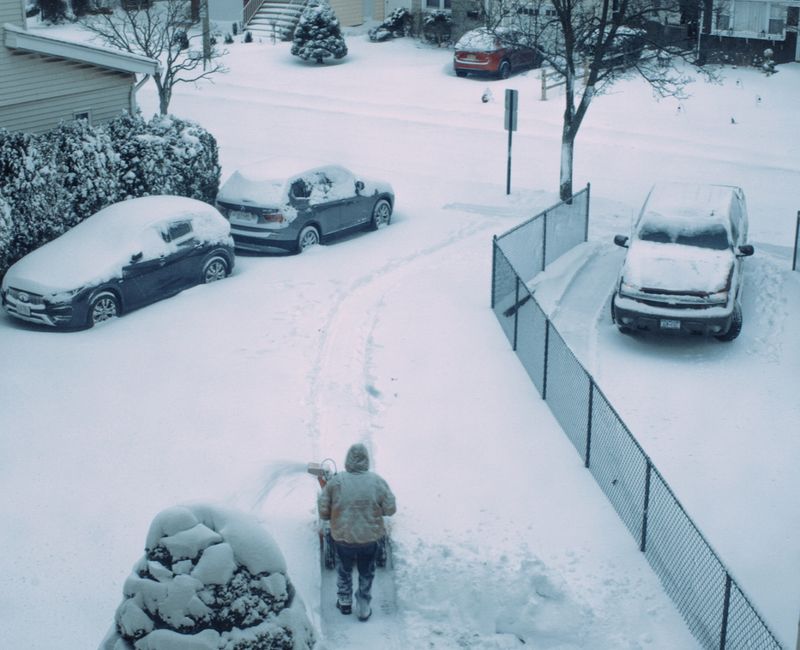
Wisconsin has no statewide net metering law. Each utility files its own solar tariff with the Public Service Commission, so what your surplus power earns depends on whether you buy from We Energies, Alliant, WPS, Xcel, Madison Gas and Electric, or a city or co-op: a few cents per kWh for yearly or monthly surplus, while power you use yourself offsets the full price. The Focus on Energy rebate is $600 per kW up to $2,400, and solar equipment is exempt from sales and property tax. Winters are very cold, and blizzards, ice and thunderstorm winds cause the long outages.
Wisconsin energy overview
Four investor-owned utilities serve most Wisconsin homes: We Energies (about 39% of customers, mostly Milwaukee and the southeast), Alliant Energy through Wisconsin Power and Light (about 17%, Madison area, Janesville, Fond du Lac), Wisconsin Public Service (about 15%, Green Bay and the northeast) and Xcel Energy (about 9%, Eau Claire and La Crosse). Madison Gas and Electric, many city utilities and rural co-ops serve the rest. FEMA rates the state’s cold waves very high and winter weather, tornadoes and strong winds relatively high, so backup heat and power matter as much as bill savings. Check which utility is on your bill before you compare quotes.
Wisconsin at a glance
Price and outage ranks are at the top of the pageExplore energy guides by Wisconsin city
Find your local utility, installation costs, rebates, permits, solar information and installer options for your Wisconsin city. Search, pick your city, or browse by region; 23 city guides are published.
Milwaukee and Southeast
- Brookfield Energy GuideSolar · Battery · Generators · EV chargers
- Greenfield Energy Guide
- Kenosha Energy GuideSolar · Battery · Generators · EV chargers
- Menomonee Falls Energy GuideSolar · Battery · Generators · EV chargers
- Milwaukee Energy GuideSolar · Battery · Generators · EV chargers
- New Berlin Energy GuideSolar · Battery · Generators · EV chargers
- Oak Creek Energy Guide
- Racine Energy GuideSolar · Battery · Generators · EV chargers
- Waukesha Energy GuideSolar · Battery · Generators · EV chargers
- Wauwatosa Energy GuideSolar · Battery · Generators · EV chargers
- West Allis Energy GuideSolar · Battery · Generators · EV chargers
Madison and South-Central
Fox Valley and Lakeshore
Green Bay and Northeast
Western and Central Wisconsin
No guide for that name yet. Try another spelling, or use the quote form below and choose “Another Arizona city”.
Regional guides
Your city is not listed? The guides above are the ones we have published so far. Use the quote request to ask for installers anywhere in Wisconsin, or read the incentives and laws below for the rules that apply statewide.
Explore Wisconsin energy solutions
Four ways to use your own power at home. Choose your city and we take you to its page for that solution, or to the Wisconsin quote form when the city has no page yet.
Solar panels and installation
Wisconsin homes make about 1,070 kWh a year per kW of panels (our estimate), less than the Sun Belt but enough to offset much of a bill. Solar you use or net inside the billing period is worth the full per-kWh rate, while surplus earns only a few cents, so size the system to your yearly use. The Focus on Energy rebate pays $600 per kW up to $2,400, and solar equipment is exempt from sales tax and property tax.
- Ask which utility serves the address and get its export credit in writing: about 3.6 cents per kWh at We Energies and WPS for 2026, and different rules at Alliant, Xcel and MGE.
- Focus on Energy: $600 per kW up to $2,400, for systems bought and installed in 2026 and applied for within 60 days (by Jan. 31, 2027).
- The federal 25D credit does not apply to spending after Dec. 31, 2025, and Wisconsin has no state income tax credit for home solar that we could find.
No city yet? Request an Arizona quote
Home battery backup
Because surplus solar pays so little, a battery can make sense in Wisconsin for storing midday power for the evening and for riding out winter storms. We found no Wisconsin utility or Focus on Energy rebate for home batteries, and the sales tax exemption wording does not clearly cover them. Batteries paired with solar follow the PSC 119 interconnection rules.
- PSC 119 (revised 2024) requires energy storage to be UL 9540 listed.
- A battery that backs up your home only when the grid is down (not exporting) needs the utility’s backup generation application at We Energies; ask your own utility for its process.
- We Energies, Alliant and WPS each offer time-of-use rates; a battery earns more where peak and off-peak prices differ widely, so compare rate plans before sizing.
No city yet? Request an Arizona quote
Standby generators
Cold-weather outages are the main reason Wisconsin homes buy a standby generator: a March 2026 storm with freezing rain and a blizzard took out power for We Energies customers across Wisconsin and Michigan (more than 190,000 were restored), and a July 2026 tornado and storms hit the Fox Valley. A furnace needs power to run, so backup heat is a safety issue.
- A generator wired to the house needs a transfer switch installed by a licensed electrician with a permit, so it cannot back-feed utility lines.
- Size it for the furnace blower, fridge, sump pump and lights first; a typical set of essentials is 3,500 to 5,000 watts (our estimate).
- Never run a generator in a garage or near a window; carbon monoxide kills every winter.
No city yet? Request an Arizona quote
Home EV charger installation
Wisconsin had about 41,900 plug-in battery EVs registered in 2025 (U.S. Department of Energy), and the state lists 895 public charging locations with 2,416 ports. We Energies and WPS both pay a small credit for charging a battery EV at night, and cold weather cuts winter range, so charging at home matters.
- We Energies EV pilot: $0.04 per kWh credit for overnight charging (midnight to 8 a.m.) on the standard rate, up to 400 kWh a month. WPS has the same $0.04 credit on its standard rate.
- Wisconsin’s NEVI program has funded fast chargers at every 50-mile mark of its designated highways; 25 stations were open as of September 2026.
- There is no state EV purchase credit that we could find, and the federal 30C charger credit ends for chargers placed in service after June 30, 2026.
- Public ports: 2,438 statewide
No city yet? Request an Arizona quote
How Wisconsin ranks among all states
The panels at the top give Wisconsin’s place for price and outages. Here you can pick any year and compare every state side by side.
Wisconsin in any year
Rank: 1st is the fewest minutes or interruptions among the 51 (50 states and D.C.). In every year from 2019 to 2024, Wisconsin ranked between 7th and 43rd for outage time including major events.
Every state, side by side
| State | Price, July 2026 (rank) | Outage minutes, all events (rank) | Outage minutes, no major events (rank) |
|---|
Prices: EIA Electric Power Monthly, residential average, July 2026 (preliminary). Outages: EIA-861 reliability reports, minutes without power per customer per year (SAIDI), customer-weighted across each state’s utilities. Utilities report on slightly different standards and a few states have little data, so a gap of a few minutes or a place or two is not meaningful. Rankings change from year to year.
How net metering works in Wisconsin
Wisconsin has no net metering statute. Instead, each rate-regulated utility has a solar tariff approved by the Public Service Commission (PSC), and the rules differ by utility. In the tariffs we read, the meter nets what you send out against what you take in during the billing period, so solar you use or net within the month offsets the full retail price of that energy. Any extra left over at the end of the period is paid or credited at a much lower rate, usually the utility’s avoided-cost energy rate: for 2026 about 3.6 cents per kWh at We Energies, 3.6 cents at WPS and an average of about 4.3 cents at Alliant. Xcel Energy in western Wisconsin banks extra kWh month to month and pays out any left at year end, and Madison Gas and Electric credits monthly excess at the retail energy rate if you are a net buyer over the year.
Size limits differ too: about 20 kW for WPS and Alliant’s simplest rate, up to 100 kW at Xcel and MGE, and under 300 kW at We Energies. Fixed monthly charges are not offset, so you still get a bill. Interconnection follows the PSC 119 rules (revised May 1, 2024), and home batteries paired with solar must be UL 9540 listed.
The rules may change. After Madison Gas and Electric and Alliant asked to change how rooftop solar is credited in their 2023 rate cases, the PSC rejected both proposals and opened an investigation of net metering (docket 5-EI-157). On July 24, 2025 it decided to go ahead without a Wisconsin-specific value-of-solar study and to look at adoption, rate designs and customer impacts. We found no final order as of October 2026. Alliant’s 2023 settlement with RENEW Wisconsin offered a ‘Power Partnership’ choice for new customers until Dec. 31, 2025; we could not confirm what Alliant offers new customers now, so ask Alliant for its current tariff in writing.
| Utility type | Export rule | Examples |
|---|---|---|
| Investor-owned: monthly netting, low-rate surplus credit | Net metered under 300 kW; kWh netted in each billing period; excess credited at the avoided energy cost rate ($0.03636 per kWh flat residential rate, 2026) | We Energies (Rate CGS NM) |
| Investor-owned: meter runs backward, low-rate surplus credit | Up to 20 kW: meter runs forward and backward; surplus credited monthly at $0.03584 per kWh (2026, PG-4). Alliant’s 20 kW-or-less rate pays cash-out of an average of $0.04254 per kWh as of Jan. 1, 2026 | Wisconsin Public Service, Alliant Energy (Wisconsin Power and Light) |
| Investor-owned: retail-rate netting | Xcel: up to 100 kW, net metering at full retail rates with monthly banking, and any excess at year end paid at on-peak and off-peak prices. MGE: up to 100 kW, monthly excess credited at the customer’s energy rate if you are a net buyer over 12 months, and at the lower buyback rate if a net seller | Xcel Energy (Northern States Power-Wisconsin), Madison Gas and Electric |
| Municipal utilities and co-ops | Set their own tariffs; we did not confirm the export rates for most of them, so ask for the tariff in writing | Sun Prairie Utilities, Kaukauna Utilities, Adams-Columbia, Riverland and Rock Energy co-ops |
Sources: We Energies Rate CGS NM (sheet 201.7, effective Jan. 1, 2026); WPS Rate PG-4 (effective Jan. 1, 2026); Alliant Wisconsin interconnection page (read Oct. 2026); Xcel Energy Wisconsin Distributed Generation Tariff Options sheet (2024); MGE Schedule Pg-2 (effective Jan. 1, 2026); RENEW Wisconsin on the PSC decision of July 24, 2025.
Wisconsin energy incentives, rebates and tax credits
Statewide rules first, then the utility programs. Statuses were checked on October 21, 2026; amounts and rules change, so confirm on the program page before you count on one. The federal credits below have ended.
| Program | Available through | Eligible equipment | Amount or benefit | Eligibility | Status and source |
|---|---|---|---|---|---|
| Federal residential clean energy credit (25D) | Federal (IRS) | Rooftop solar and home batteries | Was 30% of cost | Not allowed for expenditures after December 31, 2025 | ENDED IRS FAQ |
| Federal home energy improvement credit (25C) | Federal (IRS) | Efficiency upgrades such as heat pumps, windows, insulation | Was up to 30% with annual limits | Ended for property placed in service after December 31, 2025 | ENDED IRS FAQ |
| Federal charger credit (30C) | Federal (IRS) | EV charging equipment | Was up to 30% of cost, with a cap | Ended for property placed in service after June 30, 2026 | ENDED IRS FAQ |
| Focus on Energy residential solar rebate | Focus on Energy (Wisconsin utilities and co-ops) | Grid-connected solar PV of at least 0.5 kW DC on a home; modules and inverters on the California Energy Commission lists | $600 per kW DC up to $2,400 (single-family); multifamily up to $25,000 | Property owner or account holder served by a participating utility; equipment bought and installed in 2026; apply within 60 days and by Jan. 31, 2027; panels within 135 degrees of due south and tilt 5 to 50 degrees | ACTIVE Focus on Energy: Solar for Homes |
| Solar and wind energy systems property tax exemption (Wis. Stat. 70.111(18)) | Your local assessor | Solar, wind and biogas energy systems | The system is exempt from general property tax | Not automatic: the owner files the Department of Revenue form (PR-303) with the local assessor by March 1; passive solar design and parts of a conventional system do not qualify | ACTIVE Wisconsin Department of Revenue fact sheet |
| Solar and wind products sales tax exemption (Wis. Stat. 77.54(56)) | At purchase, through the seller or contractor | Products that make electricity or heat from sunlight or wind, producing at least 200 watts of AC | No Wisconsin sales or use tax on qualifying products | Product must convert sun or wind into AC electricity or heat; contractors can buy tax-free for resale with an exemption certificate. Whether home batteries qualify is not confirmed | ACTIVE Wisconsin Administrative Code Tax 11.10 |
| State income tax credit for home solar | Wisconsin Department of Revenue | Solar PV or batteries | None found | We found no current Wisconsin income tax credit for home solar or batteries | NOT CONFIRMED Focus on Energy and Department of Revenue pages read |
| We Energies EV charger pilot | We Energies | Battery-electric vehicles only (no plug-in hybrids), any charger | $0.04 per kWh credit for use midnight to 8 a.m. on rate Rg-1 ($0.01 on time-of-use Rg-2), up to 400 kWh a month | Owner-occupied Wisconsin home on Rg-1 or Rg-2; the pilot page was read Oct. 2026 | ACTIVE We Energies EV charger pilot |
| WPS EV charger pilot | Wisconsin Public Service | Battery-electric vehicles only | $0.04 per kWh credit midnight to 8 a.m. on rate Rg-1; $0.01 on time-of-use Rg-3; $0.005 on three-tier Rg-5; up to 400 kWh a month | WPS residential customers on those rates | ACTIVE WPS EV charger pilot |
| MGE Charge Ahead and EV time-of-use rate | Madison Gas and Electric | Home EV charging | Managed-charging rewards; off-peak time-of-use period 9 p.m. to 10 a.m. Monday to Friday | Charge Ahead was fully enrolled with a waitlist when we read the page in Oct. 2026 | ACTIVE MGE EV programs |
| Alliant Level 2 charger rebate and Smart Hours | Alliant Energy (Wisconsin) | Level 2 home chargers | Instant rebate at checkout on the Alliant Energy Marketplace and seasonal rewards in Smart Hours; the amount is not shown on the page | Alliant Wisconsin electric customers | NOT CONFIRMED Alliant charger rebate page |
| We Energies time-of-use rates | We Energies | Any home, especially with an EV or battery | Choose an on-peak window of 7-7, 8-8, 9-9 or 10-10 on weekdays; you pay more if you do not shift use | Residential customers; compare the plan with your own use first | ACTIVE We Energies time-of-use page |
| MadiSUN Group Buy for Homes | City of Madison with RENEW Wisconsin | Rooftop solar for Dane County households | Group pricing with installers chosen by a volunteer committee; 2016 to 2025 group buys reached nearly 400 homes | Dane County households; 2026 prices and dates not confirmed | NOT CONFIRMED MadiSUN |
| Focus on Energy heat pump and water heater discounts | Focus on Energy through participating contractors | Heat pump water heaters, heat pumps and other HVAC | Instant discounts through trade allies; 2026 amounts not confirmed | Participating utility customers; the 2026 HVAC rebate form closed Aug. 31, 2026 | NOT CONFIRMED Focus on Energy residential HVAC rebate form |
| Federal Home Energy Rebates (HEAR and HOMES) in Wisconsin | Wisconsin Office of Energy Innovation with Focus on Energy | Heat pumps, weatherization and electrification for income-eligible homes | Not confirmed | Sources we found disagree on whether Wisconsin’s program has launched | NOT CONFIRMED Focus on Energy: Home Energy Rebates participation map |
Utility and Focus on Energy budgets and rules change, so confirm each program on its own page before you buy. Pages were read in October 2026.
Wisconsin has no plug-in (balcony) solar law that we found, and we found no bill in 2026, so normal utility interconnection rules apply.
Electricity providers across Wisconsin
Your provider depends on your address, not on your city. A ZIP code or a city can overlap several territories, so check the top of your electric bill or ask the utility with your street address. We do not guess a provider from a ZIP code.
| Utility | General service region | Structure | Solar export rules | Special programs |
|---|---|---|---|---|
| We Energies (Wisconsin Electric Power) | Milwaukee, Waukesha, Racine, Kenosha and the southeast, plus Appleton and parts of the Fox Valley | Investor-owned; about 1.17 million customers (39% of the state, 2024); residential average 19.23 cents per kWh (2024) | Net metering under 300 kW; excess in a billing period credited at $0.03636 per kWh (2026) | EV charging pilot ($0.04 per kWh overnight credit), time-of-use rates, backup generation application; no battery or charger-hardware rebate found |
| Alliant Energy (Wisconsin Power and Light) | Madison area surroundings, Janesville, Beloit, Fond du Lac, Sheboygan | Investor-owned; about 502,000 customers (17%); residential average 16.89 cents per kWh (2024) | Up to 20 kW: meter runs backward; cash-out of an average of $0.04254 per kWh as of Jan. 1, 2026. Power Partnership status for new customers not confirmed | Level 2 charger rebate (amount not shown), Smart Hours, community solar |
| Wisconsin Public Service (WPS) | Green Bay, Oshkosh, Wausau and the northeast | Investor-owned; about 468,000 customers (15%); residential average 16.23 cents per kWh (2024) | Up to 20 kW: meter runs backward; monthly excess credited at $0.03584 per kWh (2026) | EV pilot ($0.04 per kWh overnight), three-level pricing and time-of-use rates |
| Xcel Energy (Northern States Power-Wisconsin) | Eau Claire, La Crosse and western Wisconsin | Investor-owned; about 262,000 customers (9%); residential average 15.83 cents per kWh (2024) | Up to 100 kW: net metering at full retail rates with monthly banking; excess at year end paid at Pg-2B prices | No Wisconsin battery or EV program confirmed |
| Madison Gas and Electric (MGE) | Madison and Middleton | Investor-owned; about 148,000 residential customers; residential average 20.34 cents per kWh (2024) | Up to 100 kW: monthly excess credited at the retail energy rate if you are a net buyer; buyback rate if a net seller | Charge Ahead (waitlist), EV time-of-use, Shared Solar community program |
| Sun Prairie Utilities and other city utilities | Sun Prairie, Kaukauna, Menasha, Stoughton, Plymouth, Marshfield and other cities | Municipal; residential averages in 2024 of about 12 to 13 cents per kWh (Sun Prairie 12.13, Kaukauna 12.53, Menasha 12.42) | Not confirmed; set by each utility | Many take part in Focus on Energy; ask your utility |
| Co-ops and municipal utilities | Rural Wisconsin, for example Adams-Columbia, Riverland, Rock Energy and Jackson co-ops | Member-owned; Riverland residential average 16.30 cents per kWh (2024) | Not confirmed; ask for the tariff before signing a solar contract | Focus on Energy participation varies, so check the participating utilities list |
Customer shares: EIA-861, 2024. Territories are from the EIA-861 service-territory file and each utility’s own pages. Detail for each city is in the city guides.
Wisconsin electricity costs and regional differences
Rates for We Energies, Alliant, WPS, Xcel and MGE are set by the Public Service Commission in rate cases, while city utilities and co-ops set their own prices, so the same use costs different amounts across the state.
| Measure | Scope | Value | Source and date |
|---|---|---|---|
| Residential average price | Wisconsin, July 2026 (preliminary) | 19.06 cents per kWh (U.S. 18.31) | EIA Electric Power Monthly |
| Residential average price | Wisconsin, July 2026 | 19.06 cents per kWh (preliminary) | EIA Electric Power Monthly Table 5.6.A, Sept. 2026 release |
| Same month a year earlier | Wisconsin, July 2025 | 18.25 cents per kWh | EIA Electric Power Monthly Table 5.6.A |
| Residential average, year to date | Wisconsin, Jan to Jul 2026 | 19.0 cents per kWh (preliminary) | EIA Electric Power Monthly Table 5.6.B, Sept. 2026 release |
| We Energies residential average | We Energies, 2024 | 19.23 cents per kWh | EIA-861 2024 |
| Alliant (Wisconsin Power and Light) residential average | Alliant, 2024 | 16.89 cents per kWh | EIA-861 2024 |
| WPS residential average | WPS, 2024 | 16.23 cents per kWh | EIA-861 2024 |
| Xcel Energy (NSP-Wisconsin) residential average | Xcel, 2024 | 15.83 cents per kWh | EIA-861 2024 |
| MGE residential average | MGE, 2024 | 20.34 cents per kWh | EIA-861 2024 |
| Time without power per customer | Wisconsin, 2024 | 266.1 minutes with major events; 91.3 minutes without | EIA-861 2024 reliability data |
| Typical solar price | Wisconsin, Oct. 2026 | $3.05 per watt; about $40,855 for an average 13.41 kW system before incentives | EnergySage Wisconsin solar cost page, updated Oct. 16, 2026 |
| Typical 13 kWh home battery | Wisconsin, Oct. 2026 | $16,683 (range $14,181 to $19,185) before incentives | EnergySage Wisconsin storage cost page, updated Oct. 18, 2026 |
- We Energies and WPS asked the PSC on April 1, 2026 for base electric rate increases: We Energies 4.7% in 2027 and 4.5% in 2028, WPS 6.3% in 2027 and 3.5% in 2028. The PSC has not decided those requests as far as we found.
- When surplus solar earns about 3.6 cents per kWh but buying costs 16 to 20 cents, self-use is what pays: size panels to your yearly use and shift loads to the daytime.
- Bills depend on the utility: our figures show MGE and We Energies homes averaging 20.34 and 19.23 cents per kWh in 2024 against 15.83 cents for Xcel customers (EIA-861).
Run your own numbers with the solar savings calculator and the battery backup calculator. Local detail is in your city guide.
| What it costs | Typical figure | Source |
|---|---|---|
| Rooftop solar, installed | $3.05 per watt (EnergySage, October 2026) | EnergySage Wisconsin |
| Home battery | About $16,683 for 13 kWh before incentives | EnergySage |
| Home EV charger install | About $800 to $3,000 before the charger (a U.S. range) | EnergySage, 2026 |
Solar and backup power across Wisconsin
Wisconsin is not one climate. What you plan for depends on where you live.
Milwaukee and Southeast. Milwaukee, Waukesha, Racine, Kenosha and their suburbs are mostly We Energies territory, where homes paid about 19.2 cents per kWh in 2024 and We Energies customers lost about 296 minutes of power that year with major events counted. FEMA rates cold waves very high and strong winds, tornadoes and winter weather relatively high in Milwaukee County. Plan for ice, wind and winter outages as well as solar savings. Read the Milwaukee guide.
Madison and South-Central. Madison and Middleton are mostly Madison Gas and Electric (20.3 cents per kWh in 2024), Sun Prairie has its own city utility, and Alliant serves Janesville, Beloit and much of the surrounding county. Madison gets about 1,125 kWh per kW a year from solar (our estimate), and the MadiSUN program has run group buys for Dane County homes. FEMA rates hail, ice storms and tornadoes relatively high in Dane County. Read the Madison guide.
Fox Valley and Lakeshore. Appleton is We Energies territory, Oshkosh is Wisconsin Public Service, and Fond du Lac and Sheboygan are mostly Alliant, with city utilities such as Kaukauna and Menasha nearby. A July 27, 2026 EF-3 tornado and storms left more than 131,000 We Energies customers without power and some Fox Valley customers had to repair their own meter enclosures and wiring before power could return. Read the Fox Valley guide.
Green Bay and Northeast. Green Bay is Wisconsin Public Service territory, where homes paid about 16.2 cents per kWh in 2024. WPS customers lost about 465 minutes of power in 2024 with major events counted, against 95 without, and a winter storm in April 2024 cut power to more than 120,000 WPS customers. Lake-effect snow and wind make backup heat the main concern. Read the Green Bay guide.
Western and Central Wisconsin. Eau Claire and La Crosse are Xcel Energy (Northern States Power-Wisconsin) territory, where Xcel nets solar at full retail rates with monthly banking up to 100 kW, and rural co-ops such as Riverland and Jackson serve the countryside. Wausau is Wisconsin Public Service territory. Cold waves are rated very high by FEMA in La Crosse County, so plan heating backup. Read the Western Wisconsin guide.
Which approach fits?
| If you mainly want to | Consider | Why |
|---|---|---|
| Cut a bill that is mostly cooling or heating | Solar, sized to your own use | Power used at home saves the full retail price; what exports earn depends on your utility |
| Keep essentials on through storms or freezes | A battery, or solar plus a battery | The battery keeps lights, internet and a refrigerator on automatically |
| Run central air or heat for days in an outage | A standby generator (or a very large battery) | A generator runs as long as it has fuel; a battery is silent and automatic |
| Power a remote property without a utility | Off-grid solar, batteries and a generator | No service line needed; sized to your loads |
Details and costs are in each city’s guides. See also our backup power guide.
Wisconsin energy laws, licensing and permits
| Topic | What applies statewide | Where to check |
|---|---|---|
| Net metering and solar tariffs | No statewide net metering law; each utility’s solar tariff is approved by the Public Service Commission. The PSC’s net metering investigation (docket 5-EI-157) continues, with no final order found | RENEW Wisconsin on the PSC investigation |
| Utility interconnection | PSC 119 sets the process for customer-owned generation up to 15 MW; revised rules took effect May 1, 2024 and require UL 9540 listing for storage. Your installer normally files the application, and you may not operate before the utility gives permission | PSC press release on PSC 119 revisions |
| Electrician and contractor licensing | A business that installs electrical wiring must hold a Department of Safety and Professional Services (DSPS) electrical contractor license, and individuals must be licensed electricians or registered beginning electricians. We found no separate solar license | DSPS: electrician licensing |
| License lookup | Check a contractor’s or electrician’s credential with DSPS before signing | DSPS credential lookup |
| Local limits on solar | Wis. Stat. 66.0401 bars cities, villages, towns and counties from restricting a solar system unless the restriction protects health or safety, does not significantly raise cost or lower efficiency, or allows an equal alternative | Wis. Stat. 66.0401 |
| Solar access permits | Wis. Stat. 66.0403 lets a city or county grant a recorded solar access permit that protects against later shade from new structures or plants | Wis. Stat. 66.0403 |
| HOA rules | We could not confirm a Wisconsin law that overrides private HOA covenants for solar; read your declaration and ask the association in writing | Wis. Stat. 66.0401 (government limits only) |
| Building and electrical permits | Permits are issued locally, so rules differ by city. For example, Madison requires building and electrical permits for solar, and its Fire Department handles battery systems | City of Madison: How to go solar |
| Home improvement contracts | Wisconsin’s home improvement rules (ATCP 110) require a written contract in some cases and give a three-day cancellation period for sales the contractor starts at your home; solar is not named in the guidance we read, so ask the contractor to confirm | Wis. Admin. Code ch. ATCP 110 |
Find your city’s installation requirements. Choose your city above for local permits, codes and utility steps.
Wisconsin EV charging and alternative fuel corridors
Wisconsin has 2,438 public charging ports at 903 locations: 1,465 Level 2 and 964 DC fast (Alternative Fuels Data Center, public and open stations, read 2026-10-22). DC fast ports are listed in 123 of the 212 Wisconsin cities with public chargers. About 41,900 battery-electric cars were registered through 2025, so home charging does most of the work.
Drive on another fuel? See every alternative fuel station in Beloit: hydrogen, propane, natural gas, E85 ethanol, biodiesel and renewable diesel.
Where the fast chargers are. The biggest counts are in Madison (81), Janesville (52), Milwaukee (33), Wisconsin Dells (26), Greenfield (22), Fitchburg (20).
Wisconsin received $78.65 million in federal NEVI funds. WisDOT had awarded about $37 million for 78 projects by May 2026 and says the main highway corridors are fully funded; in September 2026 it announced 42 more locations ($25 million), for about $62 million across 120 projects, with 25 stations open. Funding covers up to 80% of eligible costs.
| Fuel | Public stations in Wisconsin | Station directories |
|---|---|---|
| EV charging | 903 locations | Statewide map · EV charging guide |
| Propane autogas | 62 | Propane guide |
| E85 ethanol | 260 | E85 guide |
| Compressed natural gas (CNG) | 30 | CNG guide |
| Biodiesel | 0 | Biodiesel guide |
| Renewable diesel, hydrogen, LNG | 0, 0, 1 | Few or none listed in Wisconsin |
Station directories by city (each has its own map, addresses and directions): Appleton · Brookfield · Eau Claire · Fond du Lac · Green Bay · Janesville · Kenosha · La Crosse · Menomonee Falls · Milwaukee · New Berlin · Oshkosh · Racine · Sheboygan · Waukesha · Wausau · Wauwatosa · West Allis.
Wisconsin energy updates
Verified statewide developments only, each with a date and an official source. Last checked 2026-10-21.
We Energies asked the Public Service Commission for base electric increases of 4.7% in 2027 and 4.5% in 2028, and WPS asked for 6.3% and 3.5%. For a typical home that is about $13 more a month in 2027 at We Energies and $11 at WPS.
Source: Wisconsin Public RadioWisDOT awarded $25 million in federal NEVI funds for 42 locations, bringing the total to about $62 million across 120 projects, with 25 charging stations open.
Source: electrive, citing WisDOTAfter storms on July 27, crews restored power to more than 131,000 customers and rebuilt parts of the Fox Valley system. Some customers had to have their own damaged wiring and meter enclosures repaired by an electrician before power could be restored.
Source: We Energies newsroomA March 13 storm with gusts up to 70 mph, freezing rain and sleet, then a March 15 blizzard, led to power restoration for more than 190,000 customers across Wisconsin and Michigan.
Source: We Energies newsroomWe Energies’ net metering tariff (issued Dec. 23, 2025) sets the residential excess-energy credit at $0.03636 per kWh, WPS’s PG-4 tariff sets $0.03584 per kWh, and Alliant lists an average cash-out of $0.04254 per kWh for systems of 20 kW or less.
Source: We Energies, WPS and Alliant tariff pagesGet a quote and connect with licensed installers in your area
Ready to move forward? Tell us where your property is and which project you are considering: solar panels, a home battery, a standby generator or an EV charger. We reply ourselves and match you with a licensed installer who serves your area. It is free, with no obligation, and nothing is shared with an installer unless you choose one. We only say an installer serves your area when we have checked it.
Start your request
1. Choose your project. 2. Choose your location. 3. Continue to the form, which asks the project questions and your contact details.
Nothing is typed or sent on this step. We reply ourselves, and your details go only to an installer you choose.Are you a licensed installer in Wisconsin? Join SolutionEnergy and get requests from homeowners and businesses →
Wisconsin energy FAQs
What is the average electricity rate in Wisconsin?
Statewide, the residential average was 19.06 cents per kWh in July 2026 (EIA, preliminary), against 18.31 cents for the U.S. Individual utilities and plans differ, so check your own bill.
Does Wisconsin have net metering?
Not by a state law. Each utility has its own tariff approved by the Public Service Commission. We Energies, WPS and Alliant net your use and your solar output within the billing period and pay roughly 3.6 to 4.3 cents per kWh for any surplus, Xcel nets at full retail with monthly banking and a year-end payout, and Madison Gas and Electric credits monthly excess at the retail energy rate if you are a net buyer. Municipal utilities and co-ops set their own rules.
Are the rules about to change?
Possibly. The PSC rejected Madison Gas and Electric’s and Alliant’s 2023 proposals and opened an investigation (docket 5-EI-157). On July 24, 2025 it chose to proceed without a Wisconsin-specific value-of-solar study. We found no final order as of October 2026, so ask your installer which tariff your system will be locked to.
How much is the Focus on Energy solar rebate?
$600 per kW DC up to $2,400 for a single-family home, for systems bought and installed in 2026. You must be served by a participating utility and apply within 60 days of installation and by Jan. 31, 2027. Processing typically takes 8 to 10 weeks, and applying does not guarantee approval.
Is there a Wisconsin solar tax credit?
We found no state income tax credit for home solar. Wisconsin instead exempts qualifying solar products of at least 200 watts AC from sales tax and exempts solar energy systems from property tax. The federal 25D credit does not apply to spending after December 31, 2025.
Does solar raise my property taxes in Wisconsin?
The system itself is exempt from general property tax under Wis. Stat. 70.111(18), but the Department of Revenue says the owner files form PR-303 with the local assessor by March 1. Passive solar design and parts of a conventional system do not qualify.
Which utility serves my home, and does it matter?
It matters a lot. We Energies, Alliant, WPS, Xcel and MGE each have different solar credits and prices, and a city or co-op may differ again. Your bill names your utility, and your installer should quote that utility’s tariff.
Does solar work in a Wisconsin winter?
Yes, but less. Milwaukee gets about 1.16 kWh per square metre per day of sun in December against 5.95 in June (NASA POWER), so winter output is a fraction of summer output; the year’s total is what the estimates measure. Snow often slides off tilted panels.
Is a battery worth it in Wisconsin?
Mostly for backup in winter storms. Surplus solar earns only a few cents per kWh, so storing midday power for evening use also helps, but we found no Wisconsin utility or Focus on Energy battery rebate, and the sales tax exemption does not clearly cover batteries. Storage paired with solar must be UL 9540 listed.
What causes long outages in Wisconsin?
Winter ice and blizzards and summer thunderstorm winds and tornadoes. A March 2026 storm sequence brought gusts up to 70 mph and a blizzard and We Energies called it one of its most severe weather events in company history; a July 27, 2026 EF-3 tornado left more than 131,000 customers without power. A battery or standby generator with a licensed transfer switch covers heat and the fridge.
Do I need a licensed electrician and a permit?
Yes. Wiring a solar system, battery or generator is electrical work that needs a licensed electrical contractor, and permits are issued by your city or county. Ask the installer to show the DSPS credential and file the utility application, which the installer usually handles.
Where can I find EV charging stations across Wisconsin?
The Department of Energy map lists 2,438 public ports, and our city pages list stations near you.
How do I find qualified installers in my city?
Choose your city in the directory above, or use the quote request. We reply ourselves and suggest licensed installers that serve your area.
Sources, editorial policy and updates
| Figure or rule | Scope | Source | Data period | Verified |
|---|---|---|---|---|
| Residential electricity price, U.S. comparison | Wisconsin statewide | EIA Electric Power Monthly | July 2026 (preliminary) | 2026-10-03 |
| Outage minutes and customer counts by utility | Wisconsin statewide and by utility | EIA-861 | 2024 | 2026-10-21 |
| Net-metered home solar systems | Wisconsin residential, net-metered only | EIA-861 Net Metering | 2024 | 2026-10-03 |
| Solar resource | Wisconsin cities | NASA POWER | 2001-2020 | 2026-10-03 |
| Weather hazards | Wisconsin statewide | FEMA National Risk Index | December 2025 | 2026-10-03 |
| Public charging and fuel stations | Wisconsin statewide | Alternative Fuels Data Center | Read 2026-10-22 | 2026-10-22 |
| Federal credits | U.S. | IRS | In force 2026 | 2026-10-21 |
| Residential electricity price | Wisconsin | EIA Electric Power Monthly Table 5.6.A | July 2026 (preliminary) | 2026-10-21 |
| Utility customers, prices and reliability | Wisconsin utilities | EIA-861 2024 | 2024 | 2026-10-21 |
| Net metering rule, We Energies | We Energies | We Energies Rate CGS NM | Effective Jan. 1, 2026 | 2026-10-21 |
| Net metering rule, WPS | WPS | WPS Rate PG-4 | Effective Jan. 1, 2026 | 2026-10-21 |
| Net metering rule, Alliant | Alliant Wisconsin | Alliant Wisconsin customer interconnection page | Read Oct. 2026 | 2026-10-21 |
| Net metering rule, Xcel Energy | Xcel Wisconsin | Xcel Energy Wisconsin distributed generation tariff sheet | 2024 | 2026-10-21 |
| Net metering rule, MGE | MGE | MGE Schedule Pg-2 | Effective Jan. 1, 2026 | 2026-10-21 |
| PSC net metering investigation | Wisconsin | RENEW Wisconsin on the PSC decision | July 24, 2025 | 2026-10-21 |
| Focus on Energy solar rebate | Wisconsin | Focus on Energy: Solar for Homes | 2026 | 2026-10-21 |
| Property and sales tax exemptions | Wisconsin | Department of Revenue fact sheet; Tax 11.10 | Fact sheet dated April 2014; rule current to Aug. 2024 | 2026-10-21 |
| Solar and battery prices | Wisconsin | EnergySage Wisconsin solar cost page | Oct. 16, 2026 | 2026-10-21 |
General information, not financial, tax, legal or electrical advice. Estimates are ours and are not promises. See our editorial policy. Full source notes for this page are kept with the site’s data files and refreshed when a program changes.