Home Battery Installation in Phoenix, AZ
Costs, backup runtime, APS and SRP programs, and installers
Compare home battery installation costs in Phoenix, explore Tesla Powerwall and solar battery options, calculate how long backup power could last, and learn about APS and SRP programs, local permits, and qualified installers.
Phoenix home batteries at a glance
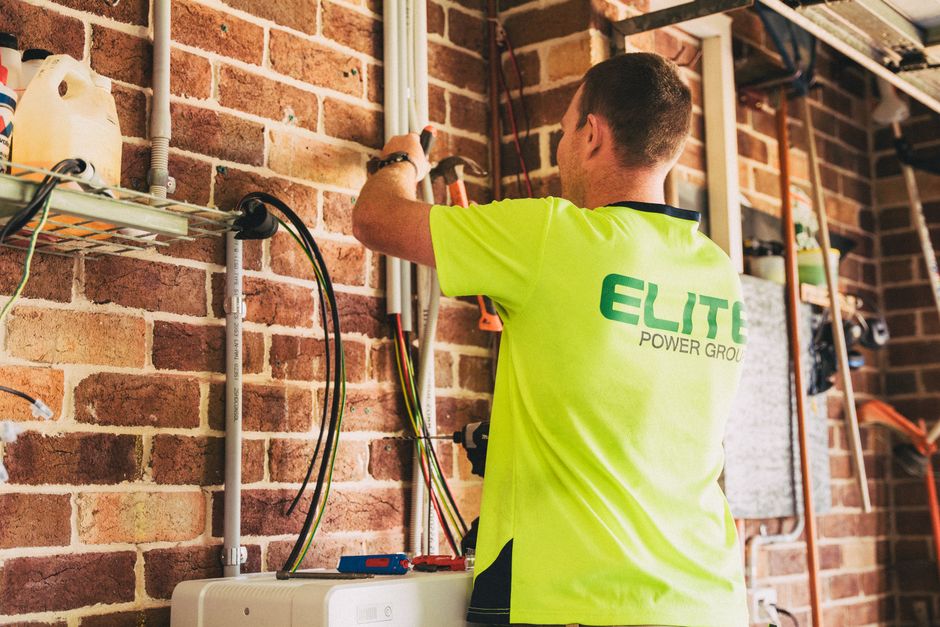
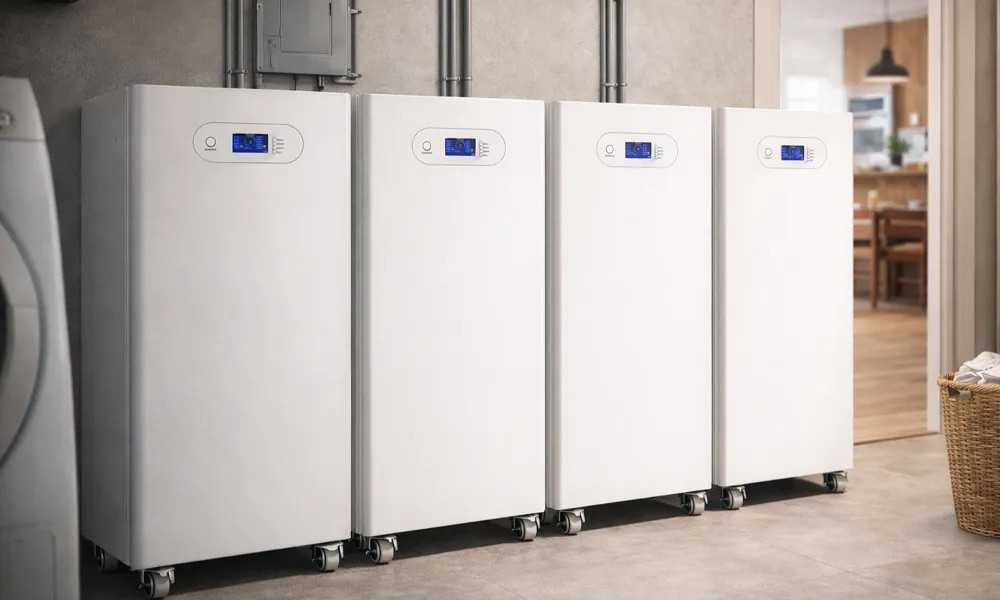
A home battery installed by a licensed contractor connects to your main electrical panel (or a backup-loads panel), charges from the grid or from solar, and takes over within moments when the grid fails. Phoenix adds a few wrinkles: heat that can push equipment past its rating, an air conditioner that is both essential and hard to start, and two utilities with different battery programs.
Sources: EnergySage, APS and SRP, the City of Phoenix, maker datasheets, IRS, EIA. Checked October 20, 2026. Full list at the bottom of the page.
Home battery installation cost in Phoenix
EnergySage’s Phoenix page (EnergySage pages updated October 18, 2026) shows $10,496 for a 13 kWh system ($807 a kWh; range $8,922 to $12,070). Its Arizona page shows $10,593 for 13 kWh and $21,185 for 26 kWh, which is about two batteries. Prices are marketplace averages before incentives, not quotes, and they include installation. EnergySage’s older state table shows a higher Arizona figure ($1,019 a kWh), so treat any single number as a range and get written quotes. The U.S. average is about $1,159 a kWh, $15,647 for a 13.5 kWh system (a U.S. figure, not a Phoenix quote).
| Size | Typical use | Phoenix, installed (our arithmetic from EnergySage $/kWh range) | Arizona (EnergySage)* |
|---|---|---|---|
| 5 kWh | A small battery for a fridge, internet and lights | $3,432 to $4,642 (about $4,035) | $4,075 |
| 10 kWh | Essentials for about a day | $6,863 to $9,285 (about $8,070) | $8,148 |
| 13 to 13.5 kWh | One Powerwall-class battery | $9,265 to $12,534 (about $10,894) | $10,593 |
| 20 kWh | Essentials plus a window or mini-split air conditioner | $13,726 to $18,569 (about $16,140) | $16,296 |
| 26 to 27 kWh | Two batteries: bigger backup or longer runtime | $18,530 to $25,068 (about $21,789) | $21,185 |
| Multiple batteries | Add the price of each; expansion units may cost less than a first install | Ask for a bid | Ask for a bid |
*Arizona page updated October 18, 2026 (the 5 kWh figure is our arithmetic at $815 a kWh). Before incentives; installation included. Sources: Phoenix, Arizona, U.S.. See also our battery cost guide.
What the installed price includes
| Part of the job | What it is | Verified price? |
|---|---|---|
| 1. Battery hardware | The battery unit(s); equipment is roughly half of the cost (EnergySage) | Only as part of the marketplace average |
| 2. Inverter and control equipment | A hybrid or battery inverter and software; may be built into the battery | No |
| 3. Gateway or transfer equipment | Switches the home to the battery when the grid fails | No |
| 4. Electrical labor | Wire, breakers, conduit, connections | No |
| 5. Backup-loads subpanel | A panel holding the circuits the battery will run, if used | No |
| 6. Panel or service upgrades | Only if the load calculation requires it; EnergySage lists panel work at $3,000 to $5,000 or more (U.S.) | U.S. range only |
| 7. Permitting and inspection | Phoenix Fire permit $390 (3 to 27 kWh) plus the electrical permit and utility interconnection | Fire permit yes; the rest no |
| 8. Solar retrofit work | A new inverter or AC coupling if you add a battery to existing solar | No |
| 9. Commissioning | Startup, settings and testing | No |
| 10. Total installed price | Sum of the above | $10,496 average for 13 kWh (EnergySage) |
What changes the price
- Brand and capacity: bigger batteries cost more in total and often less per kWh.
- Existing solar: the type of inverter you have, and whether the battery is AC-coupled (works with almost any solar system, with an extra conversion) or DC-coupled (needs a compatible hybrid inverter).
- Whole-home or partial backup: a backup-loads panel is cheaper than rewiring the whole house.
- Location: garage or exterior wall, distance to the panel, and the panel’s condition and room.
- Number of batteries and how the equipment communicates.
- Permits, utility paperwork and installer labor in your city.
A worked example, with the assumptions shown
A homeowner installs one 13.5 kWh battery at the EnergySage Phoenix average of $807 per kWh: about $10,894 (our arithmetic). EnergySage says equipment is roughly half the cost, so about $5,447 is hardware and about $5,447 is installation, permits and everything else (our rough split). The Phoenix Fire permit ($390) is part of that if the installer includes it. A retrofit that needs a new inverter or panel work costs more, and a lower or higher quote is normal. This is an example, not a quote.
Phoenix home battery installation cost estimator
This estimates the budget for having a battery installed. Answer a few questions for a range; the result shows what we could and could not price. Use the battery sizing calculator to find the size first.
Estimate your installation budget
Free, no sign-up. A rough range, not a quote.
Home battery size and backup runtime calculator for Phoenix
How large a battery do you need, and how long will it power your home? Pick what you want to keep running and for how long. The calculator separates three things: energy (kWh, how much the battery stores), power (kW, how much it can deliver at once) and start-up surge (what a motor like an air conditioner needs for an instant). It assumes the largest motor starts by itself, a simplified assumption. A basic sum is not a design: an installer must verify it.
How big a battery do you need?
Free, no sign-up. Pick what must keep running, and for how long.
Appliance watts come from published guides (Honda, Champion, Generac, ENERGY STAR, ResMed); check your own labels. Air-conditioner currents are from one maker’s sheet (Goodman GLXS).
Essential loads versus whole-home battery backup
A backup loads panel (essential-load backup) puts only the circuits you choose on the battery: fridge, lights, outlets, internet and perhaps one air conditioner. Whole-home backup keeps everything on, but a typical battery cannot start and run a whole Phoenix home through July. Whole-home connection capability does not mean unlimited runtime, or that every appliance can run at the same time.
| Essential circuits | Partial home | Whole home | Whole home with load management | |
|---|---|---|---|---|
| What it keeps on | Fridge, internet, lights, a few outlets | Those plus one cooling unit and a few more circuits | Every circuit | Every circuit, with big loads paused automatically |
| Battery capacity needed | Smallest: one battery often covers a day | One to two batteries | Several batteries for any real runtime | Fewer than plain whole-home |
| Runtime | Longest | Medium | Shortest | Longer than plain whole-home |
| Electrical work | Backup-loads subpanel | Subpanel with more circuits | Service-level switching | Switching plus controls |
| Air conditioning | Usually a window or mini-split unit | One unit, if the battery can start it | Possible with enough power and surge capacity | Easier to fit |
| Expandability | Add batteries later | Add batteries later | Plan for many | Plan for many |
Practical Phoenix examples (from the calculator’s own numbers): one 13.5 kWh battery runs essentials of about 470 W for roughly a day, a window air conditioner on top for about half that, and a 3-ton central air conditioner on top for under three hours of nonstop running. That is why many Phoenix homes back up essentials plus one cooling unit, or add a second battery or a generator for longer runs.
Can a home battery run air conditioning in Phoenix?
Sometimes, depending on the unit and the battery. A central air conditioner is the hardest load to start: it needs far more current for an instant when the compressor starts (locked-rotor current) than it draws running. A battery must cover both its continuous power and its motor-start rating. One maker’s sheet (Goodman GLXS, 230 V) lists these currents; locked-rotor current is a brief starting value, not continuous power.
| Air conditioner | Running current (RLA) | Starting current (LRA) | Running VA (our arithmetic) | Continuous runtime on one 13.5 kWh battery, with 467 W of essentials |
|---|---|---|---|---|
| 3 ton | 13.4 A | 83.3 A | 3,082 | 3.2 hours |
| 4 ton | 19.4 A | 127.7 A | 4,462 | 2.3 hours |
| 5 ton | 23.9 A | 148.0 A | 5,497 | 1.9 hours |
VA = amps x 230 volts, ignoring power factor; one brand and series only, so other units differ. Runtime is nonstop and our arithmetic (85% of 13.5 kWh delivered); a cycling air conditioner lasts longer. Goodman spec sheet (reseller-hosted copy).
| Battery | Listed motor-start rating | Versus a 3-ton unit (83 A) | Versus 4-ton (128 A) | Versus 5-ton (148 A) |
|---|---|---|---|---|
| Tesla Powerwall 3 | up to 185 A | listed rating at or above | listed rating at or above | listed rating at or above |
| Enphase IQ Battery 5P | up to 48 A | listed rating below | listed rating below | listed rating below |
| Enphase IQ Battery 10C | up to 90 A | listed rating at or above | listed rating below | listed rating below |
| FranklinWH aPower 2 | up to 185 A | listed rating at or above | listed rating at or above | listed rating at or above |
| Generac PWRcell 2 | up to 130 A | listed rating at or above | listed rating at or above | listed rating below |
| SolarEdge Home Battery 400V | not stated | not stated | not stated | not stated |
A comparison of two published figures only: it does not prove a battery will start your unit. Maker ratings use their own test conditions and may differ in voltage and duration. A soft starter or load-management module can lower the demand. Your installer must check your nameplate and the battery’s limits.
Runtime examples on one 13.5 kWh battery
| Scenario | Load | One battery | Two batteries |
|---|---|---|---|
| 1. Essentials only | 467 W | 24.6 hours | 49.1 hours |
| 2. Essentials plus one 8,000 Btu window air conditioner | 1,000 W | 11.5 hours | 22.9 hours |
| 3. Essentials plus a mini-split (assumed 1,000 W while cooling: an assumption, check the label) | 1,467 W | 7.8 hours | 15.6 hours |
| 4. Essentials plus a 3-ton central air conditioner (3,082 VA running) | 3,549 W | 3.2 hours | 6.5 hours |
Our arithmetic: 13.5 kWh nominal x 85% = 11.5 kWh delivered, divided by the load, with every load running nonstop. Real runtime depends on the air conditioner’s cycling and on outdoor temperature, which raises demand in Phoenix summers.
- Mini-split versus central: a mini-split cools one zone with a gentler start, so a battery handles it more easily than a central unit.
- Duty cycles: an air conditioner cycles on and off, so a continuous estimate is the cautious case; extreme heat shortens the off periods.
- More batteries: add continuous power and energy; ask the maker how motor-start ratings combine.
- Do not assume any battery starts every air conditioner. The installer verifies nameplate data, load requirements and compatibility.
Solar plus battery versus a battery without solar
| Solar plus battery | Battery without solar | |
|---|---|---|
| What it does | Stores solar power for the evening and for outages | Charges from the grid; backup and rate shifting |
| During an outage | Can recharge from the sun if the system is built for backup (islanded) operation | Runs until empty; cannot recharge from the grid while it is down |
| Peak-hour use | Powers the home after sunset, cutting evening grid purchases | Charges in cheap hours and discharges in peak hours |
| Solar export | Reduces low-paid exports: only 5.554¢ (APS) or 1.87¢ (SRP) per kWh | Not applicable |
| Equipment | AC- or DC-coupled; compatible inverter; battery reserve settings; existing solar may need a new inverter | No rooftop panels needed |
| Utility approval | Interconnection with solar paperwork | APS has a non-exporting option; confirm approval with the utility |
| Limits | A standard grid-tied solar system shuts down in an outage; panels alone do not keep the lights on | Extended outages are limited by stored energy |
Solar panels do not necessarily keep charging a battery during an outage unless the installed system is designed and configured for islanded backup operation. For rooftop solar, see our Phoenix solar panel installation guide; this section is only about how a battery changes the picture. SRP says storage goes through the same interconnection process as solar; APS has a non-exporting option in its application, and has not said in anything we could read whether a battery with no solar needs separate approval, so your installer should confirm with APS ([email protected]).
Are home batteries worth it in Phoenix?
It depends on what you value. A battery can be worth it for backup even where the financial payback is unattractive. Do not assume it saves money for every Phoenix household.
Possible value
- Backup power for the fridge, internet, medical devices and some cooling during outages.
- Avoiding expensive peak-hour purchases: on APS TOU-E the summer 4 to 7 p.m. price is 34.396¢ against 12.345¢ off-peak; on SRP E-28 the 6 to 9 p.m. price is 18.47¢.
- Storing solar instead of exporting at 5.554¢ (APS) or 1.87¢ (SRP).
- APS and SRP battery programs, which pay for performance during events.
- Demand charges: on plans that charge for your peak kW, a battery that trims the peak can lower the bill.
Possible disadvantages
- High installation cost: about $10,496 for 13 kWh in Phoenix (EnergySage).
- Limited backup duration compared with a generator.
- Capacity fades over time and equipment may need replacing.
- Installation constraints: placement rules and heat.
- Savings can be small on some rate plans, and the round-trip loss eats part of the price gap.
- Warranty and maintenance terms to check, and the opportunity cost of the money.
Financial savings and backup or resilience value are different things; judge each separately. Use the savings calculator below for an illustration, and see our home battery guide.
Why Phoenix outages matter
On average, the Valley grid is reliable. In 2024 the average APS customer lost 81 minutes of power in a normal year and the average SRP customer 53 minutes, or 87 and 58 counting major events (EIA Form 861, whole-utility figures, not Phoenix-only). Averages hide the storm days: monsoon and dust storms cause the outages that last.
- August 25, 2025: A haboob and thunderstorms left as many as 54,000 SRP customers and 12,000 APS customers without power at the height; by the next morning about 100 SRP and 50 APS customers were still out. (azfamily.com)
- July 20-21, 2026: Monsoon storms peaked at close to 12,000 SRP customers and about 3,200 APS customers out. (ABC15)
- July 12, 2026: A dust storm cut power to about 1,500 SRP customers near Avondale and about 1,000 east of San Tan Valley. (azfamily.com)
Those are news reports, not utility releases, and none says how long each customer was out. An outage here usually comes with 100°F-plus heat, so the first question is what must keep running: refrigeration, internet, medical devices and some cooling.
Phoenix home batteries by the numbers
What they cost, how long they run, what the utilities pay, and what heat does to them.
Installed price by battery size
Phoenix range per kWh (EnergySage, updated October 18, 2026) times the size; our arithmetic, before incentives. A marketplace average, not a quote.
Hours one 13.5 kWh battery could run
Counting 85% of the rating (11.5 kWh) as delivered to loads, with each load running nonstop (our arithmetic; a cycling air conditioner usually lasts longer, and its start-up surge is the bigger limit).
Summer electricity price by hour (cents per kWh)
APS TOU-E tariff and SRP E-28 ratebook (May-October 2026 prices; SRP changes in November). A battery earns by storing cheap power and using it when power is dear, and the gap must beat the round-trip loss.
Maker operating limits against Phoenix heat
Highest ambient temperature in each maker’s datasheet, read October 20, 2026. Several say output may be reduced near the top and to avoid direct sun; Enphase’s 5P shows its full-power charging limit. A red bar sits below Phoenix’s record high.
Sources: EnergySage, APS and SRP tariffs and program pages, maker datasheets, NWS Phoenix, EIA. Checked October 20, 2026.
APS and SRP electricity rates and battery savings
A battery pays best on a plan that charges much more at some hours than others. Savings depend on your plan, your load profile, solar production, battery size, round-trip efficiency, the energy you reserve for outages, the export rate, any demand charges, cycling limits and program participation. We do not suggest one best schedule.
- APS TOU-E (4 to 7 p.m. weekdays on-peak): summer on-peak 34.396¢ versus 12.345¢ off-peak, a gap of 22.1¢ per kWh; winter on-peak 32.543¢ versus 12.351¢, with a 3.495¢ super off-peak price from 10 a.m. to 3 p.m. in the cooler months (APS tariff, October 20, 2026). If a battery stores a kWh at 12.345¢ and returns about 90% of it at 34.396¢, that is worth roughly 19¢ net per kWh shifted (our arithmetic, before monthly charges and the Grid Access Charge for solar homes).
- APS R-3 (demand plan): very low off-peak energy prices but a demand charge of $19.585 per kW in summer based on your highest on-peak hour; a battery can lower that peak. APS rates may change when its pending rate case is decided; proposed changes are not approved tariffs.
- SRP E-28 (6 to 9 p.m. weekdays on-peak): summer on-peak 18.47¢ versus 14.68¢ off-peak and 3.57¢ from 8 a.m. to 3 p.m., a gap of 14.9¢ per kWh to the cheapest hours (SRP ratebook, May-October 2026 prices; changes with the November 2026 billing cycle). Export credit 1.87¢.
- SRP E-16 (demand plan, 5 to 10 p.m. weekdays): charges per kW of average on-peak use ($13.56 per kW in summer); a battery that trims the evening peak lowers the bill. SRP says its battery program manages discharge on demand plans to avoid creating peaks.
- Pending change: APS has a rate case before the Arizona Corporation Commission; new rates, including a higher charge for rooftop solar homes, were proposed and the decision was still pending when we checked (October 2026).
Do not treat the difference between two prices as pure savings: the round-trip loss, the energy you reserve for outages and, with solar, the export credit you give up all reduce it.
Home battery savings and payback calculator
How much could a battery save on your electricity bill? This model shifts energy from cheap hours (or solar) to the peak on your plan, counts the round-trip loss and the energy you hold back for backup, and shows a payback with a sensitivity check. It does not use your monthly bill, because a bill cannot show when you use power; for a closer answer an installer can model your hourly use. We did not model demand charges, so a demand plan could do better.
Estimate battery savings
Free, no sign-up. Published plan prices, stated assumptions.
APS Storage Rewards and SRP Battery Partner
Both programs pay you for performance: the utility can discharge your battery during peak events, and you earn per average kW delivered. They are not purchase rebates, payments vary, and joining means the utility can use your battery during events.
| APS Storage Rewards | SRP Battery Partner | |
|---|---|---|
| What it pays | $110 per average kW delivered in the season | $55 per kW of average extra capacity above your baseline, per season (summer and winter) |
| Events | May 1 to Oct 31, up to 60 conservation days, usually 4 to 10 p.m., one to four hours | Up to 80 events a year, one to four hours; the battery is never discharged below 20% |
| Status when checked | Open; five-year pilot from August 2025, up to 5,000 participants | Open as of the pages we read; applications are accepted by the program sponsor and SRP |
| Listed battery makers | Emporia, Enphase, Fortress Power, FranklinWH, SolarEdge and Tesla (Powerwall managed by Tesla); check the page for models | Enphase IQ Battery, FranklinWH aPower X, aPower 2 and aPower S, SolarEdge, and Tesla Powerwall 2, 3 and + |
| Customer control | Opting out of an event counts as 0 kW for that event | The battery is never discharged below 20% |
| Reserve for backup | Reserving more energy for backup can lower the credit | A 20% floor; check how it interacts with your backup setting |
| Watch out for | Opting out of an event counts as 0 kW for that event, which lowers the credit. Reserving more energy for backup can lower the credit. | Not available to devices enrolled in SRP's Renewable Export Program with a capacity commitment. |
| Eligible plans, permission to operate, payment schedule | We did not confirm these; check the APS page | Payments twice a year per the program page; check the administrator |
| Official page | APS Storage Rewards | SRP Battery Partner (program page) |
Neither utility publishes what a typical home earns, because it depends on how many kW your battery delivers during events. For scale only: if one battery averaged 3 kW, APS would pay $330 (3 x $110) for the season, and SRP about $165 per season (3 x $55), or $330 across its summer and winter seasons. Whether a program accepts your battery model is part of choosing a battery and an installer. We found no APS or SRP cash rebate at purchase for a battery.
Home battery incentives and tax credits in Phoenix (checked October 20, 2026)
| Program | Status | What we confirmed | Source |
|---|---|---|---|
| Federal Residential Clean Energy Credit (25D) | ENDED | Not allowed for expenditures made after December 31, 2025. The IRS treats a battery as paid for when installation is complete, so a battery finished in 2026 gets nothing. We do not show the former 30% credit as available. | IRS |
| Arizona credit for solar energy devices | ACTIVE for solar; battery depends | 25% of cost up to $1,000 per home. The statute covers solar systems that may also store solar energy, so a battery installed with solar is plausibly included; a stand-alone battery is not clearly covered. We could not read the Arizona Department of Revenue's guidance. Ask a tax professional. | A.R.S. 43-1083 |
| APS Storage Rewards, SRP Battery Partner | OPEN | Pay-for-performance bonuses (see above), not rebates. | APS |
| City of Phoenix, Maricopa County battery rebates | NONE FOUND | No local battery rebate on the City or County pages we read. | phoenix.gov |
A tax credit is not an instant discount, a rebate is not a bill credit, and a performance payment is not guaranteed. We list an incentive as available only when we confirmed it.
Battery installation permits and electrical requirements in Phoenix
- Fire Department permit: any stationary battery over 3 kWh in a house or duplex needs a Phoenix Fire Department permit. The over-the-counter permit covers 3 to 27 kWh and costs $390 (form revised January 2026); larger systems need plans. Apply by email to [email protected] or at 150 S 12th Street, phone 602-262-6771. Battery permit form.
- Solar plus battery: a combined form (F800) covers both for $390 when solar is 3 to 15 kW AC and the battery is 3 to 27 kWh.
- Electrical permit: the City's SolarAPP+ and its inspector-permit route both exclude batteries, so a battery job goes through standard permitting with the Planning and Development Department. We could not find a battery-specific PDD checklist or fee; ask your installer or call PDD at 602-262-7811.
- Codes: Phoenix's amended 2024 Fire Code (effective February 17, 2026) and the 2023 National Electrical Code apply. Phoenix Fire Code.
- SRP interconnection: batteries use the same PowerClerk process as solar. SRP requires UL 1973 cells and a UL 9540 system, an interconnection agreement, and that the battery be charged for the final inspection. SRP DER requirements (form dated 01/24).
- APS interconnection: the installer applies in PowerClerk and chooses exporting or non-exporting operation; APS now requires UL 1741-SB inverters. APS PowerClerk guide.
- A Phoenix mailing address is not the same as the City of Phoenix. Unincorporated Maricopa County and other cities have their own offices and rules; we did not confirm battery rules for them. Call your city or county.
Battery placement, safety and Phoenix extreme heat
Phoenix's fire code allows a home battery only in a detached garage or accessory building, an attached garage separated from living space, outdoors or on an exterior wall at least 3 feet from doors and windows into the home, or in an enclosed utility space with finished or fire-resistant walls. It is not allowed in a bedroom or a closet that opens into one, and a warning sign goes at the main panel (2024 Phoenix Fire Code packet, Chapter 12). The packet is ambiguous about utility closets, so confirm your location with Phoenix Fire Prevention at 602-262-6771. Model codes also cap a single unit at 20 kWh and limit total storage per location; we could not confirm those caps in Phoenix's text, so we do not apply them here.
Heat: makers' own datasheets show why Phoenix needs care. Powerwall 3 operates to 122°F but "may be de-rated" above 104°F; Generac PWRcell 2 may de-rate above 104°F; Enphase IQ Battery 10C reduces charging above 113°F and says to avoid direct sunlight; SolarEdge allows direct sun only inside its ambient range; FranklinWH aPower 2 runs to 131°F at a reduced 5 kW. The normal July high in Phoenix is 106.5°F and the record is 122°F. Direct sun on a wall, or a hot garage, can push the equipment's own temperature above the air temperature, which can reduce charging or discharging power. A garage is not always cooler than outdoors; we found no source for garage temperatures, so we do not quote one. Ask installers where they would place it and what the maker says about that spot.
- UL 9540 is the safety standard for the whole energy storage system; UL 1973 covers the battery cells and modules; UL 1741 covers the inverter and its grid-support functions; UL 9540A is a fire-test method for thermal runaway, not a pass-fail listing for a product. They are different things: ask which listings your system has. SRP requires UL 1973 and UL 9540.
- Also consider: clearances and access for maintenance, ventilation per the maker, protection from vehicles, and flooding or stormwater exposure during monsoon. Follow the manufacturer's installation instructions.
- Never install a battery yourself. It stores a lot of energy and needs permits, inspection and a licensed electrician.
Tesla Powerwall installation in Phoenix
SolutionEnergy is not Tesla-certified or an authorized Tesla installer. Specifications below come from Tesla's own Powerwall 3 datasheet; check the current sheet before you buy.
| Question | What we confirmed |
|---|---|
| Storage and power | Powerwall 3: 13.5 kWh nominal energy and 11.5 kW continuous power. Energy (kWh) is how much it stores; power (kW) is how much it can deliver at once. |
| Motor start | Lists 185 A of motor-start (locked-rotor) capability for 1 second, which is above the 83 A, 128 A and 148 A of the 3, 4 and 5-ton air conditioners in the one sheet we read. That is a comparison of two figures, not a guarantee. |
| Heat | Operates from -4 to 122°F and may de-rate above 104°F; installed indoors or outdoors (NEMA 3R). |
| Warranty | 10 years (datasheet). |
| With and without solar | Powerwall 3 includes a solar inverter, so it can pair with solar; it can also charge from the grid. Backup operation needs the gateway and correct set-up. We did not verify details of expansion units, so ask the installer. |
| Whole home or essentials | Depends on the electrical set-up and service size; one Powerwall may back up essentials plus a cooling unit, and several are used for more. |
| One versus several | Two Powerwalls double the stored energy (27 kWh) and continuous power (about 23 kW listed); runtime for the examples above roughly doubles. |
| APS and SRP programs | APS lists Tesla Powerwall (managed by Tesla); SRP lists Powerwall 2, 3 and +. Check the program pages for current models. |
| Phoenix cost | EnergySage shows about $10,496 for 13 kWh in Phoenix; its U.S. figure for a Powerwall 3 installed is about $13,473. |
Home battery brands and equipment comparison
Specifications from each maker's datasheet. We do not rank products or give scores. Note that nominal energy is not usable energy, and a kVA rating is not a kW rating: they are the same only at a power factor of 1, so we show each as the sheet gives it.
| Battery | Energy (kWh) | Continuous power | Motor start (LRA) | Chemistry | Warranty | Heat limits | Placement |
|---|---|---|---|---|---|---|---|
| Tesla Powerwall 3 | 13.5 (nominal) | 11.5 kW | 185 A (1 s) | not stated on sheet | 10 years | -4 to 122°F; may de-rate above 104°F | Indoor or outdoor, NEMA 3R |
| Enphase IQ Battery 5P | 5.0 | 3.84 kVA | up to 48 A | LFP | 15 years or 6,000 cycles | charges at full power 59 to 113°F; avoid direct sun | NEMA 3R; garage or outdoor |
| Enphase IQ Battery 10C | 10.0 | 7.08 kVA | up to 90 A | LFP | 15 years or 6,000 cycles | charge power reduced above 113°F, discharge above 122°F; avoid direct sun | NEMA 3R outdoor |
| FranklinWH aPower 2 | 15 | 10 kW (11.5 kVA) | 185 A | LFP | 15 years or 60 MWh | -4 to 122°F; to 131°F at 5 kW | Type 3R, IP67 |
| Generac PWRcell 2 | 9 to 18 per cabinet | 5.2 to 10.5 kW per cabinet; 11.5 kW inverter | 130 A max (M6) | not stated on sheet | 10 years or 7.56 MWh | discharge -4 to 122°F; may de-rate above 104°F | NEMA 3R |
| SolarEdge Home Battery 400V | 9.7 | 5 kW | not stated | not stated on sheet | 10 years | -4 to 122°F; direct sun only within that range | IP55 / NEMA 3R, indoor or outdoor |
| EG4 WallMount All Weather | 14.3 total (about 11.4 at 80% depth) | set by the paired inverter | not stated | LFP | 10 years | charge to 122°F, discharge to 131°F; built-in heater | IP65, outdoor 3 in side clearance |
Read from each maker's datasheet on October 20, 2026. Not endorsements. "Not stated" means the sheet we read does not say. Generac, SolarEdge and EG4 figures depend on the paired inverter or configuration. SolarEdge's sheet was read from a distributor's copy. Prices change; get written quotes. We did not verify AC or DC coupling, cycling limits or current installed prices for every model.
See also our home battery guide and battery cost guide.
Home battery installation process in Phoenix
- Evaluate your backup needs: what must run, and for how long.
- Review your usage and utility plan.
- Determine capacity and power: kWh, kW and motor-start needs (use the calculator).
- Decide solar-coupled or standalone.
- Inspect the existing electrical system: panel, service size, solar inverter.
- Evaluate safe placement against the fire code and heat.
- Compare equipment and installation quotes.
- Obtain permits: Fire Department and electrical.
- Complete utility applications and interconnection (APS or SRP, PowerClerk).
- Install the battery and control equipment.
- Complete inspections and utility authorization.
- Test backup operation and configure settings, including your backup reserve.
How long it takes varies with panel modifications, solar inverter compatibility, permit complexity and equipment availability, and we do not quote a universal timeline; ask your installer for a written schedule.
Home batteries versus generators in Phoenix
| Home battery | Standby generator | Portable power station | |
|---|---|---|---|
| Installed cost | About $10,496 for 13 kWh in Phoenix (EnergySage) | $8,000 to $16,000 including the generator (Generac, U.S.) | Hundreds to a few thousand dollars; no installation |
| Backup duration | Until the battery is empty; solar can recharge it | As long as fuel lasts | Hours for small loads |
| Power and air conditioning | Limited by kW and motor-start; one battery runs a cooling unit for hours, not days | Runs a whole home including central air conditioning if sized for it | Small loads only |
| Fuel and exhaust | None | Natural gas or propane; exhaust; outdoors only | None |
| Noise and maintenance | Silent; little maintenance | Loud; exercise cycles and oil changes | Silent; little |
| Automatic operation | Yes, within moments | Yes, after a short delay with a transfer switch | Manual |
| Solar compatibility | Pairs with solar | Independent of solar | Can charge from solar panels |
Batteries may suit short outages and daily electricity management; generators may suit longer outages and high sustained loads. Neither is universally better, and some homes use both. See our Phoenix backup generator installation guide.
Battery lifespan, maintenance and warranties
Battery life, warranty period and economic payback are three different things. Batteries age with time (calendar aging) and with use (cycle aging); heat speeds aging, and so does regularly using a large share of the capacity. We cannot promise a fixed number of years for any battery.
| Battery | Warranty (from the datasheet) |
|---|---|
| Tesla Powerwall 3 | 10 years |
| Enphase IQ Battery 5P | 15 years or 6,000 cycles |
| Enphase IQ Battery 10C | 15 years or 6,000 cycles |
| FranklinWH aPower 2 | 15 years or 60 MWh |
| Generac PWRcell 2 | 10 years or 7.56 MWh |
| SolarEdge Home Battery 400V | 10 years |
| EG4 WallMount All Weather | 10 years |
- Throughput limits: several warranties end at a number of cycles or MWh delivered (for example 6,000 cycles, 60 MWh), whichever comes first, so a battery used every day can reach the limit before the years run out.
- Retained capacity: check whether the warranty guarantees a percentage of the original capacity; we did not verify that for every model.
- Inverter and controls may wear out on a different schedule than the cells; ask who covers them.
- Software and connectivity: most batteries need an internet connection for monitoring and program participation.
- Workmanship warranty: comes from your installer, separately from the maker's; ask who honors it if the installer closes.
- Little routine maintenance is needed, but keep the area clear and watch for alerts in the app.
Compare home battery installers in Phoenix
We do not rank or rate companies. Use this checklist when you compare battery backup installers and solar battery installation bids in Phoenix:
| Compare | What to look for | Why it matters |
|---|---|---|
| Arizona contractor license | A license number you can check on the ROC contractor search. SRP's program document names the R-11 and CR-11 classifications for installers; we could not read the ROC's own classification page. | Unlicensed work risks safety, permits and insurance. |
| Storage experience and training | Residential storage installs, maker training claims (verify with the maker), and solar retrofit experience | Retrofits are more complex than new installs. |
| Panel and load assessment | A panel assessment and written backup load calculations, including your air conditioner's motor-start rating | This decides the size and any upgrades. |
| Permits and utility | Who handles the Phoenix Fire permit, the electrical permit and the APS or SRP interconnection | Required before operation. |
| Program compatibility | Whether the battery is on the APS or SRP program lists | Needed if you want rewards. |
| Itemized estimate | Battery model(s), kWh and kW, inverter, backup loads panel or whole-home design, permit and utility fees, and exclusions | Totals alone hide differences. |
| Warranties and support | Equipment and workmanship warranties; who services it if the installer closes; APS also keeps a list of Qualified Technology Installers (it does not endorse them) | Problems show up later. |
What a battery quote should show
- Battery and inverter models, usable kWh, continuous kW and motor-start rating.
- What loads are backed up and how (backup subpanel or whole home).
- Placement, permits and inspections, and who pays for them.
- Interconnection and program steps; settings, including the backup reserve.
- Warranty terms, exclusions and the payment schedule.
SolutionEnergy is an independent information and referral service, not the installer doing the electrical work. We are lining up independent, licensed installers in the Phoenix area. Send a request and we will reply ourselves; nothing is shared with an installer unless you choose one, and we cannot promise how many companies will respond. Read how it works.
Commercial and multifamily battery storage
This page is about homes. Small businesses, commercial storage for demand-charge reduction, multifamily buildings, community facilities and critical business backup need different engineering, utility review, permits and financial analysis. Commercial solar plus storage is a different project from a home battery. Use the quote form below to describe a business project, and see our battery installation guide.
Phoenix home battery FAQs
How much does home battery installation cost in Phoenix?
EnergySage's October 2026 data shows about $10,496 for a 13 kWh battery in Phoenix ($807 per kWh; range $8,922 to $12,070) and about $21,185 for two batteries in Arizona, before incentives. Your price depends on the battery, whether you need a new inverter or panel work, and the installer. See costs.
Is a home battery worth it in Phoenix?
It can be worth it for backup even where payback is long, and may save money on a plan with a large peak price gap. It does not save money for every home. See worth it and the savings calculator.
How long can a 13.5 kWh battery power a house?
By our arithmetic one 13.5 kWh battery runs essentials (about 470 W) for roughly a day, a window air conditioner on top for about half that, and a 3-ton central air conditioner on top for under three hours of nonstop running. Use the calculator.
Can a Tesla Powerwall run central air conditioning?
A Powerwall 3 lists 11.5 kW and 185 A of motor start, above the starting current of the 3, 4 and 5-ton units on the one sheet we read, but an installer must check your unit's nameplate. Runtime is short for a nonstop central unit. See AC runtime.
How many Powerwalls do I need for whole-home backup?
It depends on your loads and how long you want backup. One covers essentials and perhaps one cooling unit; whole-home runtime in July usually needs several or a generator. Use the calculator and ask an installer for a load calculation.
Do I need solar panels to install a battery?
No. A battery can charge from the grid. Solar makes it more useful because it can refill the battery, and exported solar earns little here. See solar plus battery.
Can I add a battery to my existing solar system?
Often yes, but it may need a new inverter or an AC-coupled battery, and the system must be set up for backup operation. Ask the installer to check your inverter.
Does APS offer battery storage incentives?
APS Storage Rewards pays $110 per average kW delivered during summer events (a pay-for-performance program, not a rebate). We found no APS purchase rebate for batteries. See programs.
Does SRP pay homeowners for battery storage?
SRP Battery Partner pays $55 per kW of average extra capacity per season (summer and winter), with up to 80 events a year; payments vary and are not guaranteed.
Is there a federal battery tax credit in 2026?
No. The 25D credit is not allowed for expenditures after December 31, 2025, so a battery finished in 2026 gets nothing (IRS). Arizona's credit (25% up to $1,000) applies to solar and plausibly to a battery installed with solar; a stand-alone battery is unclear.
Do I need a permit for home battery installation in Phoenix?
Yes. The Phoenix Fire Department requires a permit for any home battery over 3 kWh ($390 over-the-counter up to 27 kWh) and your installer needs electrical permits and utility interconnection approval. Other cities have their own rules. See permits.
Can home batteries be installed outdoors in Arizona heat?
Within limits. Makers list operating ranges up to 122 to 131°F with reduced output at the top end, and say to avoid direct sun. Pick a shaded spot or a garage, and follow Phoenix fire-code placement rules. See heat and placement.
What is the difference between kW and kWh?
kWh is energy stored, like the size of a fuel tank; kW is power, how fast it can be delivered, like how fast the fuel can flow. A battery needs enough of both, plus the start-up surge for motors.
What is the best battery for a Phoenix home?
There is no single best. Compare usable energy, continuous power, motor-start rating, heat limits, warranty, program eligibility and installer support in the comparison.
Is a battery or generator better for backup power?
A battery is silent and automatic and pairs with solar; a generator runs as long as it has fuel and suits multi-day outages and big cooling loads. See batteries versus generators and our Phoenix generator guide.
Ready to install home battery backup in Phoenix?
Explore battery systems that match your household's power needs, solar equipment, and budget. Compare installation options and request information from qualified independent installers serving the Phoenix area. We read every request and reply ourselves; nothing is shared with an installer unless you choose one, and we cannot promise how many companies will respond. If you used the calculators, your numbers are added to the message for you.
More Phoenix energy guides
- Phoenix, AZ energy guide
- Phoenix solar panel installation
- Phoenix backup generator installation
- Phoenix home EV charger installation
- Phoenix metro area guide
- Arizona energy guide
- Home batteries guide
- Home battery installation guide
- Home battery cost guide
- Solar plus battery
- Battery backup calculator
- Backup power comparison guide
Sources and data checks
Every number comes from the sources below; Phoenix figures are for Phoenix, utility figures cover a whole utility, and statewide or U.S. figures are labeled. Not confirmed: a Phoenix Planning and Development battery permit checklist or fee, whether the model-code limits of 20 kWh per unit apply in Phoenix, whether APS requires approval for a battery with no solar, the Arizona tax department's view of stand-alone batteries, program eligibility details beyond what the utility pages state, garage temperatures, and the Arizona contractor license classes. Tell us if something is out of date.
| What | Applies to | Source | Checked | Status |
|---|---|---|---|---|
| Battery price | Phoenix and Arizona | EnergySage | October 20, 2026 | Verified (marketplace averages) |
| Reliability | APS, SRP (whole utility, 2024) | EIA Form 861 | October 20, 2026 | Verified |
| Outage events | Phoenix Valley | azfamily, ABC15 (news) | October 20, 2026 | Verified (news reports) |
| APS TOU-E prices | APS | APS tariff | October 20, 2026 | Verified; rate case pending |
| SRP E-28 / E-16 prices | SRP, May-Oct 2026 | SRP ratebook | October 20, 2026 | Verified; changes Nov 2026 |
| APS Storage Rewards | APS | aps.com | October 20, 2026 | Verified |
| SRP Battery Partner | SRP | Program administrator (greatergrid.com) | October 20, 2026 | Verified (SRP's own page blocked) |
| Fire permit and placement | City of Phoenix | Phoenix Fire Department | October 20, 2026 | Verified; PDD battery process not found |
| Fire code packet | City of Phoenix | 2024 Phoenix Fire Code packet | October 20, 2026 | Verified |
| SRP battery interconnection | SRP | SRP DER requirements | October 20, 2026 | Verified (form dated 01/24) |
| APS interconnection | APS | APS PowerClerk guide | October 20, 2026 | Verified (undated) |
| Federal 25D credit | U.S. | IRS | October 20, 2026 | Verified |
| Arizona credit | Arizona | A.R.S. 43-1083 | October 20, 2026 | Verified (statute text) |
| Equipment specs | U.S. products | Maker datasheets | October 20, 2026 | Verified |
| Air-conditioner currents | U.S. (one brand) | Goodman spec sheet | October 20, 2026 | Verified (maker sheet) |
| Appliance wattages | U.S. | Honda, Champion, Generac guides; ENERGY STAR; ResMed | October 20, 2026 | Verified (typical values) |
| Heat and climate | Phoenix | NWS Phoenix; EIA RECS 2020 | October 20, 2026 | Verified |
General information, not financial, tax, legal or electrical advice. Estimates are ours and are not promises. Use a licensed electrician or installer; see our editorial policy.