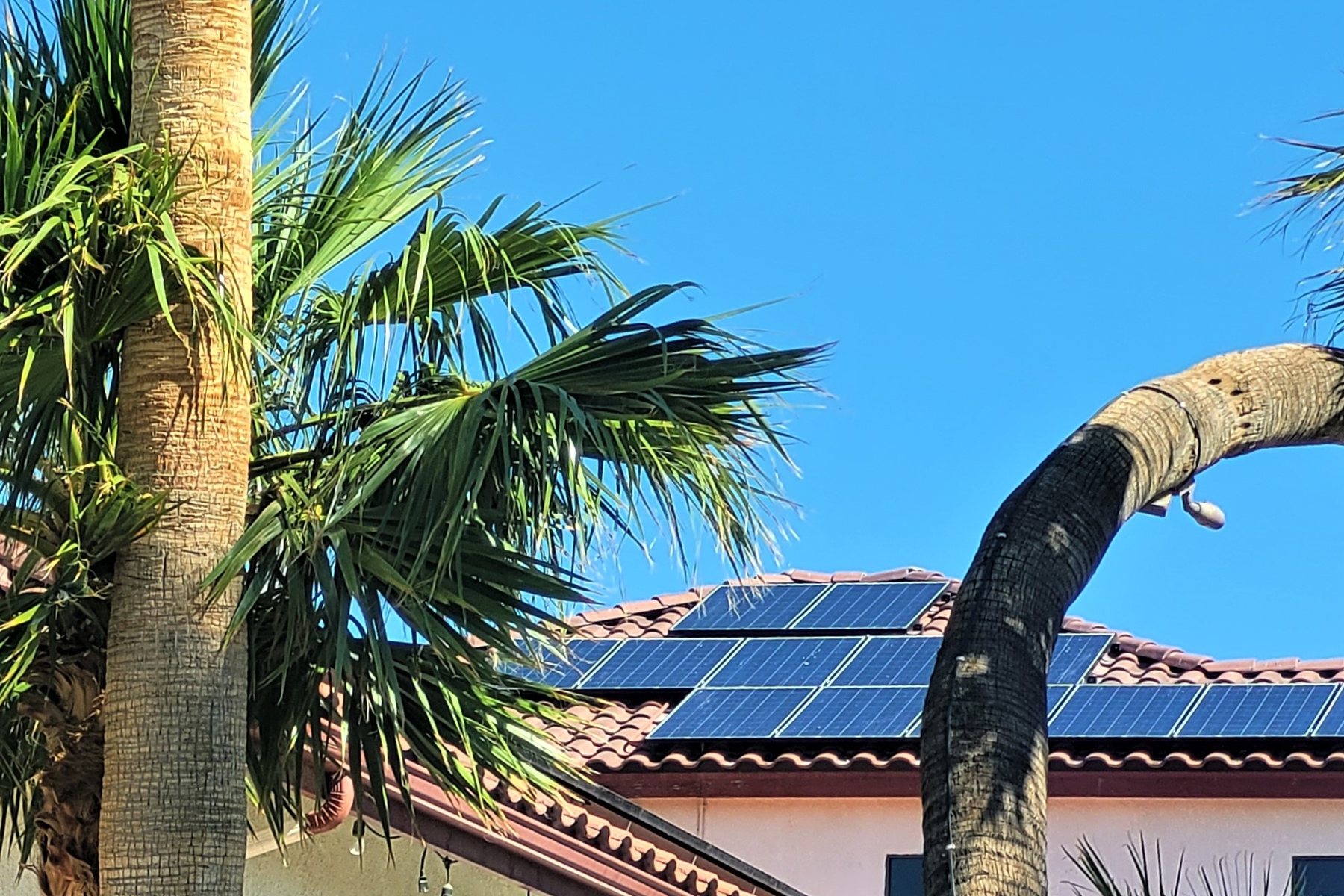
Solar Panel Installation in Phoenix, AZ
Costs, savings, APS and SRP plans, and installers
Explore Phoenix solar panel installation costs, electricity savings, APS and SRP solar plans, Arizona incentives, and local installation requirements. Calculate your potential savings and compare solar installers before requesting quotes.
Phoenix solar at a glance
Solar panel installation in Phoenix, Arizona is worth pricing for most homes with a sunny roof, but the numbers above depend on your utility, your use and your plan. Jump to the installation costs, the savings calculator, the APS and SRP rules or the installer checklist.
Sources: NREL PVWatts, EIA, EnergySage, APS and SRP tariffs, Arizona statutes and the IRS. Checked October 20, 2026. Full list at the bottom of the page.
Solar panel installation cost in Phoenix, AZ
We could not find a verified price for Phoenix alone. Arizona-wide, EnergySage’s marketplace data (updated October 16, 2026) shows an average of $2.26 per watt installed, before incentives. Its average Arizona system is 13.42 kW (the larger systems Arizona homes tend to need) at about $30,329, with a range of $25,780 to $34,878, and it estimates a payback of 12.94 years for the average home. That payback is EnergySage’s own model, not a guarantee.
| System size | Installed price at $2.26 a watt | After the $1,000 Arizona credit | Typical output a year | Roof space |
|---|---|---|---|---|
| 5 kW | $11,300 | $10,300 | 8,738 kWh | About 14 to 18 panels |
| 8 kW | $18,080 | $17,080 | 13,980 kWh | About 22 to 28 panels |
| 10 kW | $22,600 | $21,600 | 17,475 kWh | About 27 to 35 panels |
| 12 kW | $27,120 | $26,120 | 20,970 kWh | About 32 to 42 panels |
Our arithmetic from EnergySage’s Arizona average price, not Phoenix quotes. The Arizona credit is 25% of cost up to $1,000 and reduces your Arizona income tax; it is not taken off the invoice. The federal credit ended for systems finished in 2026. Output uses NREL PVWatts for ZIP 85004. Panel counts assume roughly 3 to 4 panels per kW.
| System size | U.S. average price (not a Phoenix quote) |
|---|---|
| 6 kW | $16,080 |
| 7 kW | $18,340 |
| 8 kW | $20,960 |
| U.S. average per watt | $2.60 |
Sources: EnergySage Arizona and EnergySage U.S.. See our guide to what solar panels cost.
What goes into a solar quote
- Equipment: panel brand and efficiency, inverter type (string, microinverters or optimizers) and any battery-ready hardware.
- Installation: labor, roof type (tile roofs need special mounts), roof repairs, a main panel upgrade, trenching or conduit runs.
- Soft costs: design, permits, utility application and inspection fees, and the installer’s overhead and margin.
- Size and price per watt: larger systems usually cost less per watt, so compare price per watt, not just the total.
- Financing: a loan or lease changes what you pay over time and sometimes the cash price itself (below).
Cash, loan, lease or PPA
| Option | Who owns the system | What to know |
|---|---|---|
| Cash | You | No interest. In U.S. 2024 installs the median cash price was $3.5 a watt (Lawrence Berkeley National Laboratory; a U.S. figure, not Phoenix). |
| Solar loan | You | Monthly payments. Loan fees and interest are often built into the price: the U.S. median loan price was $4.7 a watt in the same LBNL data. Compare the total you will pay, not the monthly figure. |
| Lease | The leasing company | Fixed monthly payment, usually little or nothing up front. Ask about yearly payment increases, what happens if you sell, and who receives any incentives. |
| Power purchase agreement (PPA) | The PPA company | You pay per kWh the panels make, at a set rate. Same questions as a lease. Read the contract line by line. |
Read more in our guide to buying versus leasing solar.
Why quotes differ
Two homes in Phoenix can get quotes thousands of dollars apart because of roof shape and material, shade, system size, equipment, the panel upgrade, and the installer’s own costs. A low price per watt is not automatically a better deal: check the equipment, warranty and who will service the system.
Value per kW, our estimate: used at home, one kW makes about $287 a year at APS’s 2024 average price and $235 at SRP’s. The same power sent to the grid is worth only about $97 on APS and $33 on SRP. That gap is why Phoenix homes size panels to their own use, shift use to the daytime, or add a battery.
Phoenix solar savings calculator
Pick Simple for a quick estimate from your ZIP code, utility and monthly bill, or Advanced to set the system size, roof, price and assumptions yourself. We pull the sun data for your ZIP code from NREL PVWatts and estimate production, savings, payback and long-term results. Defaults use Arizona’s average installed price ($2.26 a watt) and the Arizona tax credit (up to $1,000); there is no federal credit for systems finished in 2026.
Estimate your Phoenix solar savings
Free, no sign-up. Uses NREL sun data for your ZIP code.
We use the price and export credit shown for each utility view, NREL PVWatts for production, and your own assumptions. Estimates are not guarantees. Time-of-use pricing, demand charges and export credits can change your result; see the APS and SRP section below.
Want a second look at your roof first? Try our solar potential calculator, then compare with the general solar savings calculator and the guide to how many panels you need.
Are solar panels worth it in Phoenix?
Often yes, but it depends on how you use power and which plan you are on. Phoenix is one of the sunniest big cities in the country, so panels make a lot of energy. The question is what that energy is worth, and that depends on whether you use it at home or send it to the grid.
Why solar can pay off here
- Sunshine: a south roof makes about 1,748 kWh a year per kW (NREL PVWatts), and Phoenix ranks 1st sunniest of the 51 largest state cities (NASA POWER).
- High cooling use: air conditioning is 36% of Arizona household electricity, against 19% for the U.S., and Arizona homes use about 13,603 kWh a year (EIA RECS 2020, statewide). Much of that load runs in the sunny afternoon.
- Power you use at home saves the most: it avoids buying at the retail price, about 16.45¢ on average at APS and 13.46¢ at SRP (EIA, 2024).
- Arizona tax credit: up to $1,000 off your Arizona income tax.
Where it can disappoint
- Low export credits: only 5.554¢ per exported kWh at APS and 1.87¢ at SRP, far below what they charge. Oversizing a system does not pay.
- No federal credit: the 25D credit ended for systems finished in 2026, so payback is longer than it was.
- Plan details: time-of-use prices, demand charges and fixed fees (including a grid access charge on APS solar plans) can shrink savings. Ask your installer to model your plan.
- Roof and shade: east or west roofs make about 14% less; heavy shade and an old roof change the math.
- Low bills: if your bill is small, there is less to offset.
Use the calculator to test your own numbers, then compare written quotes. Our illustrative payback for a 6 kW system is about 7 to 16 years; EnergySage estimates 12.94 years for the average Arizona home.
Phoenix sun, weather and solar power
How much sun Phoenix gets, every month and every day of the year.
Solar panels turn sunlight into power, so the sun is the fuel. Phoenix is one of the sunniest big cities in the country (1st of the 51 largest cities of each state, by NASA data). Here is what that looks like in numbers and charts.
What 1 kW of panels makes each month
kWh per month on a south-facing roof, Phoenix ZIP 85004 (NREL PVWatts). Summer is highest, spring and early summer peak.
Sunshine by month
Average sunshine energy that reaches the ground each day, kWh per square meter (NASA POWER, 20+ years).
How long the sun is up, every day of the year
Hours between sunrise and sunset, by day. Arizona does not observe daylight saving time (except the Navajo Nation), so Phoenix stays on Mountain Standard Time all year.
Which way your roof faces matters
kWh a year from 1 kW of panels, by direction and tilt (NREL PVWatts).
Month by month
Sunrise, sunset and daylight on the 15th of each month (our calculation from latitude and longitude, to within about a minute), with sunshine and panel output.
| Month | Sunrise | Sunset | Daylight | Sunshine, kWh/m²/day | 1 kW of panels, kWh |
|---|---|---|---|---|---|
| January | 7:32 a.m. | 5:42 p.m. | 10 h 10 min | 3.43 | 118 |
| February | 7:13 a.m. | 6:12 p.m. | 10 h 58 min | 4.43 | 122 |
| March | 6:40 a.m. | 6:35 p.m. | 11 h 55 min | 5.89 | 154 |
| April | 5:59 a.m. | 6:58 p.m. | 12 h 59 min | 7.28 | 170 |
| May | 5:28 a.m. | 7:20 p.m. | 13 h 52 min | 8.17 | 179 |
| June | 5:18 a.m. | 7:39 p.m. | 14 h 21 min | 8.50 | 173 |
| July | 5:29 a.m. | 7:39 p.m. | 14 h 11 min | 7.49 | 160 |
| August | 5:50 a.m. | 7:16 p.m. | 13 h 26 min | 6.91 | 153 |
| September | 6:11 a.m. | 6:36 p.m. | 12 h 26 min | 6.16 | 147 |
| October | 6:32 a.m. | 5:56 p.m. | 11 h 24 min | 5.01 | 141 |
| November | 6:59 a.m. | 5:27 p.m. | 10 h 28 min | 3.78 | 125 |
| December | 7:25 a.m. | 5:22 p.m. | 9 h 57 min | 3.08 | 105 |
Sources: sunshine, NASA POWER climatology for Phoenix (NASA POWER climatology (satellite and model data, 20+ years), read 2026-10-21); panel output, NREL PVWatts v8, ZIP 85004, 14% system losses; sunrise, sunset and day length, our calculation with the NOAA solar equations, Mountain Standard Time all year. Checked October 20, 2026.
Compare solar installers in Phoenix
Searching for solar installers in Phoenix turns up hundreds of names. We do not rank or rate companies, and we do not list contractors we have not checked. Use this checklist on every bid:
| Compare | What to look for | Why it matters |
|---|---|---|
| Arizona contractor license | A license number you can verify on the Arizona Registrar of Contractors lookup | The City of Phoenix quick solar permit route requires an Arizona-licensed contractor. |
| Experience and credentials | Years installing in Phoenix, recent local installs you can see, optional certifications such as NABCEP | A NABCEP certification is optional, not a legal requirement. |
| Equipment | Panel and inverter brand and model, kW-DC and kW-AC, and the temperature coefficient | Heat affects output; equipment decides long-term performance. |
| Workmanship and equipment warranties | Length, who honors them, roof-penetration coverage, and what happens if the installer closes | The best panel brands offer 25-year warranties (EnergySage); the workmanship warranty is only as good as the company. |
| Production estimate | Which tool and assumptions (shade, tilt, losses), shown in kWh a year | Compare it with our NREL figure of about 1,748 kWh per kW for a south roof. |
| Total installed price | Itemized, written bid, price per watt, and what is excluded (roof repair, panel upgrade, trenching) | Totals alone hide differences in equipment and size. |
| Financing terms | Cash price, loan rate and fees, lease or PPA escalators | Financing can change the price by thousands of dollars. |
| Rate plan modeling | Savings modeled on your APS or SRP plan, not just an average price | Time-of-use and export rules change the result. |
| Customer service and support | Who handles permits and utility paperwork, who answers service calls | Problems often show up after the install. |
| Payment terms | Small deposit, payments tied to milestones, no same-day pressure | Large upfront deposits are a risk. |
Solar companies in Phoenix: how the options differ
| Type of solar company | Usually good for | Questions to ask |
|---|---|---|
| Local installer (own crews) | Direct accountability and service | Who does the work: employees or subcontractors? |
| Large national installer | Financing options, brand scale | Who is my local contact and who services the system? |
| Sales-only company that subcontracts | Sometimes competitive pricing | Whose license is on the permit and who warrants the work? |
| Utility-linked or program installers | Following a utility program | What program rules apply and what do they cost? |
SolutionEnergy does not install solar. We are lining up independent, licensed installers in the Phoenix area. Send a request and we will reply ourselves; nothing is shared with an installer unless you choose one, and we cannot promise how many companies will respond. Read how it works.
APS and SRP solar rates and programs in Phoenix
Two utilities serve Phoenix, and their solar rules are very different. Maricopa County says homes in the county get power from SRP or APS depending on location. We found no official street-by-street split, so use your bill or ask either utility. A small area of downtown Mesa is served by the City of Mesa. Pick yours. Remember: the average price you see in headlines is a whole-utility average (EIA, 2024); what you actually pay depends on your plan, your hours of use and, on some plans, your highest demand.
Arizona Public Service (APS) (investor-owned). Solar homes use the Time-of-Use 4-7 p.m. plan (TOU-E) or the Time-of-Use with Demand Charge plan (R-3). The Fixed Energy Charge plan (R-1) is not open to homes with solar.
- Export credit: 5.554¢ per kWh for new customers, Sept 1, 2026 to Aug 31, 2027 (Rider RCP), locked for 10 years from interconnection.
- TOU-E plan: 4 to 7 p.m. weekdays. On-peak 34.396¢ summer and 32.543¢ winter; off-peak about 12.345¢; a super off-peak winter price of 3.495¢ from 10 a.m. to 3 p.m. Service charge about $0.458 a day. A Grid Access Charge of $0.242 per kW-dc of solar per month applies to solar homes.
- Reliability (EIA-861, 2024): the average APS customer lost 80.86 minutes of power on normal days (87.2 counting major events), whole-utility.
- Pending change: APS has a rate case before the Arizona Corporation Commission; new rates, including a higher charge for rooftop solar homes, were proposed and the decision was still pending when we checked (October 2026).
Salt River Project (SRP) (public power; not regulated by the Arizona Corporation Commission). Plans open to solar homes include E-28 (6-9 p.m. peak, cheap 8 a.m.-3 p.m. power) and E-16 (demand-based). The older E-13, E-14, E-15 and E-27 plans are eliminated in the November 2029 billing cycle.
- Export credit: 1.87¢ per kWh on the E-28 and E-16 plans from the May 2026 billing cycle, reset each May (3.45¢ on the older E-13 and E-14 export plans).
- E-28 plan (May-October 2026 prices): on-peak 6 to 9 p.m. weekdays; super off-peak 8 a.m. to 3 p.m. every day. Summer on-peak 18.47¢, off-peak 14.68¢ and super off-peak 3.57¢ per kWh. Service charge $20, $30 or $40 a month by home type.
- Reliability (EIA-861, 2024): the average SRP customer lost 52.81 minutes on normal days (58.05 counting major events), whole-utility.
- Heads-up: The SRP prices we read are the May-October 2026 version with a temporary fuel-adjustment decrease; they change with the November 2026 billing cycle.
SRP solar plans · SRP ratebook · SRP interconnection checklist
Maricopa County says homes in the county get power from SRP or APS depending on location. We found no official street-by-street split, so use your bill or ask either utility. A small area of downtown Mesa is served by the City of Mesa.
Look at the top of your electric bill for the utility name, or call APS at 602-371-7171 or SRP at 602-236-8888 with your address. Your installer will confirm it before designing the system.
The main plans for homes with solar
| Utility and plan | What you pay to import power | What you are paid to export | Demand charge? |
|---|---|---|---|
| APS TOU-E (4 to 7 p.m. weekdays) | Summer 34.396¢ on-peak, 12.345¢ off-peak; winter 32.543¢ and 12.351¢; 3.495¢ winter super off-peak 10 a.m. to 3 p.m.; about $0.458 a day; grid access charge $0.242 per kW-dc of solar per month | 5.554¢ per kWh for new customers to August 2027 (Rider RCP), locked 10 years | No |
| APS R-3 (TOU with demand) | Energy: summer 14.227¢ on-peak and 5.943¢ off-peak; grid access charge $0.215 per kW-dc | Same export credit | Yes: $19.585 per kW in summer ($13.747 winter), based on your highest one hour of on-peak use |
| SRP E-28 (6 to 9 p.m. weekdays) | Summer 18.47¢ on-peak, 14.68¢ off-peak, 3.57¢ super off-peak (8 a.m. to 3 p.m.); May-October 2026 prices, changing in November | 1.87¢ per kWh | No |
| SRP E-16 (5 to 10 p.m. weekdays, demand) | Energy: summer 12.19¢ on-peak, 9.57¢ off-peak, 3.55¢ super off-peak | 1.87¢ per kWh | Yes: $13.56 per kW in summer (average on-peak daily demand) |
| SRP E-15 and E-27 (older customer-generation plans) | Demand-based; net kWh credited at the plan's retail per-kWh price | Net-kWh crediting (older plans, ending November 2029) | Yes |
Verified in APS and SRP tariffs and ratebooks on October 20, 2026. APS rates may change when its pending rate case is decided; SRP prices shown are the May-October 2026 billing cycles. Always check your own bill and plan.
How the plan changes your solar savings
- Import price by hour: on TOU-E, midday power costs about 12.345¢ and the 4 to 7 p.m. peak about 34.396¢ in summer, so solar used at midday saves less per kWh than the average price suggests, and a battery that shifts solar into the evening peak is worth more.
- Export credit: 5.554¢ (APS) and 1.87¢ (SRP) per exported kWh is far below the price you pay to import, so use as much solar as you can at home.
- Demand charges: on R-3, E-15, E-27 and E-16 you pay for your highest on-peak demand. Solar does not always reduce it (a cloud or a late-afternoon spike can set it), and a battery can.
- Fixed fees: APS adds a grid access charge per kW of solar on its time-of-use plans; SRP plans add a monthly service charge.
Solar with a battery on these plans
Because exports earn so little and evening prices are high, a battery can increase savings on APS TOU-E and SRP E-28, and can lower demand charges on demand plans. Whether it pays back depends on its cost (see the battery storage section below) and your plan.
Both utilities pay far less for exports than they charge. Net metering, which credits each exported kWh at the full retail price, ended for new Arizona solar customers (see our Arizona energy guide and the net metering explainer).
Arizona solar incentives and tax credits for Phoenix homeowners
Checked October 20, 2026 against the IRS, Arizona statutes, the City of Phoenix and the utilities. A tax credit is not an instant discount. It reduces the income tax you owe when you file; the installer's invoice is not lowered by it.
| Program | Status | What we confirmed | Source |
|---|---|---|---|
| Federal Residential Clean Energy Credit (25D) | ENDED | Not allowed for expenditures made after December 31, 2025. The IRS treats solar as 'made' when installation is complete, so a system finished in 2026 gets no credit. | IRS FAQ on Public Law 119-21 |
| Arizona credit for solar energy devices (income tax) | ACTIVE | 25% of the cost of the device, up to $1,000 per residence in total (not per year), once per tax year; unused credit can be carried forward up to five years. Claimed on your Arizona return (Form 310). | A.R.S. 43-1083 (azleg.gov) |
| Arizona sales-tax deduction on solar devices | ACTIVE | The state statute deducts the amount received from sales of solar energy devices from the tax base. Ask your installer how it appears on your invoice; city taxes can differ. | A.R.S. 42-5061(M) (azleg.gov) |
| Property tax: solar adds no assessed value | ACTIVE | Solar energy devices and grid-tied systems made mainly for on-site use are considered to add no value to the property for assessment. | A.R.S. 42-11054(C)(2) (azleg.gov) |
| City of Phoenix and Maricopa County solar rebates | NONE FOUND | The City's resources and incentives page lists no solar cash rebate; it points to the state Clean Energy Hub, SRP and APS. Maricopa County's solar permit page lists none. | phoenix.gov, maricopa.gov |
| APS and SRP upfront solar rebates | NOT CONFIRMED | We did not find a current cash rebate for installing rooftop solar on the APS or SRP pages we could read. Ask your installer and check both utilities before you count on one. | APS and SRP |
- Federal credit: the 25D residential credit, which also covered batteries of 3 kWh or more, is not allowed for expenditures after December 31, 2025; a system finished in 2026 gets nothing. Commercial credits for businesses were not researched for this home page.
- Arizona credit: 25% of the cost, up to $1,000 per home in total, once per tax year; unused credit carries forward up to five years (A.R.S. 43-1083). It applies to the person who pays for the system; ask a tax professional about a leased or PPA system.
- Batteries: we found no Arizona state battery incentive. APS and SRP run battery programs that pay owners who join (see the battery section).
- Deadlines: amounts and rules change, and the APS export-credit lock applies to customers who apply by a utility deadline (see the APS section). Check dates before you sign.
Talk to a tax professional about your own situation. We are not tax advisors.
Solar panels, equipment and Phoenix roofs
Three choices shape performance. Panels: residential panels are about 21% efficient on average (Lawrence Berkeley National Laboratory, 2024 installs); higher efficiency matters mostly when roof space is tight. Compare the temperature coefficient, since heat is a Phoenix fact of life. Inverters: 87% of U.S. home systems now use microinverters or optimizers (LBNL), which cost a few thousand dollars more than a single string inverter but help on shaded or multi-direction roofs (EnergySage). Warranties: the best panel brands offer 25-year warranties (EnergySage); also ask who honors the workmanship warranty if the installer closes.
| Choice | Good fit | Watch out for |
|---|---|---|
| String inverter | Simple, unshaded roof | One shaded panel can pull down the string; one inverter to replace later |
| Microinverters | Shaded or multi-direction roofs; panel-level monitoring | More parts on a hot roof; higher price |
| DC optimizers + string inverter | Partial shade, long strings | Optimizers on the roof, central inverter below |
| Panel with battery-ready inverter | You plan a battery later | Check that the inverter supports the battery you want |
Mounting and roof suitability
- Direction: in Phoenix, south is best (about 1,748 kWh per kW), southeast and southwest are within about 4%, and east or west roofs make about 14% less (table below). West-facing panels can match a late-afternoon peak plan better than their annual total suggests; ask your installer to model your plan.
- Pitch: a typical 20° roof is fine; flat roofs lose about 11% unless tilted.
- Shade: trees, chimneys and neighboring buildings matter most from 9 a.m. to 3 p.m. Microinverters or optimizers help on partly shaded roofs.
- Roof age and type: if the roof will need replacing in about 10 years, replace it first or ask the installer to detach and reset the panels. Tile roofs, common in the Phoenix area, need special mounts and careful handling.
- Electrical panel: older or full panels may need an upgrade. The City of Phoenix quick-review route accepts services up to 400 amps and no panel upgrades.
- Space: a rough guide is 3 to 4 panels per kW; see how many panels you need.
Output by roof direction and tilt
We ran NREL's PVWatts for a Phoenix ZIP code (85004) on October 20, 2026 (14% system losses, which already include heat). A south-facing roof at a typical 20° pitch makes about 1,748 kWh a year per kW of panels, roughly 10,485 kWh for a 6 kW system; Arizona homes average 13,603 kWh a year, against 10,566 for U.S. homes.
| Roof direction and tilt | kWh a year per kW | Versus best typical roof |
|---|---|---|
| South, 20° (typical roof) | 1,748 | 100% |
| South, 33° (about Phoenix's latitude) | 1,779 | 102% |
| South, 10° (low slope) | 1,671 | 96% |
| Southeast, 20° | 1,680 | 96% |
| Southwest, 20° | 1,674 | 96% |
| East, 20° | 1,507 | 86% |
| West, 20° | 1,500 | 86% |
| Flat | 1,548 | 89% |
| North, 20° (not recommended) | 1,209 | 69% |
Source: NREL PVWatts v8 (developer.nlr.gov), run through the site's solar tool for ZIP 85004 (Phoenix), 1 kW fixed roof array, 14% system losses, 2026-10-20. One kW of fixed roof panels; your result depends on your exact roof, shade and equipment.
Do solar panels work in 110° heat?
Yes, but hot panels make a little less power. Panel output falls with cell temperature (NREL's model uses about 0.47% per °C for standard panels and 0.35% for premium ones), and Phoenix summers are hard on equipment: the normal July high is 106.5°F and the record is 122°F (June 26, 1990). PVWatts includes that heat loss in the numbers above. In practice, ask installers about each panel's temperature coefficient, mounting that lets air flow under the panels, and batteries and inverters rated for your garage or yard.
Maintenance and lifespan
Solar panels have no moving parts and need little care beyond occasional cleaning of dust and checking the system's monitoring. The best panel brands offer 25-year warranties (EnergySage), though inverters may need replacing sooner, so ask about the inverter warranty and who services the system. See our solar maintenance guide.
Phoenix solar installation process and permits
Installing solar in Phoenix usually means a licensed contractor designs a roof system, gets a permit from the City of Phoenix (or your own city if you live outside Phoenix), applies to APS or SRP for permission to connect, builds it, passes inspection and then waits for the utility's permission to operate. The panels are the easy part. The hard part is choosing a size and a rate plan that match how your household uses power.
- Home energy assessment: collect your last 12 months of bills and use the calculator above to see what size makes sense.
- Roof and site evaluation: the installer checks the roof, shade, electrical panel and space, and draws a plan.
- System design and quotation: collect 3 or more written quotes from licensed contractors and compare them line by line (see the installer checklist).
- Financing and contract review: sign a contract that lists equipment models, system size in kW-DC and kW-AC, price, warranty, permit and utility fees, and who handles each step.
- Permits and utility applications: the installer applies to the City of Phoenix (or your city or county), often through SolarAPP+; the Phoenix Fire Department has its own permit for solar and batteries. The installer also applies to APS or SRP to connect (both use an online PowerClerk system), and you sign the interconnection agreement.
- Equipment installation: the crew mounts the panels and inverter on your roof and connects the system.
- Inspections and utility approval: the city inspects, then the utility inspects or approves.
- Permission to operate and activation: do not switch the system on until the utility says so. APS gives you 180 days from its application approval to finish the install for the 10-year export rate lock to apply; SRP gives 6 months from application to complete the agreement and installation.
Ask your installer for its own timeline; permits and utility approval often take longer than the installation itself. Check current steps with the utilities: APS's published guide is dated October 2021 and SRP's checklist is stamped November 2022, so portals may have changed.
Permits and interconnection in Phoenix
- City of Phoenix (homes inside the city): the Planning and Development Department accepts SolarAPP+ approved designs for rooftop systems on single-family homes and duplexes installed by an Arizona-licensed contractor. Limits: no battery storage, service up to 400 amps single-phase, no panel upgrades, no ground or ballasted mounts, not in a historic district or FEMA flood hazard area. Call 602-262-7811 for inspections. PDD solar page.
- Fire permit: the Phoenix Fire Department needs a separate permit for solar and stationary batteries; its combined over-the-counter form (F800) covers residential solar of 3 to 15 kW AC and batteries of 3 to 27 kWh, and lists a $390 fee (the form is undated, so confirm). Fire Prevention: 602-262-6771. Fire form.
- Unincorporated Maricopa County: applications go through GoSolarApp.org and then the county Permit Center (602-506-3011); ground, ballasted and manufactured-home systems are not eligible. County solar permits.
- Scottsdale, Tempe, Mesa, Glendale, Chandler and other cities: each issues its own permits; they are not covered here.
- Codes: Phoenix adopted the 2023 National Electrical Code and the 2024 International Building, Residential and Fire Codes with Phoenix amendments, effective August 1, 2025 (Ordinance G-7397). Phoenix codes.
- HOAs: Arizona law says an association shall not prohibit installing or using a solar energy device, but may set reasonable placement rules that do not prevent installation, impair function or add cost; a court must award fees to the party that substantially prevails (A.R.S. 33-1816, text).
- Utility interconnection: every system needs APS or SRP approval before it is switched on; see the utility tabs above.
Professional versus DIY solar installation
For a roof system connected to the grid in Phoenix, plan on a licensed professional. The City's quick-review route is open only to Arizona-licensed contractors, utilities require an approved interconnection, and mistakes can mean fire, roof or insurance trouble. DIY makes sense for small off-grid systems, cabins and portable power. There is no Arizona plug-in solar law as of October 2026 (see plug-in solar by state). Browse DIY solar kits, solar generators and is solar worth it for equipment buying guides.
Solar panels with battery storage in Phoenix
A battery matters more in Phoenix than in many places because exported power earns so little. A battery stores midday solar and releases it in the evening, when APS's TOU-E price is 32 to 34¢ from 4 to 7 p.m. and when SRP's E-28 plan charges more (summer on-peak 18.47¢ from 6 to 9 p.m.). It also keeps essentials running in an outage.
| Solar only | Solar plus battery | |
|---|---|---|
| Daytime | Power you do not use goes to the grid at a low credit | Surplus charges the battery instead of being exported |
| Evening and night | You buy from the utility, at peak prices on time-of-use plans | The battery covers part of the evening peak |
| Outages | Standard grid-tied solar shuts off when the grid goes down | Can keep chosen circuits running |
| Added cost | None | About $1,159 per kWh in the U.S. (EnergySage, 2026); a 13 kWh battery in Phoenix is about $10,496 (EnergySage Phoenix data, before incentives) |
| Heat | Panels lose a little output when hot | Tesla rates the Powerwall 3 to operate to 122°F but says it may de-rate above 104°F; Enphase says its IQ Battery 5P charges at full performance up to 113°F and should avoid direct sun |
Sizing: a common starting point is enough storage to cover the evening peak and the loads you want to keep on in an outage; your installer should size it to your plan and use. Does it pay? Often a battery pays more through backup value and peak-price shifting than through a short financial payback, so test it against your plan. APS Storage Rewards ($110 per kW) and SRP Battery Partner ($55 per kW) pay owners who join, and Phoenix Fire Department permits apply over 3 kWh.
See our Phoenix home battery installation guide, plus solar plus battery, battery costs and battery installation.
Phoenix solar FAQs
How much does solar panel installation cost in Phoenix?
EnergySage's October 2026 Arizona average is $2.26 per watt, about $30,329 for its 13.42 kW average system before incentives, and $13,560 for a 6 kW system by our arithmetic. These are Arizona figures, not Phoenix quotes, and prices vary by roof, equipment and installer.
Is solar worth it in Phoenix with APS or SRP?
Often yes if you use most of the power at home or add a battery, because each used kWh saves the retail price while each exported kWh earns only 5.554¢ at APS or 1.87¢ at SRP (E-28 and E-16). EnergySage estimates a 12.94-year payback for the average Arizona home; your result depends on size, plan and price. Use the calculator above.
Is there a federal tax credit for solar in 2026?
No. The 25D credit is not allowed for expenditures after December 31, 2025, and the IRS treats solar as spent when installation is complete, so a system finished in 2026 gets nothing (IRS, checked October 20, 2026). Arizona's income tax credit is still available: 25% of the cost up to $1,000 per home (A.R.S. 43-1083).
How much power will solar make in Phoenix?
About 1,748 kWh a year per kW on a south roof at 20° (NREL PVWatts, ZIP 85004), so a 7 kW system makes roughly 12,232 kWh. East or west roofs make about 14% less.
Do solar panels work in Phoenix heat?
Yes. Output drops as panels heat up, but PVWatts includes that loss, and summer is still when Phoenix homes make the most power. Ask about the temperature coefficient, ventilated mounting, and heat ratings for batteries and inverters.
Which utility serves my home, APS or SRP?
It depends on your address. Maricopa County says homes get power from SRP or APS depending on location. Check your bill or call APS (602-371-7171) or SRP (602-236-8888). Your installer will confirm.
Do I need a permit for solar in Phoenix?
Yes. Inside the City of Phoenix the Planning and Development Department issues the electrical permit (often via SolarAPP+) and the Fire Department has a separate permit for solar and batteries; unincorporated areas use Maricopa County; other cities have their own offices. The utility also must approve before you switch on.
Can my HOA stop me from installing solar?
Not outright. Arizona law (A.R.S. 33-1816) says an association shall not prohibit a solar energy device, but it may adopt reasonable placement rules that do not prevent installation, impair function or add cost. Courts must award fees to the party that substantially prevails. Ask an attorney about your own HOA.
Will solar raise my property taxes?
Arizona assessors treat solar energy devices and grid-tied systems made mainly for on-site use as adding no value to the property (A.R.S. 42-11054(C)(2)). Ask your county assessor if you have a leased system.
How do I check a solar contractor in Arizona?
Ask for the license number and look it up on the Arizona Registrar of Contractors website. Get the bid in writing with equipment models, kW size, total price, warranties and what is excluded, and compare at least three bids.
Does APS pay for excess solar electricity?
Yes, but not much: new APS customers get 5.554¢ per exported kWh (Rider RCP, September 2026 to August 2027), locked for 10 years if they apply and finish on time. That is far below the retail price (APS tariff, checked October 20, 2026).
Does SRP offer net metering?
Not for new solar customers. SRP's E-28 and E-16 plans pay 1.87¢ per exported kWh. Older customer-generation plans (E-15, E-27) credit net kWh at the plan's retail price but are being phased out by November 2029 (SRP ratebook, checked October 20, 2026).
How long does solar installation take?
The roof work itself is short, but permits, the utility application and inspections usually take longer than the install. Ask your installer for a written timeline and do not switch the system on until APS or SRP gives permission.
Can I finance a solar installation?
Yes: with cash, a solar loan, a lease or a PPA. Loans and leases can raise what you pay overall, so compare the total cost (see our cost section). In U.S. 2024 installs the median loan price was $4.7 a watt against $3.5 for cash (LBNL).
Is battery storage worth adding?
It can be, because exports earn little and evening prices are high, and it gives backup in an outage. Test it against your plan; see the battery section above.
Do I need a battery with solar in Phoenix?
Not required, but exports are paid so little that a battery or a rate plan that favors your daytime use can change the math. A battery also gives backup in an outage. Compare in our solar plus battery guide.
Ready to compare solar installation quotes in Phoenix?
Tell us about your home and what you want solar to do. We read every request and reply ourselves; nothing is shared with an installer unless you choose one, and we cannot promise how many companies will respond. If you used the calculator, your estimate is added to the message for you.
More Phoenix energy guides
- Phoenix, AZ energy guide
- Phoenix home battery installation
- Phoenix backup generator installation
- Phoenix home EV charger installation
- Phoenix metro area guide
- Arizona energy guide
- Solar installation guide
- What solar panels cost
- Net metering vs net billing
- Solar maintenance
- Home battery installation
- Generator installation
- EV charger installation
Sources and data checks
Every number on this page comes from the sources below. "Phoenix" figures are for Phoenix; utility figures cover a whole utility; statewide and U.S. figures are labeled. Not confirmed: a street-by-street APS/SRP split, a current APS or SRP upfront solar rebate, Arizona contractor license classes and fee amounts in the Fire and city fee schedules. We re-check this page; tell us if something is out of date.
| What | Applies to | Source | Checked | Status |
|---|---|---|---|---|
| Solar output per kW | Phoenix ZIP 85004 | NREL PVWatts v8 | October 20, 2026 | Verified (tool run) |
| Average home price, outages | APS, SRP (whole utility, 2024) | EIA Form 861 | October 20, 2026 | Verified |
| APS export rate (RCP) | APS, Sept 2026 to Aug 2027 | APS Rider RCP tariff | October 20, 2026 | Verified |
| APS TOU-E prices | APS | APS tariff | October 20, 2026 | Verified; rate case pending |
| SRP E-28 and export credit | SRP, May-Oct 2026 prices | SRP ratebook | October 20, 2026 | Verified; changes Nov 2026 |
| Federal 25D credit | U.S. | IRS | October 20, 2026 | Verified |
| Arizona solar credit | Arizona | A.R.S. 43-1083 | October 20, 2026 | Verified (statute text) |
| Sales tax and property tax | Arizona | A.R.S. 42-5061, 42-11054 | October 20, 2026 | Verified (statute text) |
| Solar permits | City of Phoenix | Phoenix PDD and Fire Department | October 20, 2026 | Verified; fees may change |
| County solar permits | Maricopa County | Maricopa County | October 20, 2026 | Verified |
| HOA solar law | Arizona | A.R.S. 33-1816 | October 20, 2026 | Verified (statute text) |
| Installed price | Arizona and U.S. | EnergySage | October 20, 2026 | Verified (marketplace data, not Phoenix quotes) |
| Heat and climate | Phoenix | NWS Phoenix; EIA RECS 2020 | October 20, 2026 | Verified |
| Panel efficiency, inverter share | U.S. 2024 installs | Lawrence Berkeley National Laboratory | October 20, 2026 | Verified |
General information, not financial, tax, legal or electrical advice. Estimates are ours and are not promises. Use a licensed electrician or installer for all wiring, and see our editorial policy.