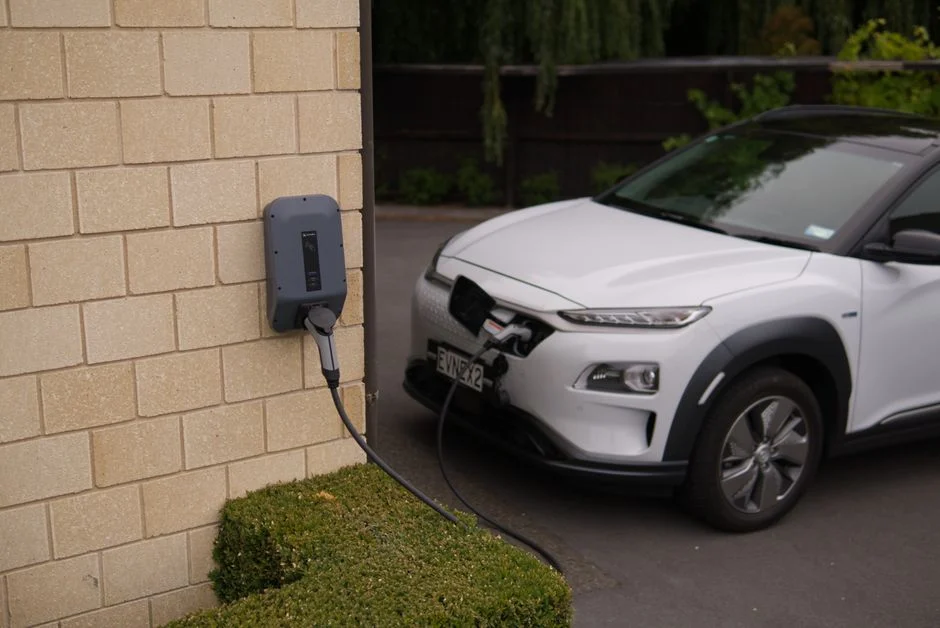
You test-drove the electric car on a Saturday, the kids loved how quiet it was, and the salesperson’s numbers looked good. Then a friend asks: “Did you get the $7,500?” In 2026 the answer is almost always no. Here is what happened to the federal EV credits, what’s left for the charger in your garage, and where state and utility money still helps.

There is no federal EV tax credit for a car bought in 2026. The new EV credit (30D, up to $7,500) and the used EV credit (25E, up to $4,000) ended for vehicles acquired after September 30, 2025. The home charger credit (30C) ended for chargers placed in service after June 30, 2026. State rebates and utility charger rebates remain in some places.
This is general information, not tax or legal advice. We checked the IRS and the program pages named below in October 2026; programs change and run out of money. Confirm with the program and a tax professional before you count on any amount.
EV incentives in 2026 at a glance
| Incentive | Was worth | Status (checked October 2026) |
|---|---|---|
| New clean vehicle credit (30D) | Up to $7,500 | Ended for vehicles acquired after Sept 30, 2025 |
| Used clean vehicle credit (25E) | 30% of the price, up to $4,000 | Ended for vehicles acquired after Sept 30, 2025 |
| Home charger credit (30C) | 30%, up to $1,000 per charging port | Ended for property placed in service after June 30, 2026; only in eligible census tracts |
| State EV rebates | Varies | Some states still offer them (examples below) |
| Utility charger rebates | Varies | Many utilities offer them, often with a time-of-use or EV rate |
What happened to the $7,500 EV tax credit
The law signed on July 4, 2025 (Public Law 119-21, often called the One Big Beautiful Bill) ended the clean vehicle credits early. The IRS fact sheet FS-2025-05 (August 21, 2025) says the 30D credit “will not be allowed for any vehicle acquired after September 30, 2025,” and the same date applies to the 25E used-vehicle credit and the 45W commercial credit.
“Acquired” has a specific meaning. The IRS says a vehicle is acquired on the date a written binding contract is signed and a payment is made. So if you signed and paid a deposit on or before September 30, 2025, you can still claim the credit when the car is placed in service, even if it was delivered later. If you signed in October 2025 or later, there is no federal credit.
Who can still claim something
- You signed a binding contract and paid on or before Sept 30, 2025, but took delivery later: the IRS says you’re entitled to the credit when you place the vehicle in service. The vehicle and your income must still meet the usual 30D or 25E rules.
- You bought a used EV on or before Sept 30, 2025: the 25E credit was 30% of the sale price up to $4,000, for vehicles priced at $25,000 or less, bought from a dealer, with income limits of $75,000 to $150,000 depending on filing status (IRS).
- Everyone else buying in 2026: no federal credit. Dealers may still offer their own discounts or lease deals, which are prices, not tax credits.
The home EV charger credit (30C) and its June 30, 2026 end
The Alternative Fuel Vehicle Refueling Property Credit, section 30C, lasted longer than the car credits. For a charger you buy and place in service at your main home, the IRS says the credit equals 30% of the cost, up to $1,000 per item (each charging port), for property placed in service from January 1, 2023 to June 30, 2026. The IRS fact sheet confirms it is not allowed for property placed in service after June 30, 2026.
The catch most people missed: the charger had to be installed in a low-income community census tract or a non-urban census tract. The IRS publishes lists of eligible census tracts (one set for installs before January 1, 2025, another for installs after). Many suburban homes were never eligible.
- Charger installed and working between Jan 1 and June 30, 2026, at your main home, in an eligible tract: you may be able to claim it on your 2026 return, which you’ll file in 2027. Keep the invoice that shows the install date and cost.
- Charger installed July 1, 2026 or later: no federal credit. Look at utility and state rebates instead (below).
Whatever you install, a Level 2 charger on a 240-volt circuit is work for a licensed electrician, with a permit where required. Our EV charger installation cost guide covers what that costs and why, and Level 1 vs Level 2 charging explains whether you need one at all.
State EV rebates still listed in 2026
A handful of states run their own EV rebates, paid at the dealer or after purchase. They have price caps, residency rules and limited budgets, and several have paused or ended over the years. These are the programs we could read on the official program page in October 2026. The pages showed the amounts below, but none of them stated an end date, so confirm the program is still taking applications before you buy.
| State and program | What the program page showed |
|---|---|
| New York: Drive Clean Rebate (NYSERDA) | Up to $2,000 off the purchase or lease of 60+ new EV models; $500 for models with an MSRP over $42,000. Point of sale: the dealer applies for you. |
| Massachusetts: MOR-EV | $3,500 to $6,000 for an electric vehicle, for Massachusetts residents, businesses and nonprofits. |
| Connecticut: CHEAPR | Battery EVs with an MSRP up to $50,000: $1,000 standard rebate; with the income-based Rebate+, up to $4,000 new or $5,000 used. Plug-in hybrids: $500 standard, up to $2,000 new or $3,000 used with Rebate+. Page last updated October 1, 2025. |
Other states and cities have programs too, some only for income-qualified buyers or for replacing an old gas car. Search “your state EV rebate” and open the state energy office, environmental agency or the program’s own site, or use DSIRE (dsireusa.org) and DOE’s Alternative Fuels Data Center to find them.
Utility rebates for home chargers
With the federal charger credit gone, your electric utility is now the most likely source of help for a home charger. Utilities want EVs to charge at night, so many rebates come with a time-of-use or EV rate. Two programs we read in full:
- Georgia Power: $150 per Level 2 (208/240 V) wall or pedestal charger, up to two per account, for installations completed by December 31, 2026 while funds last. The charger needs a dedicated circuit; mobile connectors don’t qualify. Submit within six months of installation. You don’t need to be on the EV rate.
- Consumers Energy (Michigan): $500 off a Level 2 home charger installation, up to $1,000 for income-qualified customers. The charger must be ENERGY STAR rated and UL-certified (or supplied by the automaker), 9.6 kW or less, and you must enroll in the Nighttime Savers Rate.
Southern California Edison, Xcel Energy, DTE and many others also list home-charger programs on their own sites, with different amounts and rules. Your utility’s EV page is the place to start.
How to find EV money where you live: do these next
- Your utility’s EV page. Charger rebates, EV or time-of-use rates, and sometimes a free or discounted charger.
- Your state’s EV rebate. Check the official program page for the price cap, whether the dealer applies for you, and whether money is left.
- Before you sign: ask the dealer in writing which rebates they’re applying, and keep the contract, invoice, charger receipt and electrician’s invoice.
Does an EV still make sense without the credit?
The credit was a one-time discount; the running cost is what you live with. Charging at home on a good overnight rate usually costs less per mile than gasoline, but how much less depends on your electric rate, your car’s efficiency and how much you drive. Our guide to the cost to charge an EV at home shows the math with your own numbers, and EV charging with solar explains how panels change it. Compare the out-the-door price with and without any state rebate, not the sticker.
Keep exploring
Start with our guide to EV chargers for home, then see the best home EV chargers. For other incentives, read home energy rebates by state, the heat pump tax credit in 2026 and the solar tax credit in 2026. For backup power, an EV pairs well with a home battery; for the basics, see electrical energy explained and clean energy. Browse all tax credit and rebate articles or our EV articles.
EV tax credit questions
Is there an EV tax credit in 2026?
Not for a car bought in 2026. The IRS says the new (30D) and used (25E) clean vehicle credits are not allowed for vehicles acquired after September 30, 2025. The only exception is a car under a binding written contract with a payment made on or before that date. Some states and utilities still offer rebates.
Can I still get the EV charger tax credit?
Only for a charger placed in service at your main home by June 30, 2026, in an eligible low-income or non-urban census tract. Then it’s 30% of the cost, up to $1,000 per charging port, claimed on your 2026 return. A charger installed on July 1, 2026 or later doesn’t qualify.
What if my EV was delivered after September 30, 2025?
It depends on when you acquired it. If you signed a written binding contract and made a payment on or before September 30, 2025, the IRS says you can claim the credit when the car is placed in service, even after that date. Keep the signed contract and the payment receipt with your tax records.
Do leased EVs get anything now?
Not a federal credit: the leasing company’s commercial credit (45W) ended on the same September 30, 2025 date. Some state rebates, like New York’s Drive Clean Rebate, include leases, and automakers set their own lease deals. Ask the dealer to show any rebate as a separate line on the contract.
Are utility charger rebates taxable?
It depends on the program and your situation, and it’s a question for a tax professional. Utility rebates often reduce the cost of the equipment rather than count as income, but don’t assume. Keep the rebate paperwork with your records.