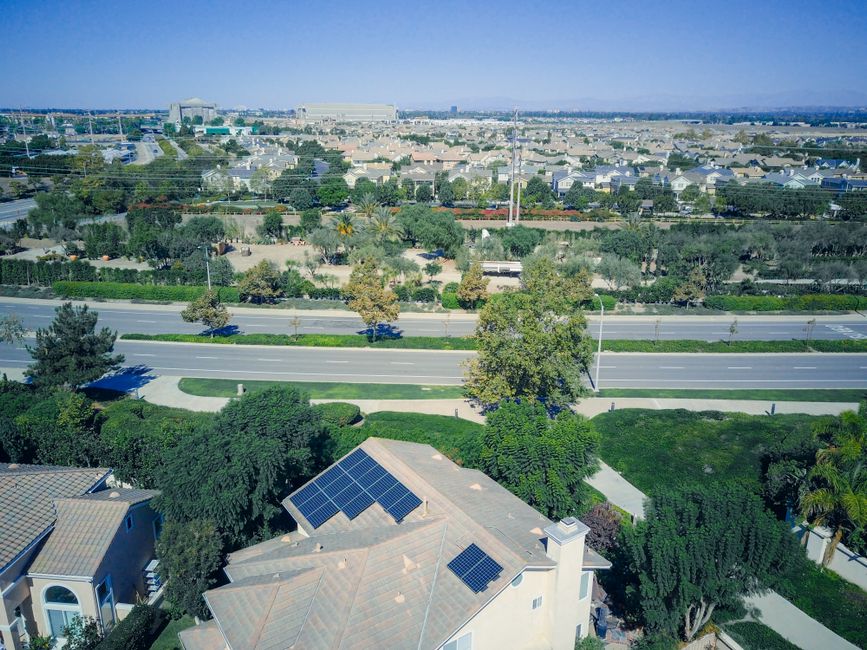
In short: Most of Jacksonville buys power from JEA, the city-owned utility, which averaged about 12.4¢ per kWh for homes in 2024, among the lowest prices of Florida’s large utilities. JEA credits solar you export only at its fuel rate, not the full retail price, so in Jacksonville solar pays best when you use the power yourself or store it.
This page covers what is specific to Jacksonville and St. Augustine. Statewide rules (tax exemptions, contractor licenses, the investor-owned utilities’ net metering rule) are in our Florida energy guide.
Jacksonville at a glance
- Utilities: JEA serves most of Jacksonville and parts of nearby counties. Beaches Energy Services, also city-owned, serves parts of the beaches area; Clay Electric Cooperative serves parts of Duval and Clay counties; FPL serves parts of Duval, St. Johns, Clay and Nassau. In St. Augustine and St. Johns County, both FPL and JEA have customers (EIA-861 territories, 2024; City of St. Augustine).
- What homes paid in 2024: JEA 12.43¢ per kWh, Beaches Energy 12.38¢, Clay Electric 13.09¢ and FPL 13.71¢, against a Florida average of about 14.1¢ (EIA-861, revenue divided by sales).
- Outage minutes (2024): JEA reported about 75 minutes per customer, the same with and without major events, under a non-standard method. Beaches Energy reported about 50 minutes with major events. Clay Electric reported about 2,142 minutes with major events and 174 without, and FPL 702 and 46 (EIA-861).
- Sunshine (estimate): NASA POWER puts Jacksonville at about 4.8 kWh per square meter per day, a bit below South and Central Florida. Our rough estimate: about 1,400 kWh a year per kW of panels.
- Top hazards (FEMA National Risk Index): Duval County rates hurricanes, lightning and cold waves “very high”, and coastal flooding, river flooding and hail “relatively high”. St. Johns County rates hurricanes, lightning and coastal flooding “relatively high”.
- Public charging: Jacksonville had 540 public charging ports and St. Augustine 129 (AFDC Station Locator, October 3, 2026; public Level 2 and DC fast ports).
Your utility and what it means
JEA: credits at the fuel rate. JEA is city-owned, so the state’s net metering rule for investor-owned utilities doesn’t set its terms. Under JEA’s Distributed Generation Policy, solar power you send to the grid earns an energy credit at JEA’s fuel rate, while power you buy is charged at the normal rate. Unused credits build up through the calendar year, and JEA pays out any balance at year end, again at the fuel rate. Distributed generation customers can’t enroll in JEA’s MyWay program. Systems that passed final inspection by March 31, 2018 kept JEA’s older net metering for 20 years.
JEA’s current home rebate list covers items such as attic insulation, heat pump water heaters and smart thermostats; it has no solar or battery rebate. On EVs, JEA states that it, the federal government and the State of Florida “are not offering EV incentives at this time.” JEA also runs a Solar Concierge information program to help you decide before you buy.
FPL, Beaches Energy and Clay Electric. FPL customers, including many in St. Augustine, follow the state’s net metering rule, with credits carried forward within the year; see our South Florida page for FPL’s programs. Beaches Energy and Clay Electric set their own terms, so ask them how exports are credited.
Backup power in Jacksonville
Northeast Florida is hit less often than the southern peninsula, but Duval County still rates hurricanes “very high” for expected losses, and its “very high” cold wave rating is a reminder that winter freezes happen here too, when heat pumps work hardest. Where you live changes the picture: Clay Electric’s 2024 storm-day figure was about 2,142 minutes, far above JEA’s reported number.
- Generator: covers heating or cooling through a long outage. Standby units need a gas line and permits; portable ones need a transfer switch or interlock from a licensed electrician. See generator installation and the generator sizing tool.
- Battery: with JEA’s fuel-rate credit, storing midday solar for the evening also adds bill value, not only backup. Check runtime with the battery backup calculator.
- Portable power station: for renters and essentials; see portable power.
Run portable generators outdoors only, at least 20 feet from the house and never in a garage (CPSC). Compare options on our backup power page.
Solar in Jacksonville
Two things make Jacksonville solar math different from the rest of the state: JEA’s low price and its fuel-rate export credit. Every solar kWh you use at home saves JEA’s full per-kWh price; every kWh you export earns only the fuel rate. So the best fit is a system sized to your daytime use, especially with a pool pump, air conditioning or an EV that can run while the sun is up.
Rough example (our estimate, not a quote): a 6 kW system at about 1,400 kWh per kW makes roughly 8,400 kWh a year. Even if every kWh offset power you would have bought at JEA’s 2024 average of 12.43¢, that is about $1,040 a year, and exports at the fuel rate earn less. For an FPL home in St. Augustine the same system would be worth up to about $1,150 at 13.71¢. Try the solar savings calculator with your own bill, start with the solar potential tool, and see what solar costs and solar installation.
Batteries
JEA itself explains that a battery stores your solar’s extra power instead of sending it to the grid, and can be set up to run critical appliances in an outage. Under the fuel-rate credit, that stored power is worth the full price when you use it in the evening. We found no JEA battery rebate on its current rebate list. See battery installation and home battery cost.
EV charging
JEA’s low price makes home charging cheap: about $3.70 per 100 miles at its 2024 average and about 30 kWh per 100 miles (our estimate), or roughly $37 for 1,000 miles. There is no JEA EV or charger incentive right now. A Level 2 charger needs a 240-volt circuit and a permit, installed by a licensed electrician. Try the EV charging cost calculator and read EV charger installation.
Drive on another fuel? See every alternative fuel station in Jacksonville: hydrogen, propane, natural gas, E85 ethanol, biodiesel and renewable diesel.
Permits and inspections
- City of Jacksonville: the Building Inspection Division (Ed Ball Building, 214 N. Hogan St.) enforces the Florida Building Code, 8th Edition (2023), and all permits must be submitted online through JaxEPICS. We did not find a city guide specific to solar, generators or EV chargers.
- Doing it yourself: the city’s residential permits page lets a homeowner pull a permit for their own primary home (not for sale or rent, name on the deed), but licensed electrical, plumbing or mechanical contractors you hire must pull their own permits. For solar, batteries and generators, hire licensed pros.
- St. Augustine and St. Johns County: permits come from the city or the county building department.
- Utility approval: apply to JEA (or FPL) for interconnection before switching a solar or battery system on. Check contractor licenses on the state DBPR lookup (see the Florida guide) and get HOA approval in writing.
Cities we cover
- Jacksonville
- St. Augustine
Get help
Are you a licensed installer in Jacksonville? Join SolutionEnergy and get requests from homeowners and businesses →
Tell us about your project and we will connect you with a licensed, independent installer who serves the Jacksonville area. It is free, there is no obligation, and only the installer you choose gets your details. See how it works.
Jacksonville energy questions
Does JEA have net metering?
Not the full retail kind for new systems. Since April 2018, JEA’s Distributed Generation Policy credits exported solar at JEA’s fuel rate, with any year-end balance paid at that rate. Systems that passed final inspection by March 31, 2018 kept the older net metering for 20 years.
Is solar worth it with JEA?
It can be, but the payback is slower than in most of Florida because JEA’s price is low and exports earn only the fuel rate. Size the system to what you use during the day, or add a battery, and compare quotes with our solar savings calculator using your own JEA bill.
Are there EV rebates in Jacksonville?
Not right now. JEA’s EV incentives page says JEA, the federal government and the State of Florida are not offering EV incentives at this time. Home charging is still cheap at JEA’s prices, about $3.70 per 100 miles on our estimate.
Is St. Augustine on JEA or FPL?
Both utilities serve parts of St. Johns County, and the City of St. Augustine lists outage numbers for each. Check your bill: FPL customers follow the state net metering rule with full retail credit, while JEA customers get the fuel-rate credit.
Sources
EIA-861 2024 (sales, reliability and service territory files); NASA POWER climatology 2001 to 2020; FEMA National Risk Index (December 2025); AFDC (October 2026); JEA Distributed Generation, residential rebates and EV incentives pages; City of Jacksonville Building Inspection Division pages (read October 3, 2026); CPSC.