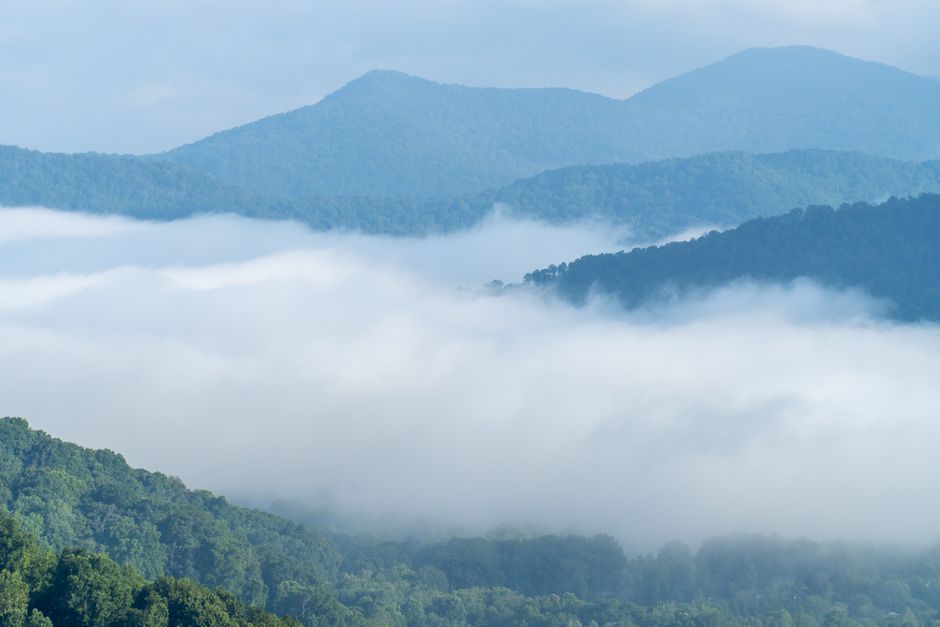
In short: Hurricane Helene showed what a long outage looks like in Asheville. A week after the storm, about 167,000 Duke Energy customers in the North Carolina mountains were still without power (Duke Energy). Haywood EMC, which serves part of Buncombe County, averaged about 160 hours without power in 2024 (EIA). Here, backup power is a real plan, not an extra.
This page covers what is local to Asheville. Statewide rules (Duke Energy’s solar rates, licensing, the property tax exclusion) are in our North Carolina energy guide.
Asheville at a glance
- Duke Energy Progress (the Asheville region): 15.54¢/kWh average for homes in 2024; a typical 1,000 kWh bill was $165.66 in January 2026 (NC Utilities Commission). Outages in 2024, across all its North Carolina customers: 1,803 minutes with major events (about 30 hours), 141 without.
- Haywood EMC (cooperative): 16.60¢/kWh in 2024; 9,612 minutes of outages per customer with major events, about 6.7 days, and 566 minutes without them.
- French Broad EMC (cooperative): 14.78¢/kWh in 2024. Its outage figures were reported on a different basis, so we do not compare them.
- Sun: about 4.39 kWh per square meter per day (NASA POWER, 2001 to 2020). Our rough estimate: about 1,281 kWh a year per kW of panels, before shade from ridges and trees, which matters a lot in the mountains.
- Top hazards (FEMA National Risk Index, Buncombe County): cold waves, ice storms, lightning and strong wind “Relatively High”; landslides, inland flooding and winter weather “Relatively Moderate”.
- Public charging: 253 ports at 62 locations in Asheville, 83 of them DC fast (AFDC, October 3, 2026).
Prices are 2024 averages (home revenue divided by home sales, EIA-861), so they include fixed charges. FEMA’s ratings describe long-run expected losses across all years, which is why a single extreme storm like Helene does not make every hazard “Very High”.
What Helene did to the power grid
From Duke Energy’s own updates in 2024: on September 27, nearly 703,000 Duke customers in North Carolina were without power, and Duke warned of multiday outages in western North Carolina. On October 3, 201,000 customers in the mountain region were still out, and Duke said about 105,000 of them faced catastrophic damage needing extended restoration; the storm had damaged transmission towers, substations, poles and lines. On October 4, about 167,000 were still without power, and Duke was rebuilding the backbone of its system in Buncombe and seven nearby counties. The U.S. Energy Information Administration later reported that Helene’s winds and flooding caused prolonged outages in North Carolina.
Your utility and what it means
- Duke Energy Progress: Duke describes Asheville as part of its Duke Energy Progress area (Duke Energy Carolinas also has some Buncombe County customers, so check your bill). New home solar goes on Duke’s North Carolina solar rates, explained on our state page; the Net Metering Bridge rate closes to new applicants on December 31, 2026. Duke announced a Charger Prep Credit in 2022 of up to $1,133 toward the wiring for a home Level 2 charger; we could not confirm it is still open in 2026, so ask Duke.
- Haywood EMC and French Broad EMC: cooperatives set their own solar credits, battery rules and programs. Ask yours directly before you size a system.
Backup power in Asheville
After Helene, the useful question is not “will the power go out?” but “how would we manage for a week or more?” Roads can be blocked too, so fuel deliveries are not guaranteed.
- Standby generator on propane or natural gas: the most hours for a long outage. A larger propane tank stretches the time between refills. See generator installation.
- Solar plus a battery: refills every sunny day without fuel, useful when roads are closed. Size it for essentials: fridge, lights, well pump if you have one, phones, a furnace fan in winter.
- Portable power station plus small panels: for renters and short outages, and a good addition to either plan. See portable power stations.
- Safety: run portable generators outdoors only, at least 20 feet from the house, exhaust away from windows and doors, never in a garage (CPSC); carbon monoxide alarms on every level. A licensed electrician installs any transfer switch or interlock, with a permit.
Work out what you need with the battery backup calculator and generator sizing calculator, and compare options in our backup power guide.
Solar in Asheville
A rough estimate: a 7 kW system at about 1,281 kWh per kW makes roughly 9,000 kWh a year on an open site. If every kWh replaced power at Duke Energy Progress’ 2024 average of 15.54¢, that would be worth about $1,390 a year. That is a ceiling: exported energy earns much less than retail under Duke’s solar rates, and in Asheville a ridge or tall trees can cut production sharply. A site visit with a shade measurement matters more here than almost anywhere in the state. Try our solar potential tool, then see solar panel cost and solar installation.
Batteries
In Asheville a battery’s first job is resilience. Paired with solar it keeps essentials running through a long outage; without solar it covers the shorter ones and buys time to start a generator. Under Duke’s time-of-use solar rate it also shifts midday solar to the evening. Ask whether the system can restart from solar alone if the battery runs down. See home battery installation, home battery cost and solar battery storage.
EV charging
Asheville has 253 public charging ports, and its 83 DC fast ports are more than Raleigh’s 82. At home, a labelled estimate at about 30 kWh per 100 miles and Duke Energy Progress’ 2024 average of 15.54¢: about $4.66 per 100 miles, or about $560 a year for 12,000 miles. Mountain driving uses more energy uphill, and cold weather cuts range.
Drive on another fuel? See every alternative fuel station in Asheville: hydrogen, propane, natural gas, E85 ethanol, biodiesel and renewable diesel.
A Level 2 charger needs a 240-volt circuit installed by a licensed electrician, with a permit. The federal 30C charger credit ended for chargers placed in service after June 30, 2026. See EV charger installation and our EV charging cost calculator.
Permits and inspections
- Inside the City of Asheville: Development Services and its Permit Application Center (161 South Charlotte Street) handle residential permits. The City’s apply page links a Solar PV Submittal Requirements Guide, and reminds you to confirm your property is in the City’s permitting jurisdiction.
- Elsewhere in Buncombe County: Buncombe County Permits & Inspections has separate application forms for roof-mounted and ground-mounted residential solar; ground mounts need engineering. Find them on the County’s forms page.
- Who does the work: a licensed electrical contractor for any solar system in North Carolina; a licensed gas contractor for generator gas and propane lines.
Cities we cover
- Asheville
Get help
Tell us about your project and we will connect you with a licensed, independent installer who serves the Asheville area. It is free, there is no obligation, and only the installer you choose gets your details. See how it works.
Are you a licensed installer in Asheville? Join SolutionEnergy and get requests from homeowners and businesses →
Asheville energy FAQ
How long was the power out in Asheville after Hurricane Helene?
It varied by street. Duke Energy reported 201,000 customers in the North Carolina mountains still without power on October 3, 2024, and about 167,000 on October 4, with some areas needing extended rebuilding. In 2024, Haywood EMC customers averaged about 160 hours without power and Duke Energy Progress customers about 30 hours across North Carolina (EIA).
Who provides electricity in Asheville?
Mostly Duke Energy Progress, which Duke describes as serving the Asheville region. Duke Energy Carolinas and two cooperatives, French Broad EMC and Haywood EMC, also serve parts of Buncombe County. Your bill tells you which one you have and which solar rules apply.
Is solar a good idea in the mountains around Asheville?
It can be, on an open, south-facing site: our estimate is about 1,281 kWh per kW a year before shade. Ridges and tall trees can cut that a lot, so get a shade measurement. Paired with a battery, solar also gives backup that does not depend on fuel deliveries.
Where do I get a solar permit in Asheville?
Inside city limits, from the City of Asheville’s Development Services, which publishes a solar PV submittal guide. Outside the City’s jurisdiction, from Buncombe County Permits & Inspections, which has separate roof-mount and ground-mount solar applications. Your licensed contractor usually applies.
Sources
Helene outages: Duke Energy news releases of September 27, October 3 and October 4, 2024; EIA Today in Energy, December 1, 2025. Utility areas, prices and outages: EIA-861, 2024 data. Typical bill: NC Utilities Commission overview, January 2026. Hazards: FEMA National Risk Index, December 2025. Sun: NASA POWER, 2001 to 2020. Charging ports: AFDC Station Locator, October 3, 2026. Permits: City of Asheville Development Services, Buncombe County Permits & Inspections. Generator safety: CPSC. Checked October 3, 2026.