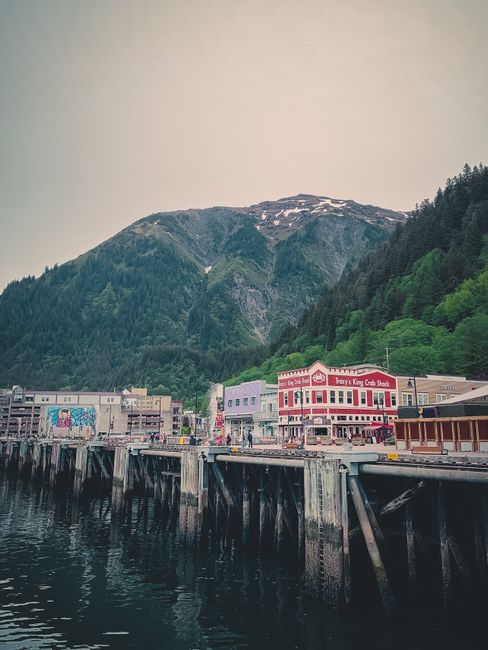
In short: Juneau runs on hydropower, and homes paid about 12.9¢ per kWh in 2024, less than half the Alaska average. AEL&P’s winter rate from October 2026 is 13.8¢, and its off-peak EV rate is 6.7¢. Most of Juneau’s 2024 outage time came from losing supply on its island grid, so short backup matters more than solar.
Juneau is different from the rest of Alaska: no gas, no road to another grid, cheap clean power and very little sun. Below: what that means for backup power, heat pumps, electric cars, solar and permits. For statewide rules and contractor licensing, see our Alaska energy guide.
Juneau at a glance
- Utility: Alaska Electric Light & Power (AEL&P), an investor-owned utility owned by Avista, serves about 17,000 customers in the City and Borough of Juneau. Homes paid 12.9¢ per kWh on average in 2024 (EIA-861). Posted residential rates from October 1, 2026: 13.83¢ per kWh November to May, 11.36¢ June to October, plus $11.34 a month.
- Power source: five hydro plants, the largest at Snettisham. AEL&P calls Juneau “an electrical island”: no lines connect it to other communities.
- Outages (2024): 156 minutes and 2.9 interruptions per customer. With loss-of-supply events removed, it was 55 minutes and 0.6 interruptions, so most outages started at the plants or transmission lines rather than on your street (EIA-861).
- Sun: 2.38 kWh per square meter per day, from 0.23 in December to 4.9 in June (NASA POWER, 2001–2020). Our rough estimate: about 690 kWh a year per kW of panels.
- Top hazards: FEMA’s National Risk Index (December 2025) rates Juneau’s overall risk “very low,” with winter weather “relatively high” and avalanche and landslide “relatively moderate.” The index does not cover glacial outburst floods, which the City and Borough treats as a major threat (below).
- Public charging: 27 ports at 16 locations (AFDC, October 2026).
Your utility and what it means
AEL&P’s rate page has several options that matter more in Juneau than solar does:
- Seasonal pricing: energy costs about 22% more from November to May than from June to October.
- Heat pump rate (Rate 92): lower energy charges (5.93¢ in winter) with a demand charge per kW. It can suit a home heating with a heat pump that keeps its peak load in check; ask AEL&P to compare it with your current bill.
- Off-peak and dual-fuel rates: an off-peak heat storage rate (10 p.m. to 6 a.m., 8.75¢) and a residential dual-fuel rate (10.22¢ for October to December 2026) for homes that keep a second heat source.
- EV rate (Rate 93): 6.71¢ November to May and 5.86¢ June to October for charging from 10 p.m. to 5 a.m. on a separately metered Level 2 charger. You can rent a charger with its meter from AEL&P ($12.08 a month) or install your own with an outdoor meter base.
- Demand billing: AEL&P may move accounts above 20 kW of demand or 5,000 kWh a month to a demand rate. Large electric heat and charging loads can push a home there.
Backup power in Juneau
Because the grid is an island, a problem at a power plant or on a main line can darken much of town at once. Avalanches damaged Snettisham transmission towers in 2008 and 2009. AEL&P has since built steel diversion structures above the most exposed towers and runs avalanche control on the line each winter; it says one structure turned away an avalanche in 2012 and prevented a major outage. In 2024, outages averaged about 53 minutes each, so most were short.
- Short outages: a portable power station or home battery keeps Wi-Fi, a CPAP, the boiler controls or a heat pump’s indoor unit running with no restart. A battery must stay within the maker’s temperature range.
- Long outages: homes with all-electric heat should have a plan for a multi-day loss: a generator with a transfer switch sized for the heat, or a non-electric heat source. See generator installation.
- Flood zones: glacial outburst floods from Suicide Basin above Mendenhall Glacier have reached farther into the Mendenhall Valley each year; in August 2025 the City and Borough and Tlingit & Haida declared a disaster ahead of a possible record flood. If you are in a mapped zone, keep generators, batteries and panels above the flood level. Check CBJ’s flood inundation maps.
Run a generator outdoors only, at least 20 feet from the house with exhaust pointed away, and keep carbon monoxide alarms inside (CPSC). Size your setup with the battery backup calculator or generator sizing calculator, and compare options in our backup power guide.
Solar in Juneau
Solar is a hard sell here. AEL&P itself says Juneau “specializes in rain more than sun.” A kW of panels makes about 690 kWh a year by our estimate, mostly from April to September, when AEL&P’s price is 11.36¢ to 13.83¢. That is worth about $75 to $95 a year per kW (an estimate), far less than in Anchorage or Fairbanks, where power costs twice as much.
We also could not find net metering terms on AEL&P’s website, and EIA’s 2024 data lists no net-metered systems for AEL&P. Alaska’s net metering rule has an exception for grid systems powered entirely by renewables apart from standby fuel; whether that covers Juneau is a question for AEL&P. Before buying grid-tied panels, ask AEL&P in writing how surplus power would be handled. For a cabin off the road system, see our off-grid guide and the solar potential tool; read how solar installation works if you go ahead.
Home batteries in Juneau
With little solar to store and no time-of-day pricing on the standard rate, a battery in Juneau is purely a backup purchase: it covers the short supply-loss outages instantly. For a home on electric heat, a battery large enough to carry heat for days is expensive, so most households pair a smaller battery with a generator or second heat source. See battery costs and battery installation.
EV charging in Juneau
Home charging is cheap in Juneau. At about 30 kWh per 100 miles, AEL&P’s off-peak EV rate works out to roughly $2 per 100 miles, about $240 for 12,000 miles, or about $4.15 per 100 miles on the regular winter rate (estimates; small adjustments apply). The EV rate needs a Level 2 charger on its own meter. For your own charger, AEL&P’s service standards (SS-16) tell your electrician what to install, and AEL&P sets the meter after the work passes inspection. See AEL&P’s EV page, our EV charger installation guide and the EV charging cost calculator.
Drive on another fuel? See every alternative fuel station in Juneau: hydrogen, propane, natural gas, E85 ethanol, biodiesel and renewable diesel.
Permits and inspections
The City and Borough of Juneau’s Community Development Department runs the Permit Center. Its “Do I need a permit?” page lists common projects, including air source heat pumps and boilers, and applications go through CBJ’s online Civic Access portal. Ask the Permit Center about electrical permits for a charger, transfer switch or battery. Use a licensed electrical contractor (see the state page for licensing), and tell AEL&P before connecting anything that can feed power into your panel.
Cities we cover
- Juneau
Get help in Juneau
Are you a licensed installer in Juneau? Join SolutionEnergy and get requests from homeowners and businesses →
Tell us about your project and we will connect you with a licensed, independent installer who serves the Juneau area. It is free, there is no obligation, and only the installer you choose gets your details. Read how it works.
Juneau energy questions
Why is power so much cheaper in Juneau than in the rest of Alaska?
AEL&P’s base-load power comes from five hydro plants, so bills don’t follow gas or diesel prices. Homes paid 12.9¢ per kWh in 2024, against about 21¢ to 30¢ for the big Railbelt co-ops (EIA-861).
How does AEL&P’s EV rate work?
Charging on a separately metered Level 2 charger between 10 p.m. and 5 a.m. is billed at 6.71¢ per kWh in winter and 5.86¢ in summer. You can rent a charger and meter from AEL&P for $12.08 a month or install your own with an outdoor meter base. Residential customers not billed on a demand rate qualify, which AEL&P says is most homes.
Is solar worth it in Juneau?
Rarely, for a grid-connected home. Panels make about 690 kWh per kW a year here, worth roughly $75 to $95 at AEL&P’s rates by our estimate, and we found no published net metering terms. Solar makes more sense for off-grid cabins or as part of a backup kit.
What backup do I need in Juneau?
For most homes, something for short outages: a power station or battery for essentials. Add a generator or a second heat source if you heat with electricity, and keep equipment above flood level if you live in the Mendenhall Valley flood zones.
Sources
EIA-861, 2024 (price = residential revenue ÷ sales; reliability, including loss-of-supply data; net metering); AEL&P current rates (effective October 1, 2026), EV, demand rate, alternative energy, about and avalanche diversion pages; Regulatory Commission of Alaska net metering regulations (3 AAC 50.900); City and Borough of Juneau permit and flood pages and August 8, 2025 disaster declaration; NASA POWER, 2001–2020; FEMA National Risk Index, December 2025; AFDC; CPSC. Read October 2026. Estimates are ours and labelled.