In short: Huntington homes are served by Appalachian Power, which charged about 16.77¢ per kWh in 2024 and whose West Virginia customers averaged about 1,832 minutes without power, over 30 hours. Ice storms are Cabell County’s top FEMA-rated hazard. Plan backup first; then solar and batteries, with an off-peak rate for EV charging.
This page covers Huntington, Barboursville and the rest of Cabell County. Statewide rules (the new solar export credits, licensing, why we could not confirm state solar tax breaks) are on our West Virginia energy guide.
Huntington at a glance
- Appalachian Power (all of Cabell and Wayne counties): 16.77¢/kWh average for homes in 2024; outages 1,832 minutes per customer with major events, 576 without; about 3.3 interruptions a year (EIA-861, West Virginia service area).
- Sun: about 4.00 kWh per square meter per day at Huntington (NASA POWER, 2001 to 2020). Our rough estimate: about 1,170 kWh a year per kW of panels.
- Top hazards (FEMA National Risk Index): Cabell County’s overall risk is “Relatively Moderate”, led by ice storms (“Relatively High”); heat waves, landslides, lightning, river flooding, strong wind and winter weather are “Relatively Moderate”.
- Public charging: 19 ports at 8 locations in Huntington and 12 in Barboursville (AFDC, October 3, 2026).
The statewide average in 2024 was 1,166 outage minutes with major events and 486 without. Prices are 2024 averages including fixed charges; the state average was 15.78¢ in July 2026.
Your utility and what it means
- One utility, frequent outages: every home in Cabell County is on Appalachian Power. Its West Virginia customers averaged about 9.6 hours without power on ordinary days in 2024 and about 30 hours including major events, above the state averages.
- Solar credits: Appalachian Power’s one-to-one net metering has ended for new customers, with a reported export credit of about 12.4¢ per kWh; existing customers were grandfathered (see our state page). New systems go through the company’s West Virginia distributed generation coordinator (dgcoordinator-wv@aep.com, 304-348-4126) (Appalachian Power solar).
- EV off-peak rate: Tariff RS-PEV saves about 25% on home charging from 8 p.m. to 6 a.m. on weekdays and all weekend and major holidays; Appalachian Power’s example is 12.9¢ off-peak against 17.6¢ standard, with a 5.11¢ surcharge for on-peak charging. Sign-up is free and the EV meter is supplied, but you pay an electrician to install the meter base (Appalachian Power WV off-peak charging). If you have net-metered solar, ask how the two fit together: the company notes that net metering rules do not currently allow time-of-use metering on its standard tariff.
- Charger rebates: we found no current Appalachian Power charger rebate in West Virginia; the old rebate link now leads to the general TakeCharge programs list.
Backup power in Huntington
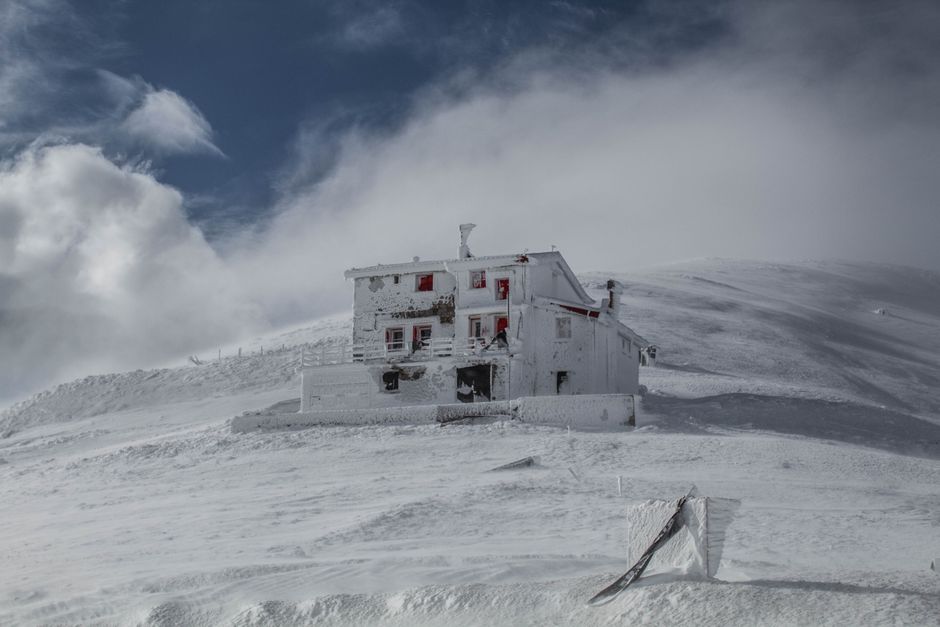
Ice is the local twist. FEMA’s top-rated hazard for Cabell County is ice storms, which bring down trees and lines and can leave homes cold for days, and landslides and river flooding are also rated “Relatively Moderate”. Add Appalachian Power’s outage record and most households here will use backup several times a year.
- For multi-day ice storms: a standby generator on natural gas or propane, with an automatic transfer switch installed by a licensed electrician, keeps the furnace and fridge running.
- For the frequent short outages: a home battery switches over silently; a portable power station covers phones, internet and a CPAP.
- Safety: portable generators outdoors only, at least 20 feet from the house, exhaust away from doors and windows, never in a garage or basement (CPSC); carbon monoxide alarms on every level. In an ice storm it is tempting to shelter a generator in a garage or by the door; do not.
Size it with the generator sizing calculator or the battery backup calculator; see our backup power guide and generator installation.
Solar in Huntington
A rough estimate: a 7 kW system at about 1,170 kWh per kW makes roughly 8,170 kWh a year. Used entirely at home at 16.77¢ it would be worth about $1,370 a year; with half exported at the reported credit of about 12.4¢, about $1,190. Huntington’s sun is slightly better than Charleston’s in NASA’s data. Try the solar potential calculator, then read solar panel cost and solar installation.
Batteries
With exports credited below retail and outages common, a battery both raises the value of solar and keeps the lights on. About one in six net-metered home solar systems on Appalachian Power’s West Virginia lines had a battery at the end of 2024 (248 of 1,592, EIA). See home battery installation and home battery cost.
EV charging
A labelled estimate at 30 kWh per 100 miles: about $5.03 per 100 miles at 16.77¢ (roughly $600 a year for 12,000 miles), or about $3.87 (roughly $460 a year) at the 12.9¢ off-peak price in Appalachian Power’s example. Public charging is thin, 31 ports between Huntington and Barboursville, so home charging matters. A Level 2 charger needs a city electrical permit inside Huntington and a licensed electrician. See EV charger installation and the EV charging cost calculator.
Drive on another fuel? See every alternative fuel station in Huntington: hydrogen, propane, natural gas, E85 ethanol, biodiesel and renewable diesel.
Permits and inspections
- City of Huntington: a permit is required to install or alter any electrical, gas, mechanical or plumbing system, and contractors working in the city must be licensed with the City of Huntington. The city uses the 2020 National Electrical Code. Apply online or in person; contact the permit technician at 304-696-5540 ext. 2003 or permits@huntingtonwv.gov. Each permit carries a $20 application fee plus a fee based on the job’s cost (Huntington building permits).
- Bring your contract: since 2016 the permit office has required a copy of the contract between you and the general contractor, and the subcontractors’ contracts, or a Notice to Proceed form.
- Barboursville and unincorporated Cabell County: ask the village or the county; the county’s site blocked our checks.
- Who does the work: a licensed electrician and contractor (state lookups on our state page), a qualified gas fitter for generator fuel lines, Appalachian Power’s interconnection approval for solar or batteries, and HOA approval where needed.
Cities we cover
- Huntington
- Barboursville
Get help
Tell us about your project and we will connect you with a licensed, independent installer who serves the Huntington area. It is free, there is no obligation, and only the installer you choose gets your details. See how it works.
Are you a licensed installer in Huntington? Join SolutionEnergy and get requests from homeowners and businesses →
Huntington energy FAQ
What is the main weather risk to power in Huntington?
Ice storms, the only hazard FEMA rates “Relatively High” for Cabell County. Strong wind, lightning, winter weather, landslides and river flooding follow at “Relatively Moderate”. Choose backup that can run for more than a day, and keep generators outdoors and well away from the house.
What does Huntington require for a permit?
A permit for any electrical, gas, mechanical or plumbing installation, a contractor licensed with the city, and a copy of your contract (or a Notice to Proceed). Each permit has a $20 application fee plus a fee based on labor and materials.
How much cheaper is off-peak EV charging?
About 25%, according to Appalachian Power: its example shows 12.9¢ per kWh off-peak against a 17.6¢ standard rate. Off-peak runs 8 p.m. to 6 a.m. on weekdays and all day on weekends and major holidays.
Is solar worth it in Huntington?
By our rough estimate a 7 kW system is worth about $1,190 to $1,370 a year, depending on how much you use yourself. Because exports now earn less than retail, a battery that raises self-use and covers outages often makes the system more useful.
Sources
Utility areas, prices, outages, home solar and battery counts: EIA-861, 2024 data. Appalachian Power West Virginia Off-Peak Charging and solar pages; TakeCharge WV home programs. Permits: City of Huntington building permit page. Hazards: FEMA National Risk Index, December 2025. Sun: NASA POWER, 2001 to 2020. Charging ports: AFDC Station Locator, October 3, 2026. Generator safety: CPSC. Checked October 3, 2026.